
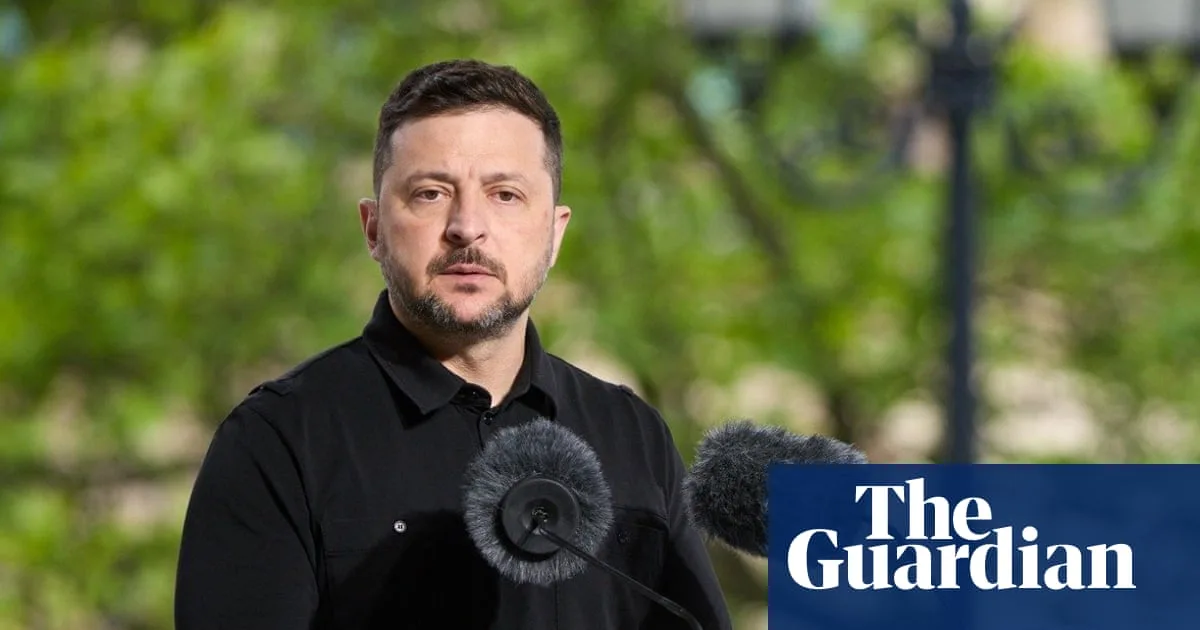
Ukrainian President Volodymyr Zelenskyy has issued a public letter to Russian President Vladimir Putin, proposing face-to-face negotiations in a neutral third country. The letter, the first of its kind since Russia's full-scale invasion in 2022, criticises Putin's 26-year rule and urges an end to the war.
Zelenskyy suggested Switzerland, Turkey, or Arab states as possible hosts for the talks, ruling out Moscow and Kyiv. He wrote, 'It is leaders who resolve the key issues. I propose to set a clear date for such a meeting.' The move comes as Ukraine has regained some battlefield leverage through improved long-range strike capabilities.
Putin, speaking at the St Petersburg International Economic Forum, acknowledged recent Ukrainian drone attacks that have reached deep inside Russia. He stated, 'Russia has an air defence system, we need to improve it, strengthen it, and we will do that.' Putin also indicated openness to compromise based on understandings reached at his summit with Donald Trump in Anchorage, Alaska.
Former US President Donald Trump welcomed the prospect of a meeting, saying, 'I think it would be great if they met. They should – get it done.' He added that both sides must make compromises, without elaborating. Meanwhile, the US House of Representatives passed legislation to provide over $1bn in aid to Ukraine and sanction key segments of the Russian economy, overriding objections from Republican leaders.
Kremlin spokesperson Dmitry Peskov said Putin was aware of Zelenskyy's letter but had not yet reviewed it in detail. Peskov reiterated that Zelenskyy could come to Moscow if he wanted talks. Zelenskyy's letter accused Russia of planning to prolong the war into 2027-2028 and of seeking to draw Belarus and Transnistria deeper into the conflict.




