Putin Aide Warns No Russian Region Safe After Ukraine Strikes 800km Base
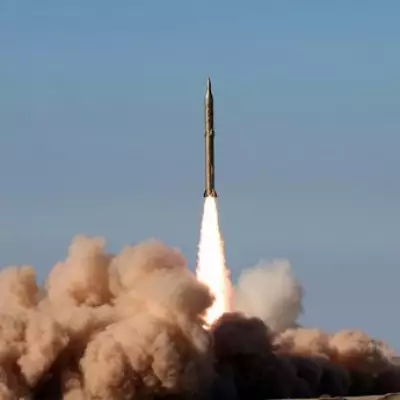
A senior aide to Russian President Vladimir Putin has issued a stark warning that no region of Russia can consider itself safe from Ukrainian long-range strikes, following successful attacks on military facilities located approximately 800 kilometres from the shared border. The declaration underscores a significant escalation in the ongoing conflict, highlighting Ukraine's enhanced capabilities to target deep within Russian territory.
Long-Range Strikes Target Aircraft Repair Facilities
Ukrainian forces confirmed they targeted two key facilities responsible for repairing Russian military aircraft in the Novgorod and Ulyanovsk regions, areas far removed from the primary frontline combat zones. These strikes inflicted damage on hangars, parking areas, and several aircraft stationed at the sites, which are crucial for maintaining Russia's fleet of military transport, cargo, and refuelling planes.
The attacks, which occurred on Monday, have prompted serious concerns within the Russian security apparatus regarding the expanding reach of Ukrainian military operations.

Sergei Shoigu Highlights Surge in Ukrainian Attacks
Speaking at a meeting of Russia's security council on Tuesday, Sergei Shoigu, the council's secretary and former defence minister, delivered a sobering assessment of the threat. He revealed that Ukrainian aerial strikes on Russian infrastructure increased nearly fourfold in 2025, with more than 23,000 attacks recorded during the year.
Shoigu emphasised that Ukraine's drone technology has advanced to a level where "no Russian region can feel safe," explicitly naming the Ural region, situated over 1,500 kilometres from the border, as being in the "immediate danger zone." His comments were made during the council meeting held in the city of Yekaterinburg, located within the Urals.
International Developments Amidst the Conflict
Concurrently, several international developments are unfolding that intersect with the broader Ukraine-Russia war. South Korea is reportedly considering resuming imports of Russian crude oil and naphtha to address energy shortages, a move linked to potential easing of economic sanctions. The country had halted such imports following Russia's 2022 invasion of Ukraine.
In European Union affairs, leaders are preparing to pressure Hungarian Prime Minister Viktor Orban to lift his blockade on a critical €90 billion EU loan to Ukraine. Orban has linked his approval to the restoration of oil shipments via the damaged Druzhba pipeline, stating, "No oil deliveries? No money." EU officials express frustration over his stance, accusing him of undermining collective support for Ukraine.
Additionally, a diplomatic row has emerged after a Polish court ordered the extradition of Russian archaeologist Alexander Butyagin to Ukraine, where he faces allegations of plundering historical artefacts in Crimea. Russia's foreign ministry has denounced the decision as having no legal basis and vowed to secure his return.
Escalating Military Dynamics
The recent long-range strikes and Shoigu's warnings signal a new phase in the conflict, where Ukrainian forces are increasingly capable of projecting power deep into Russian territory. This development challenges previous assumptions about the geographical limits of the war and raises the stakes for Russian defensive planning.
As the conflict continues, these advancements in drone warfare and long-range strike capabilities are reshaping the strategic landscape, forcing Russian authorities to confront vulnerabilities far beyond the traditional battlefronts in eastern Ukraine.