

The Enigma of London's Billionaire's Row
Just a short distance from some of the United Kingdom's most prestigious neighborhoods lies a street of extraordinary contrasts. The Bishops Avenue, frequently dubbed "Billionaire's Row" and "the most expensive street in the world," is home to more than sixty enormous mansions with a combined value reaching hundreds of millions of pounds. This remarkable London thoroughfare boasts a history intertwined with pop stars, royal families, oppressive regimes, and even murder.
A Street of Ghost Palaces
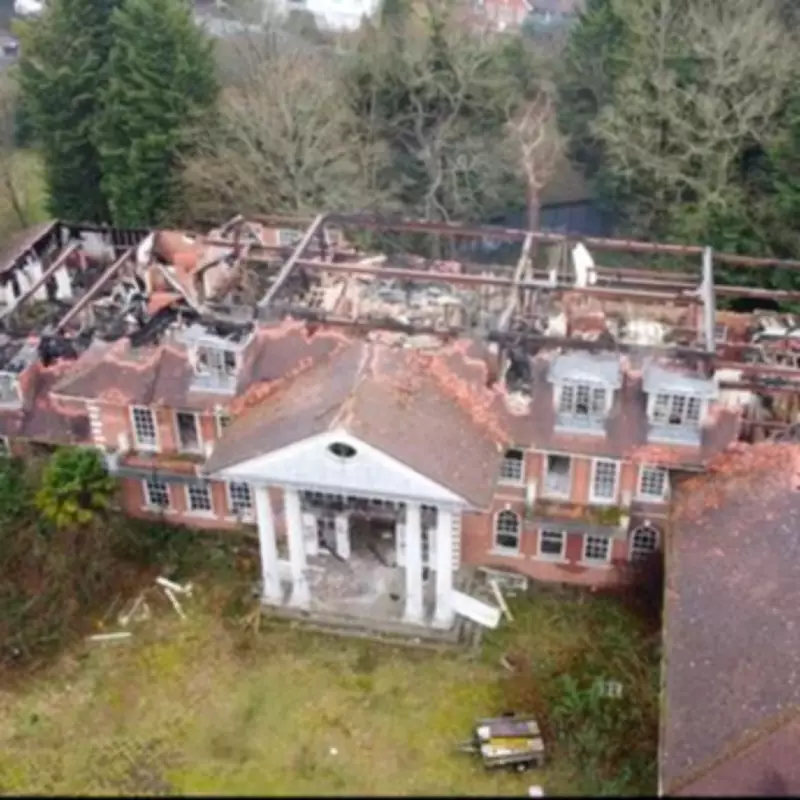
While the bustling life of affluent areas like Hampstead and Highgate continues nearby, many of the palatial homes on The Bishops Avenue stand empty and seemingly abandoned. These colossal structures, some the size of palaces, lie in varying states of dereliction and decay. The decline of these once-grand mansions presents a striking visual paradox amidst one of London's wealthiest enclaves.
The ownership of these properties is often shrouded in mystery. In numerous cases, title is registered to companies based in offshore tax havens such as the Bahamas, Panama, and the British Virgin Islands, making the true owners practically impossible to trace without forensic accounting expertise. Reports indicate that approximately sixty percent of the mansions are owned by these hard-to-scrutinise shell corporations.

Notorious Residents and Dark Histories
The street's history is both fascinating and shadowy. Among its known owners is the Saudi royal family, which purchased an imposing collection of mansions called "The Towers" in the 1980s as a potential refuge should Saddam Hussein's Iraq invade. Another property, Heath Hall, was owned by a Czech tycoon and has been rented by international celebrities including Justin Bieber and Salma Hayek.
More troubling connections have emerged recently. Following the outbreak of conflict in Iran and across the wider Middle East, reports have surfaced linking some mansions to the very top of the Iranian regime, including "supreme leader" Mojtaba Khamenei himself. British politicians are now demanding urgent investigations into concerns that the UK has become a haven for individuals connected to oppressive regimes to conceal their wealth.
The street has also been the scene of notorious crimes. Greek-Cypriot fashion tycoon Aristos Constantinou was shot dead at his home on New Year's Day in 1985 in what became known as the "Silver Bullets Murder," a case that remains unsolved. Another mansion was once the fortified home of author Salman Rushdie, who lived there under twenty-four-hour police protection after Iran issued a fatwa against him.
From Sultans to Squatters
The Bishops Avenue earned its "Millionaire's Row" moniker as early as the 1930s. Early residents included sugar magnate William Lyle and the Sultan of Brunei, once considered the world's richest man. Other notable figures associated with the street include a former Lebanese prime minister, the last king of Greece Constantine II, and publisher Richard Desmond.
Yet for every known owner, many more remain hidden. One local property agent revealed to Business Insider that a Russian gentleman who owns property on the avenue "never leaves The Bishops Avenue" and "won't even go around the corner," suggesting that for some, the mansions serve as fortified hideaways rather than homes.
Some properties have faced dramatic fates. One mansion owned by a Nigerian politician was seized by squatters after his death in 2007 and subsequently burned down. Another was the scene of one of London's largest robberies in 2006, where approximately two million pounds worth of items were stolen. Meanwhile, a different mansion serves as accommodation for contestants on the BBC series The Apprentice, reportedly featuring eight bedrooms, nine bathrooms, and a seventeen-million-pound valuation.
Transformation and Continued Secrecy
While many mansions languish in ruins, others are undergoing transformation. Hammerson House opened as a care home in 2021, replacing one of the huge properties. A few doors away, another luxury care home complex with ninety-three flats is scheduled to open in 2025. The Towers, the Saudi royal family's former holdings, have been sold to a developer with plans to convert them into luxury apartments.

Recent visitors describe an eerie atmosphere. One journalist noted that "so few people now live on The Bishops Avenue" that inhabitants are hard to find, with many gates "firmly shut" and the only regular activity being private security guards patrolling around the clock. Another visitor last month observed that "some of its glamorous past is firmly in the rear-view mirror," with massive properties standing empty in a beautiful part of the capital.
Luxury property consultant Trevor Abrahmsohn perhaps best captured the street's essence, telling The Sunday Times: "The Bishops Avenue is so interesting that you could say if it didn't exist it would need to be invented. A house starts off being owned by the Savile Row-tailored businessmen with posh voices, and ends up being run by the Mujahideen." This statement underscores the extraordinary journey of these properties from symbols of extreme wealth to enigmatic monuments of global capital flows and hidden power.





