Former Governor Urges Prime Minister to Adopt Direct Approach in China Talks
Lord Chris Patten, the final British governor of Hong Kong, has publicly advised Prime Minister Sir Keir Starmer to communicate with absolute candour during his forthcoming diplomatic mission to China. Lord Patten emphasised that the Prime Minister should refrain from excessive diplomatic caution and must articulate his genuine perspectives without reservation when engaging with Chinese leadership.
A Call for Frank Dialogue on Sensitive Issues
In a detailed interview with the Press Association, Lord Patten criticised what he described as a fundamentally flawed premise underlying British foreign policy towards China. He argued against the notion that commercial relations necessitate avoiding any statements or actions that might displease Beijing, dismissing this approach as "complete bilge". The veteran statesman insisted that constructive business relationships can be maintained alongside honest political discourse.
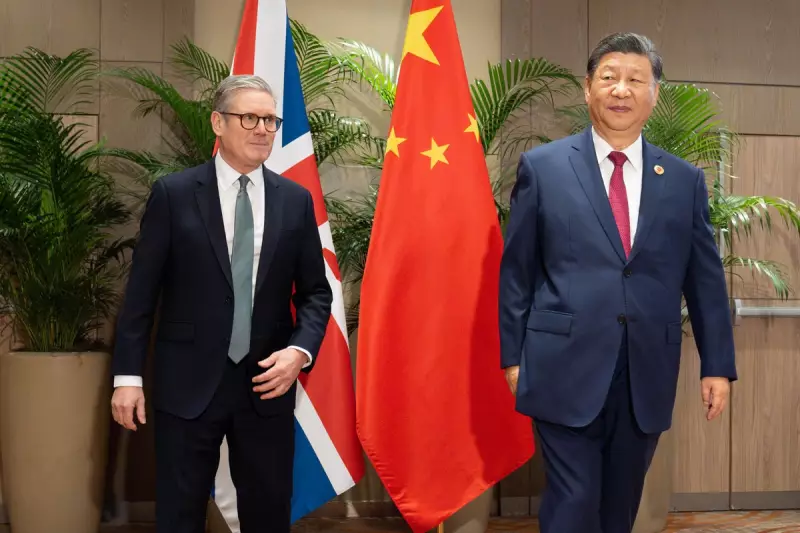
Sir Keir Starmer's visit represents a significant effort to rebuild Sino-British relations, which experienced considerable strain during the latter period of Conservative governance. A Downing Street source has characterised the government's strategy as a "hard-headed, grown-up approach" designed to establish a "steady, consistent course" with Beijing. The diplomatic journey coincides with the recent approval for a new Chinese embassy in London and will include accompanying business leaders seeking enhanced trade opportunities.

Specific Concerns Requiring Prime Ministerial Attention
Despite the focus on economic collaboration, Lord Patten highlighted several pressing matters that demand the Prime Minister's attention during discussions with President Xi Jinping. These include:
- Alleged Chinese espionage activities targeting the United Kingdom
- The ongoing treatment of the Uighur minority population
- The prolonged imprisonment of Jimmy Lai, the British national and Hong Kong pro-democracy campaigner
Mr Lai, aged 78, has been detained for over five years under Hong Kong's national security legislation, with extensive periods spent in solitary confinement. Lord Patten asserted that this case should feature prominently in diplomatic conversations, stating bluntly that failure to raise it would be "pathetic". He cautioned against treating such serious concerns as peripheral agenda items, stressing that meaningful dialogue requires demonstrating genuine parliamentary and public concern.
Political Context and International Precedents
The Foreign Office recently summoned the Chinese ambassador following Mr Lai's conviction on sedition and conspiracy charges, with Foreign Secretary Yvette Cooper demanding his "immediate release". Meanwhile, former Conservative leader Sir Iain Duncan Smith, himself sanctioned by Beijing, has advocated for cancelling the Prime Minister's visit entirely as a protest measure.
Lord Patten expressed support for the diplomatic mission but urged against excessive apprehension about causing offence. He referenced historical precedent, noting that British exports to China accelerated significantly following Prime Minister David Cameron's controversial 2012 meeting with the Dalai Lama, despite Beijing's initial displeasure.
The former governor pointed to Canadian Prime Minister Mark Carney's recent successful visit as a potential model, suggesting Sir Keir might benefit from consulting his Canadian counterpart about engaging with the current Chinese administration. Mr Carney secured tariff reduction agreements during his trip while characterising Beijing as an increasingly stable international partner compared to the United States under President Donald Trump.
Cautious Optimism with Clear-Eyed Realism
While advocating for improved UK-China relations, particularly given global geopolitical uncertainties, Lord Patten offered a characteristically vivid metaphor: "It is dim sum we should consume, but with a very long spoon." He warned against unrealistic expectations, noting that China has historically demonstrated willingness to disregard international agreements when convenient.

The central message remains unambiguous: the Prime Minister should pursue constructive engagement while maintaining principled positions, recognising that authentic diplomacy requires speaking truthfully even when addressing difficult subjects. As Lord Patten concluded, successful statecraft involves acknowledging differences while seeking mutually beneficial relationships grounded in realistic assessments rather than diplomatic fiction.