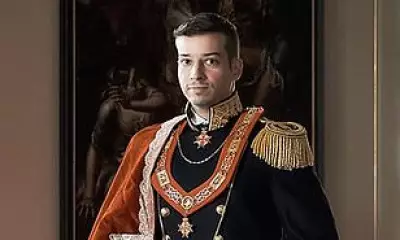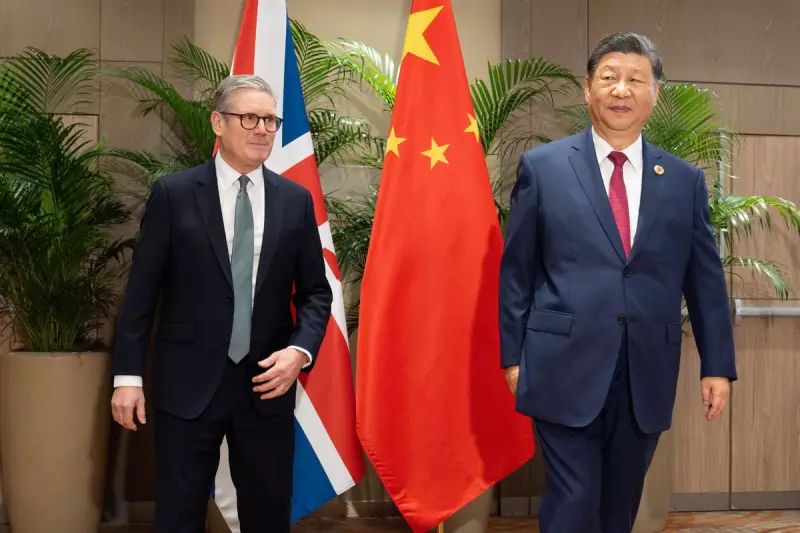
Former Hong Kong governor Lord Chris Patten has delivered a stark warning to Prime Minister Keir Starmer ahead of his diplomatic mission to Beijing, declaring it would be "pathetic" not to confront Chinese leaders over the imprisonment of British national Jimmy Lai.
Diplomatic Courage Required
In a forthright interview with the Press Association, Lord Patten urged the Prime Minister to abandon any tendency to "lean over backwards" to avoid offending Chinese sensibilities during his crucial visit. The last British governor of Hong Kong dismissed what he described as the "complete falsehood" underpinning current UK-China policy - the notion that commercial interests require diplomatic silence on contentious issues.
"The Chinese do business on exactly the same basis as everybody else," Lord Patten asserted, characterising the prevailing diplomatic caution as "complete bilge." His comments come as Sir Keir Starmer prepares to embark on his first major China visit as Prime Minister, attempting to rebuild relations following years of Conservative-era tensions.

Pressure Points and Priorities
The Prime Minister's itinerary includes meetings with Chinese leadership alongside British business representatives seeking improved trading relations with the Asian superpower. However, Lord Patten insists that commercial considerations must not overshadow fundamental human rights concerns.
"If he doesn't raise the Jimmy Lai case, he's been pathetic," Lord Patten stated unequivocally. He emphasised that Lai's situation - involving over five years' detention, much in solitary confinement, under Hong Kong's national security laws - should represent "one of the first things" addressed in Beijing discussions.
The former governor warned against tokenistic diplomacy, noting: "What will not persuade them is if it becomes the 'oh, by the way' issue in meetings where you don't actually raise something until the end as you're going out, just so you can tell the press you did it."
Broader Context of UK-China Relations
Sir Keir's visit follows recent approval for a new Chinese embassy in London and occurs against a complex geopolitical backdrop. The Prime Minister's office has characterised the approach as "a hard-headed, grown-up" strategy aiming for "steady, consistent" engagement with Beijing.
Nevertheless, domestic pressure continues mounting regarding multiple sensitive issues beyond Jimmy Lai's imprisonment. These include China's espionage activities, treatment of Uighur minorities, and broader human rights concerns that have strained bilateral relations in recent years.
Foreign Secretary Yvette Cooper previously summoned China's ambassador following Lai's sedition conviction last month, demanding his "immediate release." Meanwhile, China hawk Sir Iain Duncan Smith has advocated cancelling the Prime Minister's visit entirely in protest against Beijing's actions.
Historical Precedents and Future Directions
Lord Patten, who governed Hong Kong during its transition to Chinese rule in 1997, rejected arguments that diplomatic frankness damages commercial prospects. He cited David Cameron's 2012 meeting with the Dalai Lama - which provoked Beijing's ire - noting that British exports to China subsequently experienced unprecedented growth.
"You have to say with them, without being impolite, exactly what you think," Lord Patten advised. "They know we're different, but they want to have a reasonable relationship with us and, particularly given the state of the world with Trump, we should want to have a reasonable relationship with them."
The former governor pointed to Canadian Prime Minister Mark Carney's recent China visit as a potential model, suggesting Sir Keir might benefit from consulting his Canadian counterpart about engaging with Beijing's current leadership.
Cautious Engagement Recommended
While supporting diplomatic engagement in principle, Lord Patten offered characteristically vivid caution about managing expectations. "It's dim sum we should consume, but with a very long spoon," he remarked, urging the Prime Minister to "recognise the realities" of dealing with China.

"I don't think we should kid ourselves that if you're nice to China, they're more likely to obey the rules," Lord Patten observed. "They sign up to agreements and they break them whenever it's convenient. So I'm in favour of trying to have a better relationship with China, but we shouldn't think that there is some way of cosying up to China and getting them to do what you want them to do in perpetuity, because it doesn't happen like that."
The former Hong Kong governor's intervention establishes clear expectations for Sir Keir Starmer's China diplomacy, emphasising that principled engagement requires confronting difficult issues directly rather than relegating them to diplomatic sidelines.