UK Evacuation Flight from Oman Grounded Amid Technical Issues
The first UK government-chartered evacuation flight intended to rescue 180 British citizens stranded in Oman failed to take off as scheduled, with passengers reporting panic attacks and distressing scenes at Muscat International Airport. The flight, which was due to depart from Oman's capital at approximately 11pm on Wednesday, remained grounded overnight due to unresolved technical problems, according to the Foreign Office.
Passengers Describe Chaotic Scenes and Emotional Distress
An unnamed British passenger who was scheduled to travel on the ill-fated flight provided a harrowing account to Sky News. "The check-in process took about four hours due to technical issues," they explained. "We then got taken to the plane on a bus but had to stay on it for about one-and-a-half hours. No consular staff were present airside. They just left us. People started getting very agitated, banging windows, panic attacks."
The passenger further revealed that dozens of vulnerable individuals, including young children and families, were among those affected. It is understood that the flight has been rescheduled for Thursday, with those due to travel being accommodated in hotels overnight. The passenger claimed they were informed that "due to slow check-in and delays, the pilot had clocked his hours so needed to rest."
Government Response and Broader Consular Crisis
Labour leader Keir Starmer has pledged that two additional government-chartered flights will be deployed to rescue British nationals trapped in the region "in the coming days," with the possibility of operations commencing as early as Thursday. This development comes as the Foreign Office contends with what officials describe as the largest consular crisis since the Covid-19 pandemic.
Approximately 138,000 British nationals have registered their presence in the Middle East, with the vast majority—112,000—based in the United Arab Emirates. Most stranded individuals will need to secure seats on commercial flights to return home. Prime Minister Rishi Sunak informed MPs on Wednesday that over 1,000 British nationals arrived back in the UK on commercial flights from the UAE on Tuesday alone, with eight more commercial flights scheduled to depart the UAE on Wednesday.
Diplomatic and Operational Efforts Intensify
Foreign Secretary Yvette Cooper has met with executives from Emirates and British Airways in an effort to increase flight availability. Meanwhile, Foreign Office minister Hamish Falconer, who summoned the Iranian ambassador on Wednesday to condemn Iran's recent attacks, emphasized that officials are working around the clock to address the situation.
"We know that airspace closures and restrictions are making it extremely hard for British people to get home," Falconer stated. "It's why the government and our embassies are working intensively with airlines, travel companies and regional governments to find safe routes home for people." The Foreign Office has received over 4,000 calls since the conflict erupted over the weekend.
Personal Accounts from Returning Britons
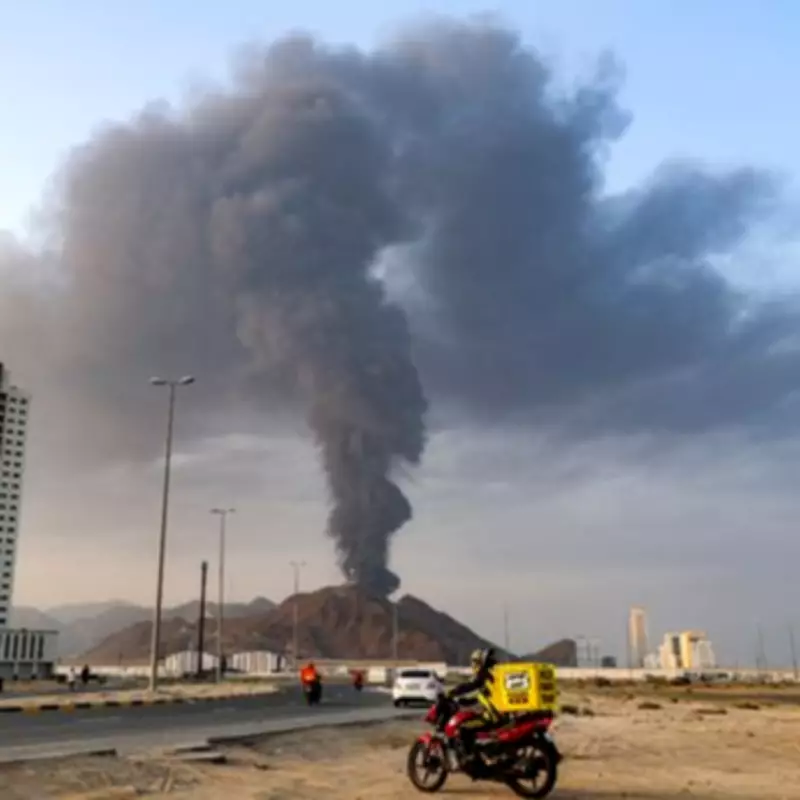
Among those successfully returning to the UK was 69-year-old pensioner Shelagh Knight from Bristol, who was reunited with relatives at Heathrow Airport on Wednesday after being stranded in Dubai for four days. Knight, who had been traveling since November on a birthday trip to New Zealand and Australia, described seeing missiles flying overhead from her hotel pool.
"It was the alarms at night that used to really freak us out," she recalled. "I was very scared. I was on my own, but I made some amazing friends. We call ourselves the hopeful survivors." Her son, Stephen Knight, 43, noted the psychological toll, saying, "I imagine it was quite scary, with the alarms going and not being able to relax, not having any sort of north star in terms of target flight."
Another couple, Lee Smart, 36, and partner Nina Luminati, 35, from Thornton Heath, south London, also arrived at Heathrow on Wednesday after spending the night sleeping on chairs in Dubai airport. They became stranded in the UAE while waiting for a connecting flight from India. "We were advised by our hotel to get to the airport yesterday morning and then it was just a bit of carnage," Smart said, though he praised the UAE government's handling of the situation.