Israeli Prime Minister Benjamin Netanyahu has downplayed the significance of a major step in the Gaza peace process, describing the move into a second ceasefire phase as largely symbolic. This stance casts immediate doubt on the implementation of the deal's most challenging components.
Symbolic Gesture or Genuine Progress?
Speaking late on Wednesday, Netanyahu told the parents of the last Israeli hostage whose remains are still in Gaza that the announcement of a new Palestinian governing committee was merely a "declarative move." This directly contradicted the portrayal of progress given by US envoy Steve Witkoff.
The parents of Israeli police officer Ran Gvili had pressed the Prime Minister not to advance the ceasefire until their son's remains were returned. Netanyahu assured them the return remained a top priority, following a promise noted by Israel's Hostage and Missing Families Forum.

While the announcement marked a formal step forward, it left critical questions unanswered. These include the makeup of an apolitical committee of Palestinian experts and an international "Board of Peace," the timing for deploying international forces, and the reopening of Gaza's crucial southern Rafah border crossing. Concrete plans for disarming Hamas and rebuilding the devastated territory also remain unclear.
On the Ground: Ceasefire Announcement Brings Little Relief
For Palestinians in Gaza, the news of a second phase has done little to alleviate daily suffering. More than 450 people have been killed since the initial halt in fighting was agreed in October, according to Gaza's Health Ministry on Thursday.
The ministry, run by Hamas but considered the most reliable source on casualties by the UN and independent experts, states the total Palestinian death toll now stands at 71,441 since the war began. UNICEF notes this includes more than 100 children. Israel disputes these figures but has not provided its own comprehensive count.
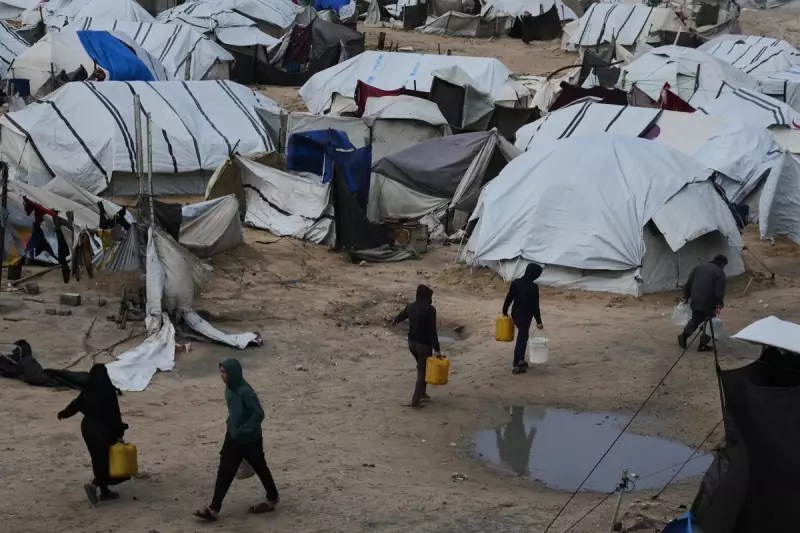
"We see on the ground that the war has not stopped, the bloodshed has not stopped, and our suffering in the tents has not ended," said Samed Abu Rawagh, displaced from Jabaliya to southern Gaza.
Another resident, Hamza Abu Shahab from Khan Younis, echoed the need for tangible change. "We were happy with this news, but we ask God that it is not just empty words," he told The Associated Press. "We need this news to be real... God willing, it won't just be empty promises."
Over 2 million people face a third winter of war since the Hamas attack on Israel on 7 October 2023, which killed around 1,200 people and saw 251 taken hostage. They now battle cold weather, storms, and severe shortages of aid and proper shelter.
The Daunting Road Ahead: Disarmament and $50bn Reconstruction
The second phase of the ceasefire must confront issues far thornier than the first. Central is the future of Hamas's military wing and the disarmament of the group, which has ruled Gaza for nearly two decades. Hamas has stated it will dissolve its government but has not clarified the fate of its armed forces or its civilian officials.
Israel insists Hamas must lay down its weapons, while the group's leaders reject calls to surrender, maintaining Palestinians have "the right to resist."
The scale of the reconstruction challenge is monumental. The United Nations estimates it will cost over $50 billion, a process expected to take years, with little funding pledged so far. The path to a stable, post-war governance structure for Gaza remains deeply uncertain, with Netanyahu's latest comments suggesting significant hurdles lie immediately ahead.