Navalny's Death: Exotic Frog Toxin Sparks Debate Over Russian Message
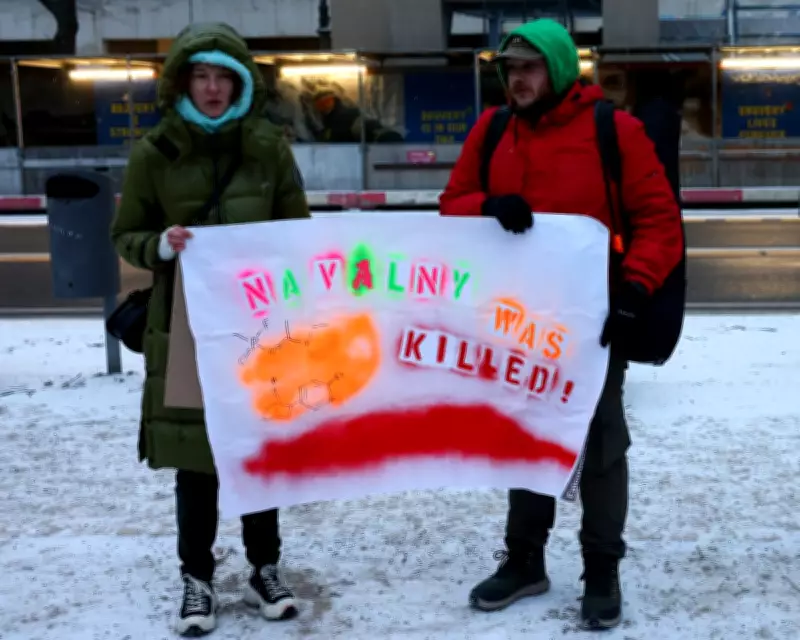
Supporters of the late Russian opposition leader Alexei Navalny gathered outside the Russian embassy in Berlin following revelations that he was killed using epibatidine, a potent toxin derived from poison dart frogs. The UK government has explicitly blamed the Russian state for Navalny's death, stating it alone possessed the means, motive, and opportunity to deploy this lethal substance during his imprisonment in a Siberian penal colony.
A Lethal and Unusual Choice of Weapon
Epibatidine is a powerful painkiller, estimated to be hundreds of times more potent than morphine, and it can induce fatal muscle paralysis. "Your chest wall doesn't expand and contract, so essentially you can't breathe and you're suffocated," explained Alastair Hay, emeritus professor of environmental toxicology at the University of Leeds. Compounding the danger, there is no known antidote for this poison.
While the toxin appears exotic, it is not entirely obscure. Researchers, including those in Russia, have long studied epibatidine and its synthetic analogues for potential pain relief in lung conditions, though its high toxicity has prevented therapeutic use. "Because its structure is known, it can be synthesised in the lab," noted Hay. "Competent chemists are not going to have a problem making it." In fact, such compounds can even be purchased online for research purposes.

Russia's History of Poisonings and Statecraft
Russia has a well-documented history of using poisons against perceived threats. Notable cases include:
- The 2006 polonium-210 poisoning of former KGB agent Alexander Litvinenko.
- The 2018 novichok nerve agent attack on ex-Russian agent Sergei Skripal and his daughter Yulia, which later claimed the life of Dawn Sturgess.
Russia is known to operate a poison factory in Moscow and employs highly skilled chemists, making the state a prime suspect in such incidents.
Was This a Covert Act or a Deliberate Signal?
Foreign Secretary Yvette Cooper has suggested the use of epibatidine was meant to convey a message: "Russia saw Navalny as a threat. By using this form of poison the Russian state demonstrated the despicable tools it has at its disposal and the overwhelming fear it has of political opposition."
However, experts offer differing interpretations. Alastair Hay pointed out that the poison's potency means only trace amounts would be present in the body, making detection difficult. The identification of epibatidine was only possible due to advanced instruments and samples smuggled out of Russia by Navalny's widow, Yulia Navalnaya.
Dr Brett Edwards, an expert in biological and chemical weapons at the University of Bath, argued that if the goal was simply to avoid detection, many other poisons or methods could have been used. "If they wanted to do it quietly, they wouldn't have used a toxin," he said, noting that Navalny was in a high-security prison where nothing enters without state approval. The choice of an unusual toxin, similar to the novichok poisonings, suggests a deliberate decision.
Dr Luca Trenta, an associate professor of international relations at Swansea University, contrasted this case with more overt signals like the Litvinenko or Skripal attacks. "This one, if it had not been for a fairly long effort at getting some samples and some testing out, it might not have been discovered," he said. Trenta speculated that Russia might have been testing epibatidine's use, showcasing capabilities if discovered, or simply employing a particularly gruesome weapon in revenge.
The Bottom Line: Political Murder or Strategic Signalling?
Ultimately, while the use of an exotic toxin raises questions about Russia's capabilities, Dr Edwards emphasised the fundamental reality: "It's intriguing, but in essence, it's just murder. It's just standard political murder. They've always done it. They'll keep doing it." The debate continues over whether this was a covert assassination or a macabre message from the Kremlin, but the outcome remains a tragic loss for political opposition in Russia.