Thousands of people across Denmark and Greenland have taken to the streets in a powerful display of defiance against former US President Donald Trump's renewed demands for the United States to acquire the vast Arctic island of Greenland.
‘Greenland is Not for Sale’: Protests Erupt in Copenhagen and Nuuk
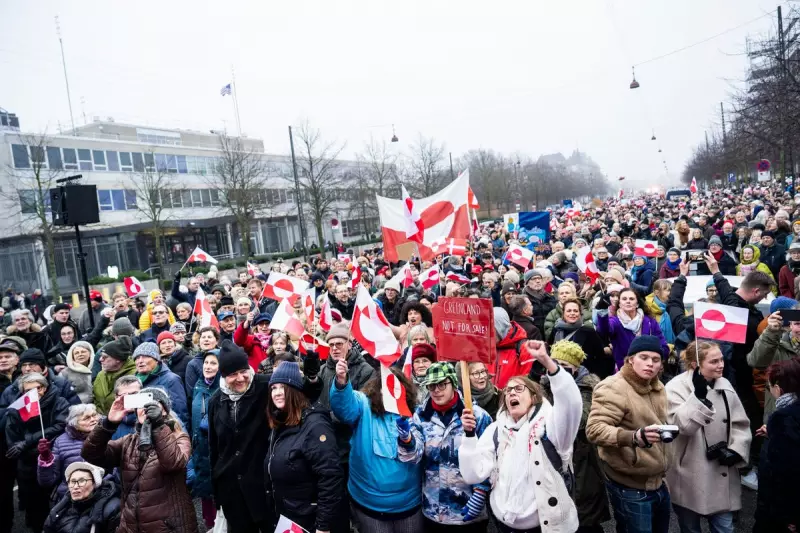
On Saturday 17 January 2026, the streets of Copenhagen echoed with chants of "Greenland is not for sale" as a massive crowd marched towards the US embassy. Protesters brandished the red-and-white flag of Greenland alongside placards bearing messages like "No means No" and "Hands off Greenland". In a pointed satire of Trump's iconic campaign apparel, some participants wore red baseball caps reading "Make America Go Away".
Simultaneously, in Greenland's capital, Nuuk, thousands more, led by Prime Minister Jens-Frederik Nielsen, marched on the US consulate. Their chants of "Kalaallit Nunaat" – the island's name in Greenlandic – underscored a fierce assertion of cultural identity and political autonomy. Naja Holm, a civil servant present at the Nuuk rally, captured the prevailing sentiment, stating, "I’ve come here today because I think it’s important to show that Greenland is not for sale. It is not a toy. This is our home."

A Deepening Diplomatic Crisis and Strategic Stakes
The protests are a direct response to Trump's persistent claims that Greenland is vital to US security due to its strategic location and significant mineral wealth. He has notably refused to rule out military intervention to secure American interests. This stance has ignited a serious diplomatic rift between the US and Denmark, both founding members of NATO, and drawn condemnation from across Europe.
In a significant escalation, European nations dispatched military personnel to Greenland this week at Denmark's request, signalling a firm commitment to the island's current political status. The territory, home to approximately 57,000 people, has been governed from Copenhagen for centuries. While it achieved substantial autonomy in 1979, Denmark still handles its defence and foreign policy and provides major financial support.
Public Sentiment and the Path Forward
Organisers estimated that over 20,000 people attended the Copenhagen protest alone—a figure comparable to the entire population of Nuuk. Julie Rademacher, chair of Uagut, an organisation for Greenlanders living in Denmark, expressed gratitude for the support, adding, "we are also sending a message to the world that you all must wake up."
Despite all parties in Greenland's parliament ultimately favouring independence, recent developments have solidified a preference to remain part of Denmark rather than be absorbed by the US. Public opinion in America also appears sceptical; a Reuters/Ipsos poll found only 17 per cent of Americans approved of Trump's efforts to acquire Greenland, with large majorities of both Democrats and Republicans opposing military annexation. Trump dismissed these findings as "fake."
The widespread demonstrations from the heart of Copenhagen to the shores of Nuuk deliver an unequivocal message: the future of Greenland will be determined by its people, not by real estate demands from abroad.