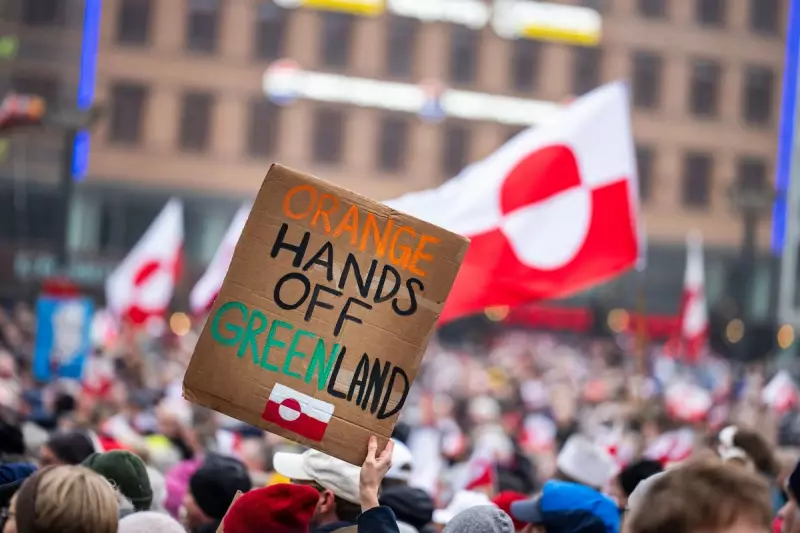
Thousands of people have taken to the streets in both Denmark and Greenland in a powerful display of opposition to former US President Donald Trump's renewed demands for the United States to acquire the vast Arctic island.
‘Greenland is Not For Sale’: Voices from the Protests
The coordinated demonstrations, held on Saturday 17 January 2026, saw crowds gather in the Danish capital of Copenhagen and Greenland's own capital, Nuuk. Protesters were united in their message, loudly chanting slogans including 'Greenland is not for sale' and 'Hands off Greenland'.
This public outcry directly challenges Trump's longstanding assertion that Greenland is vital to US security interests, primarily due to its strategic location and significant mineral wealth. The former president has notably refused to rule out the possibility of military intervention to secure control.

A Deepening Diplomatic Crisis for NATO Allies
The widespread protests underscore a serious and growing diplomatic rift between the United States and Denmark, both longstanding members of the NATO alliance. In a significant move reflecting the heightened tensions, European nations have dispatched military personnel to Greenland at the formal request of the Danish government.
Greenland, with a population of approximately 57,000 people, maintains a complex political relationship with Denmark. While its local parliament has historically favoured a path towards full independence, the prevailing sentiment strongly prefers remaining within the Danish realm rather than being absorbed by the United States.
What Happens Next for the Arctic Territory?
The situation places Greenland at the centre of an international geopolitical struggle. The mobilisation of European military support highlights the seriousness with which Copenhagen views Trump's threats. For the residents of Greenland, the protests are a clear assertion of their right to self-determination and a rejection of what they see as a colonial-style land grab.
This event signals a potential flashpoint in Arctic relations, testing alliances and raising fundamental questions about sovereignty, security, and the rights of indigenous populations in an increasingly contested region.