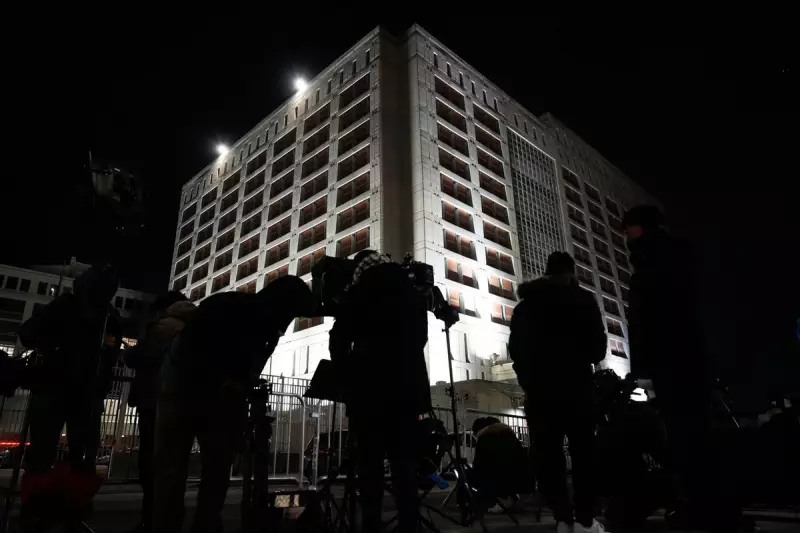
In a dramatic escalation of international legal action, captured Venezuelan President Nicolás Maduro faces a barrage of criminal charges in the United States, accused of presiding over a state-sponsored cocaine trafficking scheme. A newly unsealed indictment from the U.S. Justice Department paints a damning picture of a regime it labels "corrupt" and "illegitimate," allegedly fuelled by profits from flooding American streets with thousands of tons of narcotics.
The Charges and the Capture
Maduro, alongside his wife Cilia Flores, his son, and three others, was apprehended in a stunning military operation in Venezuela early on Saturday, 4 January 2026. The arrest sets the stage for a monumental courtroom battle in Manhattan, where U.S. prosecutors will seek to convict the long-time leader of the oil-rich nation.
Attorney General Pam Bondi declared on social media platform X that Maduro and his wife "will soon face the full wrath of American justice on American soil in American courts." The charges against Maduro himself are fourfold: conspiracy to commit narco-terrorism, conspiracy to import cocaine, and two counts related to possessing machine guns and destructive devices. These mirror an earlier 2020 indictment but the new filing adds charges specifically against his wife.

A video released by a White House account showed Maduro smiling as he was escorted by federal agents through a U.S. Drug Enforcement Administration office in New York. He is expected to be held at a federal jail in Brooklyn while awaiting trial.
A "Cocaine-Fuelled" State Enterprise
The indictment alleges that Maduro partnered with "some of the most violent and prolific drug traffickers and narco-terrorists in the world," including Mexico's Sinaloa Cartel and the Tren de Aragua gang. The U.S. claims this partnership allowed for the shipment of up to 250 tons of cocaine to pass through Venezuela annually by 2020, using go-fast boats, fishing vessels, container ships, and planes from clandestine airstrips.
In exchange for providing "law enforcement cover and logistical support," high-ranking Venezuelan officials, including Maduro and his family, allegedly received substantial profits. The document states Maduro allowed "cocaine-fueled corruption to flourish for his own benefit, for the benefit of members of his ruling regime, and for his family members."
Allegations of Violence and Bribery
The accusations extend beyond trafficking into extreme violence and systemic bribery. Maduro and his wife are accused of ordering kidnappings, beatings, and murders of those who crossed their drug operation, including a local drug boss in Caracas.
Furthermore, Flores is alleged to have accepted hundreds of thousands of dollars in bribes in 2007 to arrange a meeting between a major drug trafficker and Venezuela's National Anti-Drug Office director. This led to a corrupt deal involving monthly bribes and payments of roughly $100,000 per cocaine-laden flight for safe passage, with a cut allegedly going to Maduro's wife.
The case also references the 2015 convictions of Flores's nephews, who were recorded discussing sending "multi-hundred-kilogram" cocaine shipments from Maduro's "presidential hangar." They were sentenced to 18 years but released in a 2022 prisoner swap.
A "Law Enforcement Function"
U.S. officials have framed the extraordinary military raid to capture Maduro as an operation in support of the Justice Department. Secretary of State Marco Rubio described it as "basically a law enforcement function," where the "Department of War supported the Department of Justice." He emphasised that Maduro was a fugitive with a $50 million bounty on his head.
This unprecedented case now moves to the courtroom, testing the reach of U.S. justice against a sitting head of state accused of turning his nation into a narco-state. The world watches as the legal proceedings unfold in Manhattan, with profound implications for international law, diplomacy, and the global fight against drug-fuelled corruption.