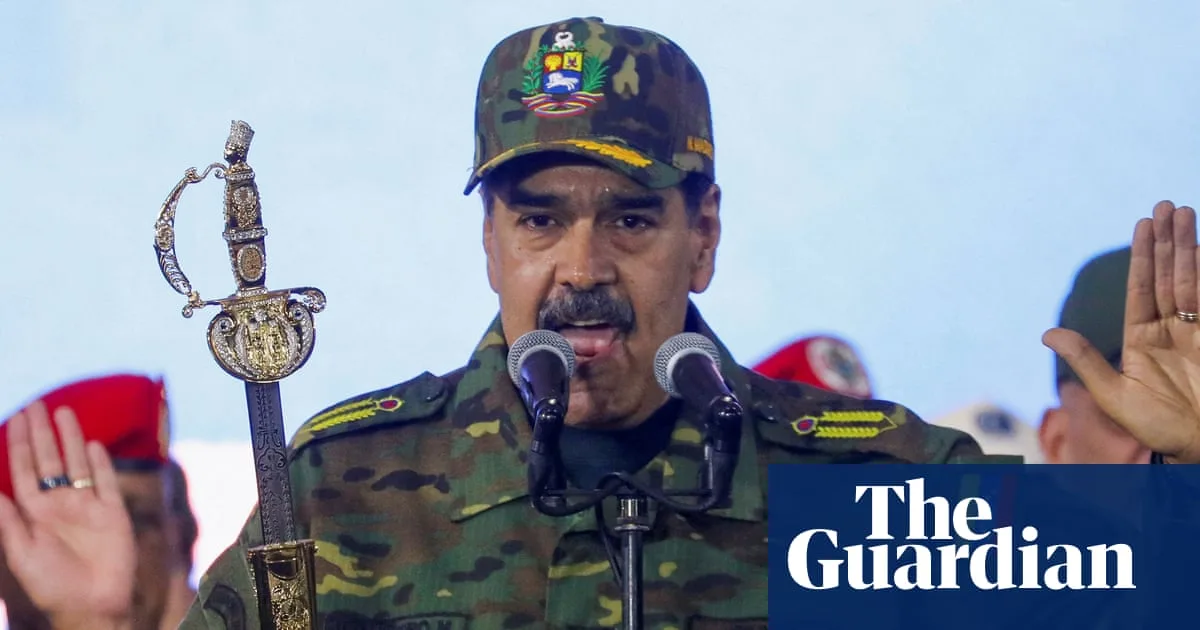
In an unprecedented military and intelligence operation, the United States has captured Venezuelan President Nicolás Maduro and his wife, charging them with conspiracy to commit narco-terrorism. The dramatic move, months in the planning, marks a severe escalation in Washington's long-running campaign to oust the socialist leader and places the future of Venezuela's vast oil reserves and its 30 million citizens in sharp focus.
The Surface Story: Narcotics and a $50 Million Bounty
The immediate justification for the capture centres on allegations of drug trafficking. Former US President Donald Trump has repeatedly accused Maduro of flooding America with narcotics and criminals, labelling him the head of a 'narco-terrorist' organisation. A $50 million (£37 million) bounty was placed on Maduro's head, culminating in charges being filed against him and his wife on Saturday for their alleged role in the conspiracy.
Since September, a significant US military force in the Caribbean—the largest since the Cold War—has been targeting vessels suspected of drug trafficking, hitting 35 boats and killing at least 115 people. The operation to apprehend Maduro, dubbed 'Operation Absolute Resolve', was monitored by Trump and CIA Director John Ratcliffe from Mar-a-Lago on January 3.
The Deeper Current: Oil, Geopolitics, and a Decades-Long Rift
Beneath the narcotics allegations lies a potent geopolitical struggle centred on Venezuela's oil reserves, the largest of any nation. Maduro has long claimed Washington seeks control of this resource, a charge given weight by Trump's statement that the US will now be 'strongly involved' in Venezuela's oil industry. Trump asserted the nation 'stole' it from the US and that American oil giants would fix infrastructure and 'start making money'.
Relations between the two countries began deteriorating when socialist Hugo Chávez took power in 1999, forging closer ties with US adversaries like Cuba, Iran, and Russia. The rift deepened when Maduro succeeded Chávez in 2013, inheriting an economy in freefall characterised by hyperinflation, food shortages, and poverty. His government has been accused of rigging elections, imprisoning rivals, and carrying out extrajudicial killings.
An Unprecedented Move With a Historical Parallel
While the capture of a sitting head of state raises serious questions of international law, it bears striking resemblance to another US intervention. In 1989, Washington accused Panamanian leader Manuel Noriega of drug-trafficking. The subsequent 'Operation Just Cause' invasion led to Noriega's surrender, trial in Miami, and a 40-year prison sentence for trafficking and racketeering.
What Happens Next for Venezuela?
The immediate future is fraught with uncertainty. Maduro and his wife will face charges in a New York court. President Trump has declared the US 'ready' to stage a second, 'and much larger' attack on Venezuela if necessary and is 'not afraid' of putting boots on the ground. The US intends to 'run' Venezuela until a 'safe, proper and judicious transition' is achieved, though details of this governance plan remain scarce.
For the people of Venezuela, already enduring an unimaginable humanitarian and economic crisis, this dramatic intervention introduces a new and volatile chapter. The ultimate impact on the nation's sovereignty, its oil-fuelled economy, and its populace remains to be seen.




