
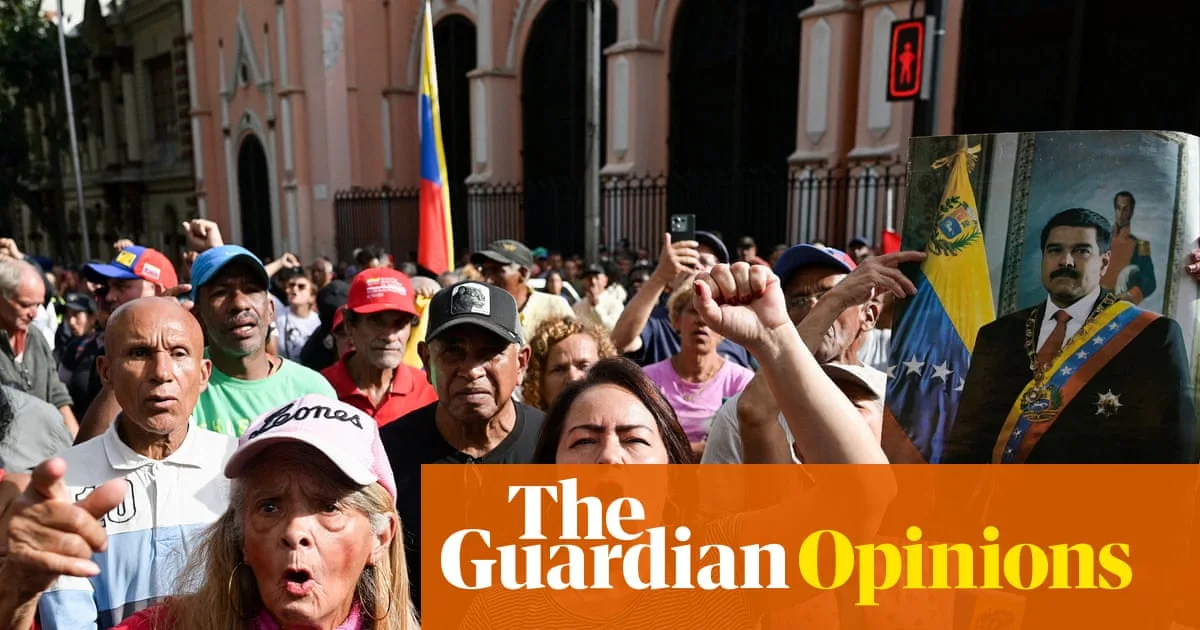
The US takeover of Venezuela under President Donald Trump has been described as a blatant violation of international law, with critics noting a lack of any serious attempt to justify the intervention. Unlike the Iraq war, where there were at least concerted efforts to justify unilateral action, the current operation is framed purely in terms of US interests. Defence Secretary Pete Hegseth stated that Maduro “effed around and found out”, while Trump declared the US would “run Venezuela” and have a presence there “as it pertains to oil”.
The charges against Maduro, including narco-terrorism and conspiracy to possess machineguns, are seen as insufficient to justify invasion and abduction. Critics point out that Trump has pardoned others convicted of drug offences, such as former Honduran president Juan Orlando Hernández and Ross Ulbricht, undermining the seriousness of the allegations. The coup is viewed not as an act of law enforcement but as a demonstration that the US is above the law, able to act with impunity and kill innocents without consequence.
International responses have been weak and contradictory. UK Prime Minister Keir Starmer said the situation is “fast moving” and that he will “establish all the facts”, even as Maduro was paraded in Brooklyn. EU Commission President Ursula von der Leyen stated she is “following very closely” and that any solution must respect international law, while EU foreign policy chief Kaja Kallas said the bloc is “closely monitoring”. British Foreign Secretary Yvette Cooper reiterated the UK’s rejection of Maduro’s legitimacy and support for international law, but without acknowledging that international law had already been violated.
The incident is expected to further erode the pretence of a rules-based international order, with implications for how leaders in Russia, China, and the UAE perceive the US. The lack of meaningful censure suggests that might makes right, and that the US can project its will anywhere without accountability.




