French President Emmanuel Macron has issued a sharp rebuke to U.S. President Donald Trump, dismissing calls for military intervention to forcibly reopen the strategically vital Strait of Hormuz. The critical maritime passage, which handles approximately one-fifth of global oil and liquefied natural gas supplies, has been effectively shut by Tehran following intense regional conflict.
Macron Highlights Diplomatic Path Over Military Force
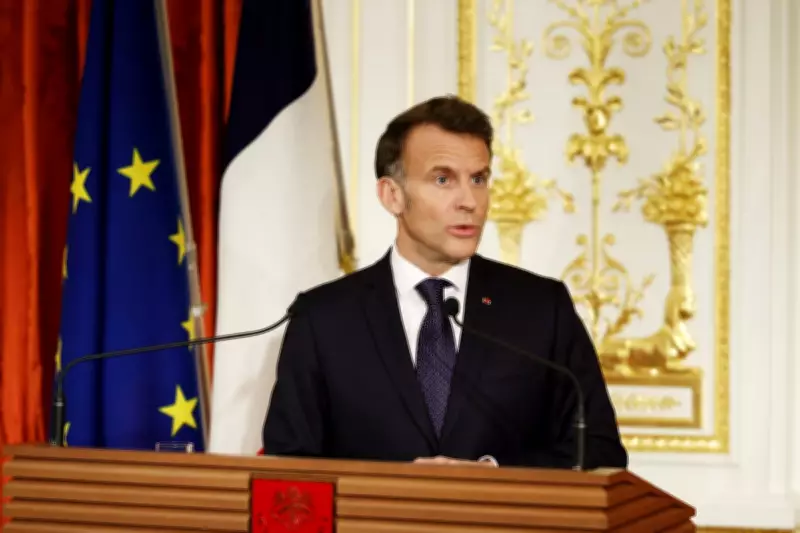
Speaking to reporters during a visit to South Korea, Macron explicitly rejected the idea of using military force to free the strait, a position he noted has been variably expressed by the United States. "This was never the option we have supported because it is unrealistic," Macron stated. "It would take forever, and would expose all those who go through the Strait to risks from the Revolutionary Guards but also ballistic missiles."
Instead, Macron has been working diligently with European and other international allies to build a coalition aimed at guaranteeing free passage through the Hormuz Strait once hostilities have ceased. He stressed that reopening this crucial artery for energy flows, fertilisers, and international trade can only be achieved through direct consultation and dialogue with Iran.

Thinly Veiled Criticism of Trump's NATO Comments and Inconsistency
When questioned about Trump's recent criticisms of NATO allies, Macron offered a pointed response. "I don't want to provide a running commentary of an operation the Americans have decided on their own with Israel," he said. "They can deplore the fact they're not being helped, but that's not our operation. We want peace as soon as possible."
Macron further emphasised the gravity of the situation, adding, "This is not a show. We're talking about war and peace... Let's be serious and not say one day the opposite of what we said the day before." While not explicitly naming Trump, the remarks were widely interpreted as a direct critique of the U.S. president's fluctuating statements.
On the subject of Trump's threats to withdraw the United States from the NATO alliance, Macron argued that the strength of such alliances lies in unspoken trust. "If you create doubt every day about your commitments, you hollow out its substance," he warned, highlighting concerns over the erosion of international security frameworks.
Background of Regional Conflict and Macron's Personal Rebuke
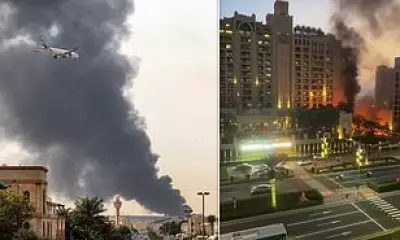
The closure of the Strait of Hormuz follows a period of severe regional turmoil that began on 28 February, marked by U.S. and Israeli strikes on Iran. These actions provoked retaliatory Iranian attacks on Israel, U.S. bases, and Gulf states, resulting in thousands of fatalities across the Middle East and creating a complex geopolitical standoff.
In a personal note, Macron also addressed Trump's past comments mocking him and his wife, Brigitte. The French leader described these remarks as "neither elegant, nor commensurate" with the serious moment facing global leaders, underscoring the deteriorating personal dynamics between the two heads of state.
Macron's firm stance underscores a significant transatlantic divergence on how to address the Hormuz crisis, with France championing diplomacy and coalition-building over military escalation, directly countering Trump's more confrontational approach.