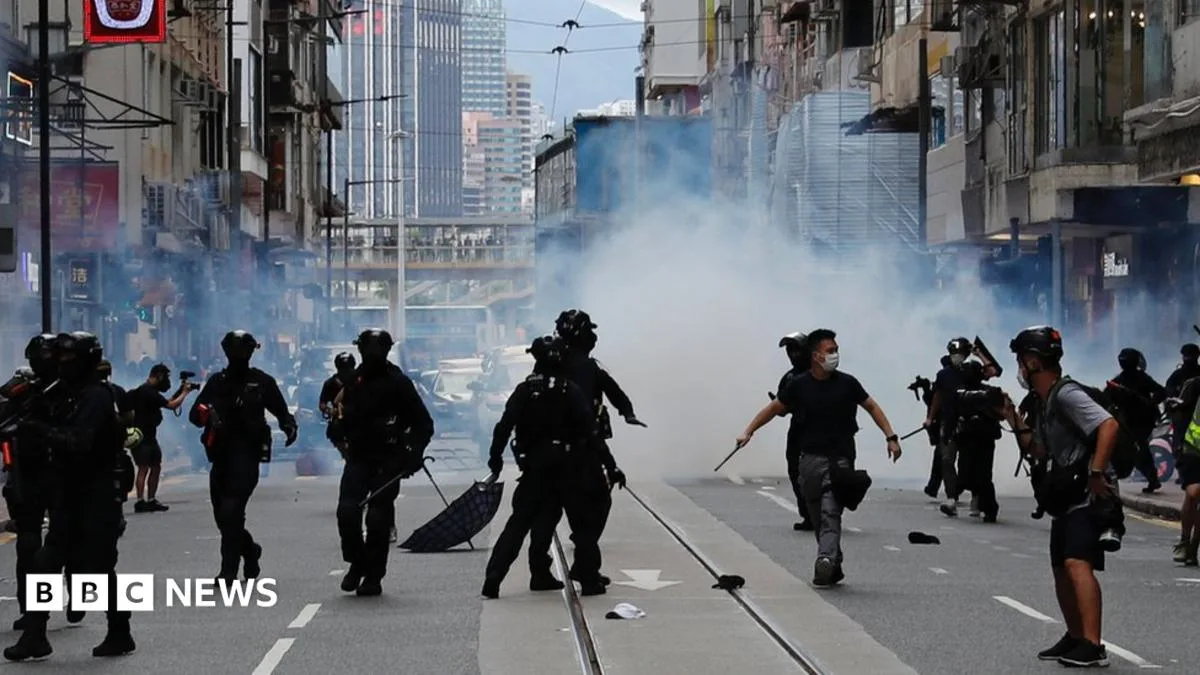
Prime Minister Boris Johnson has announced that the United Kingdom will alter its extradition arrangements with Hong Kong, with Foreign Secretary Dominic Raab expected to suspend the treaty later today. The move comes in response to Beijing's imposition of a controversial national security law on the former British colony, which introduces severe penalties for acts of subversion.
The extradition treaty, in place for over three decades, allows for the transfer of suspects between the UK and Hong Kong. However, British authorities now fear that individuals extradited to Hong Kong could be subsequently sent to mainland China, where they may face unfair trials. Canada and Australia have already suspended similar agreements with Hong Kong following the security law's enactment.
Johnson emphasised a calibrated approach, stating, 'I'm not going to be pushed into a position of becoming a knee-jerk Sinophobe on every issue.' He added that the UK must engage with China while being tough on certain matters. The UK has also offered residency and a path to citizenship to approximately three million Hong Kongers holding British National Overseas passports.
China has accused the UK of 'brutal meddling' in its internal affairs and warned of a 'resolute response' if the extradition deal is withdrawn. The tensions follow the UK's decision to ban Chinese tech firm Huawei from its 5G network and ongoing criticism of Beijing's human rights record in Xinjiang and Hong Kong.
The suspension is seen as a diplomatic step that allows for potential future reinstatement, though analysts deem a Chinese retreat unlikely. The UK seeks to avoid escalating a trade war, focusing instead on justice and rule-of-law concerns.