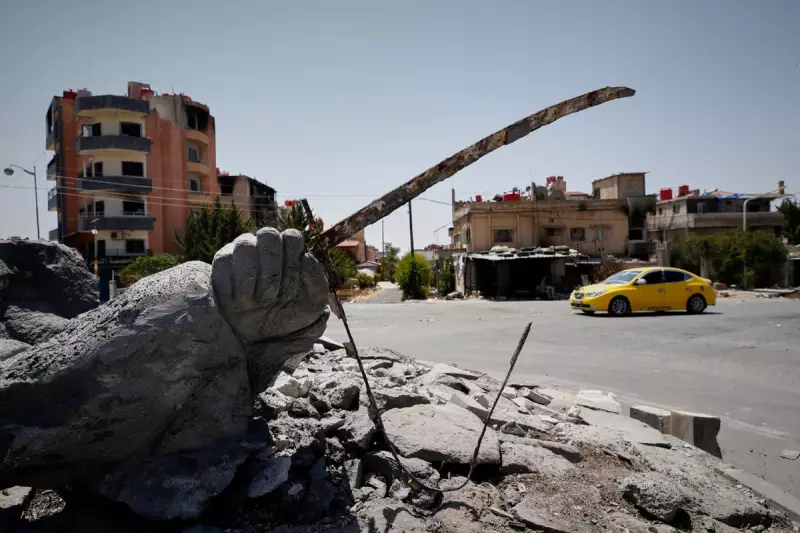
Human Rights Watch has issued a stark condemnation of the Syrian government, accusing it of a profound failure to deliver justice following a wave of sectarian violence in the southern province of Sweida last summer. The rights group's report, released on Thursday 15 January 2026, details a devastating series of clashes that resulted in hundreds of civilian casualties and widespread displacement.
Unlawful Killings and a Cycle of Revenge
In its investigation, Human Rights Watch documented 86 "apparently unlawful killings" of civilians during the fierce fighting in July. The victims were predominantly from the Druze community, with 67 Druze and 19 Bedouin civilians losing their lives. The violence erupted between government-backed armed Bedouin clans and local Druze militias, spiralling into a brutal cycle of reprisal attacks.
Eyewitnesses and survivors interviewed by the organisation described a harrowing scene. They reported that Syrian government forces not only failed to protect civilians but actively participated in the destruction of property and carried out summary executions. Armed Bedouin groups, operating with apparent state support, were accused of looting homes and kidnapping individuals. In response, Druze militias launched revenge raids, attacking and detaining Bedouin civilians.

A Setback for Damascus and a New Autonomy
The clashes represent a significant setback for President Ahmad al-Sharaa, who has struggled to consolidate his authority across Syria and win the trust of the country's sceptical minorities. The Druze, who maintained a degree of autonomy under the former regime of Bashar al-Assad by largely avoiding the civil war, now face an uncertain future.
The conflict began in mid-July when armed groups loyal to Druze spiritual leader Sheikh Hikmat al-Hijri clashed with local Bedouin clans. Government intervention effectively sided with the Bedouins, leading to hundreds of civilian deaths, most of whom were Druze. The United Nations estimates the violence displaced approximately 187,000 people by the end of the month.
In the aftermath, a large coalition of Druze militias has united under al-Hijri's leadership, creating a de facto autonomous zone in Sweida, a province that is home to the majority of Syria's Druze population. This area is reportedly backed by neighbouring Israel.
Calls for Accountability Amid Ongoing Violence
"The government’s acknowledgment of atrocities isn’t enough if those leading and directing abusive forces are shielded from justice," stated Adam Coogle, deputy Middle East director at Human Rights Watch. He warned that without senior-level accountability and security sector reform, Syria would remain trapped in cycles of violence.
While Damascus announced an investigation in September 2025, detaining several military and security personnel, progress appears stalled. A government committee missed its initial deadline and requested an extension until the end of the year to publish findings. As of mid-January 2026, no report has been made public, and no trials related to the Sweida violence have begun.
This stands in contrast to proceedings in Aleppo, where trials continued on Thursday for defendants accused of attacks during sectarian violence in the coastal provinces in March. That earlier conflict, which saw hundreds of Alawite civilians killed, highlights the pervasive nature of communal strife in Syria.
The failure to address the Sweida killings comes as the Syrian government prepares for a potential new military escalation against the Kurdish-led Syrian Democratic Forces in the northeast, further threatening stability and civilian safety across the war-torn nation.