Israel Targets Iranian Commanders in Beirut Hotel Strike
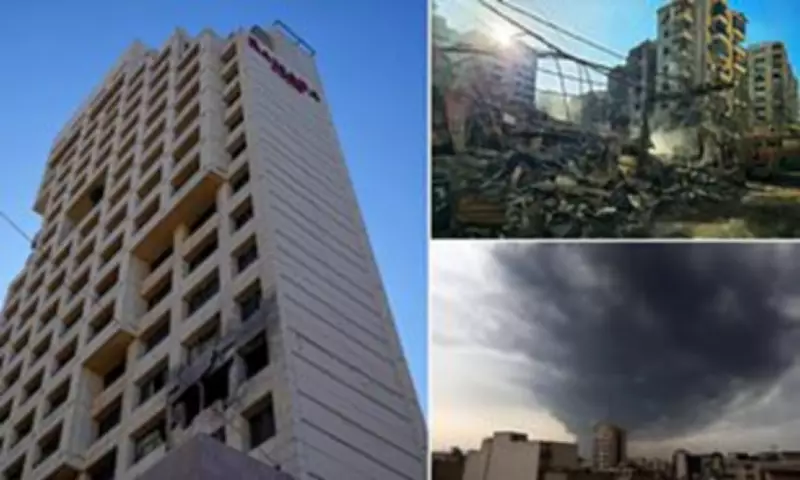
Israeli forces conducted a precision strike on a seaside hotel in central Beirut, targeting a group of Iranian commanders and killing at least four individuals. The attack, confirmed by Lebanon's health ministry, left the hotel with shattered windows and charred walls, as photographed by an AFP journalist. This escalation comes amid warnings from Iran's Revolutionary Guards that they could sustain an intense war for up to six months.
Netanyahu's Vow and Regional Fallout
Israeli Prime Minister Benjamin Netanyahu has pledged to continue the war against Iran with full force, aiming to eradicate the country's leadership. This follows joint US-Israeli raids last week that killed Supreme Leader Ayatollah Ali Khamenei, sparking the current regional conflict. Despite these threats, Revolutionary Guards spokesman Ali Mohammad Naini stated that Iran has so far deployed first and second-generation missiles but plans to use advanced long-range missiles in the coming days.
The conflict has now entered its second week, with repercussions spreading across the Middle East. Saudi Arabia intercepted drones targeting Riyadh's diplomatic quarter, while Kuwait reported an attack on fuel tanks at its international airport. This strike on Kuwait's aviation fuel storage has heightened fears over energy supplies, compounded by Kuwait's national oil company announcing a cut in crude production due to threats to the Strait of Hormuz, a critical transit route for global oil and gas.

Expanding Attacks and Infrastructure Damage
Tehran has accused the US and Israel of striking an oil depot in the Iranian capital, marking the first reported assault on Iran's oil infrastructure. The Israeli military confirmed targeting fuel storage facilities in Tehran used for military operations and launched new strikes across the city on Sunday. Additionally, Israel attacked a Hezbollah bastion in Beirut's southern suburbs after Lebanon was drawn into the war when the militant group retaliated with rockets and drones following Khamenei's death.
Lebanon's health ministry reports at least 294 deaths from Israeli air strikes over the past week, with Prime Minister Nawaf Salam warning of a looming humanitarian disaster. Inside Iran, damage to infrastructure and residential areas is mounting, with civilians reporting anxiety and a heavy security presence. Iran's health ministry claims at least 926 civilian deaths and 6,000 injuries, though these figures remain unverified independently.
International Reactions and Warnings
US President Donald Trump attended the return of six American service members killed in a drone strike in Kuwait, underscoring the war's widening reach. Iran's security chief Ali Larijani accused the Trump administration of attempting a Venezuela-like scenario to oust leadership, while judiciary chief Gholamhossein Mohseni Ejei warned Middle East neighbors supporting enemies of continued heavy attacks. Iranian President Masoud Pezeshkian stated Tehran would respond if neighboring countries are used as launchpads for attacks.
Tehran has vowed to target US assets in the region, with Saudi Arabia, Qatar, the United Arab Emirates, and Kuwait all reporting new attacks. Saudi Arabia intercepted over a dozen drones, Qatar faced missile strikes, and UAE forces engaged incoming projectiles. Video footage showed a projectile crashing at Dubai airport, and blasts were heard in Baghdad and Erbil.
Analysts and Diplomatic Stances
Analysts warn there is no clear path to ending the conflict, which US and Israeli officials suggest could last a month or longer. Trump has proposed rebuilding Iran's economy under a Washington-acceptable leader, an idea Tehran rejects. China and Russia have largely remained on the sidelines despite ties with Iran. China's top diplomat Wang Yi condemned the war, stating it should never have happened and emphasizing that strong force does not equate to strong reason, urging against a return to the law of the jungle.

Netanyahu claims Israel has near-total control of Tehran's skies, while Trump reiterated allegations of Iran's nuclear ambitions and suggested US troops might secure enriched uranium stockpiles. Separately, Trump blamed Iran for a deadly strike on an elementary school in Minab, which Iran attributes to Washington, with no independent verification available.