Ireland has issued a firm rebuke to the United States, declaring its position on the future of Greenland "will not change" despite new tariff threats from President Donald Trump. The US leader has warned of imposing punitive levies on several European nations, including the UK, unless a deal is struck for Washington to purchase the vast autonomous territory from Denmark.
Trump's Tariff Ultimatum Over Greenland
The controversy escalated when President Trump announced that the United Kingdom would face a 10 per cent tariff "on any and all goods" exported to the US starting from 1 February 2026. He stated this would rise sharply to 25 per cent from 1 June if no agreement is reached for the US to acquire Greenland.
In a significant broadening of the pressure campaign, President Trump declared the same measures would apply to a list of European allies: Denmark, Norway, Sweden, France, Germany, the Netherlands, and Finland. He cryptically noted these countries had "journeyed to Greenland, for purposes unknown," suggesting coordinated activity he views with suspicion.

Ireland's "Unacceptable and Regrettable" Verdict
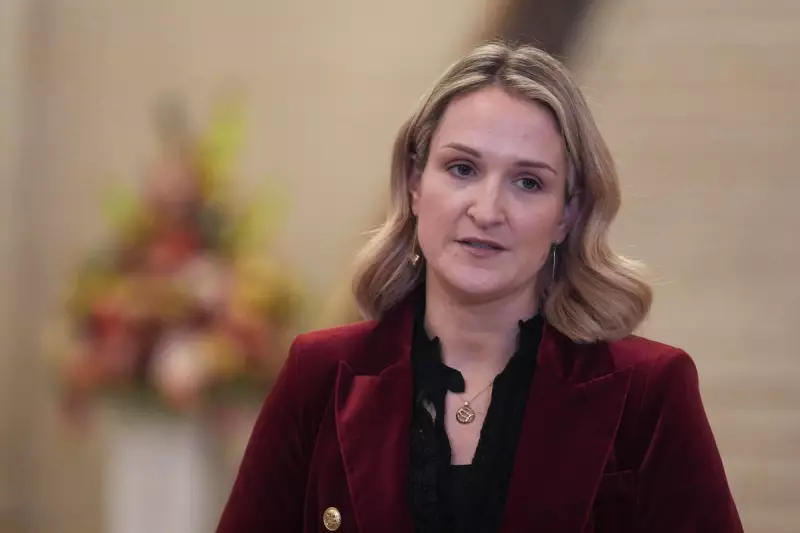
Responding to the announcement, Ireland's Minister for Foreign Affairs, Helen McEntee, delivered a stern condemnation. She labelled the US decision, which comes amid ongoing talks about Greenland's future, as "completely unacceptable and deeply regrettable."
Minister McEntee left no room for ambiguity regarding Ireland's stance. "Ireland has been crystal clear that the future of Greenland is a matter to be determined by Denmark and by the Greenlandic people," she asserted, emphasising this must align with "well-established democratic principles and international law."
She underscored the non-negotiable nature of respecting state sovereignty, calling it a "fundamental principle of the United Nations Charter" that ensures security for all nations, regardless of size or military alignment.
A Cornerstone of Irish Foreign Policy
Reiterating Ireland's deep-seated commitment to multilateralism, McEntee placed the UN at the heart of the nation's diplomatic approach. "A commitment to multilateralism, and the international legal order, with the UN... at its heart, is the cornerstone of Irish foreign policy," she stated, noting this has been unwavering since Ireland joined the global body in 1955.
The Minister also defended the rights of Denmark and Greenland, affirming they possess the "sovereign right to arrange military exercises with their partners, on their own territory." Ireland is now coordinating its response closely with EU and wider European partners.
Striking a conciliatory but firm tone, McEntee concluded that "the only way forward" to resolve US concerns is through "respectful engagement," pointing out that both Denmark and Greenland have repeatedly expressed openness to constructive dialogue on all issues.