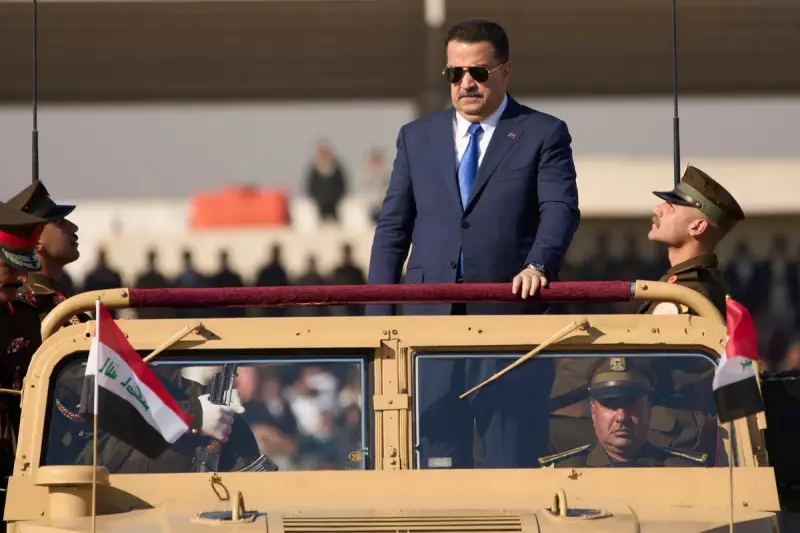
In a significant development for Iraq's political future, caretaker Prime Minister Mohammed Shia al-Sudani has stepped aside to allow his rival, former Prime Minister Nouri al-Maliki, to form the next government. The move follows intense post-election negotiations and highlights the deep complexities facing the nation.
A Political Bargain: Stepping Aside for a Rival
The decision was confirmed on Tuesday, 13 January 2026, by two senior Iraqi officials who spoke anonymously. Al-Sudani's Reconstruction and Development Coalition had secured 46 seats in the 329-seat parliament following November's election, making it the largest single bloc. By contrast, the coalition led by al-Maliki won 30 seats.
Both men were vying for the endorsement of the powerful Coordination Framework, a coalition of Iran-backed Shiite parties that was instrumental in bringing al-Sudani to power in 2022. According to the officials, the Framework could not decide between the two top contenders and left the final choice to the candidates themselves. A subsequent meeting between al-Sudani and al-Maliki resulted in an agreement for the sitting premier to withdraw.

The Looming Challenge: State Control of Weapons
The incoming administration, expected to be led by al-Maliki, will inherit a host of severe economic and political challenges. The most contentious issue remains the future of Iraq's armed factions, particularly the Popular Mobilization Forces (PMF). This coalition of mostly Shiite militias was formed over a decade ago to combat the Islamic State group but continues to operate with significant autonomy despite being formally placed under military command in 2016.
The United States has persistently pushed for the disarmament of Iran-backed groups, a politically fraught demand given their substantial influence. This debate has now drawn in Iraq's judiciary. The head of the Supreme Judicial Council, Judge Faiq Zidan, stated earlier this month that with terrorism defeated, "there were no longer a need for weapons outside the Iraqi state." He emphasised that a functional state requires "exclusive state control of weapons."
This judicial intervention has been met with starkly different reactions. While some political forces welcomed it as a step toward strengthening institutions, armed groups issued fierce rejections. The Iraqi Resistance Coordination group, which includes powerful factions like Kataib Hezbollah, stated its weapons were "a guarantee to defend the country" and any dialogue must wait until "after full sovereignty is achieved." A judicial official, also speaking anonymously, asserted the judiciary would provide legal cover for any future disarmament process, regardless of factional objections.
A More Assertive Judiciary in a Fraught Landscape
Analyst Ihsan Al-Shammari, a professor at the University of Baghdad, noted that the judiciary's recent actions—including enforcing constitutional deadlines for government formation—represent one of its most assertive interventions since 2003. This newfound judicial confidence adds another layer to Iraq's delicate political balancing act.
As al-Maliki prepares to take the helm once more, his government must navigate the competing demands of powerful militias, international partners, and a population weary of instability, all while under the watchful eye of a more active judiciary. The deal that cleared his path may have resolved an immediate political deadlock, but the far harder task of unifying state authority now begins.