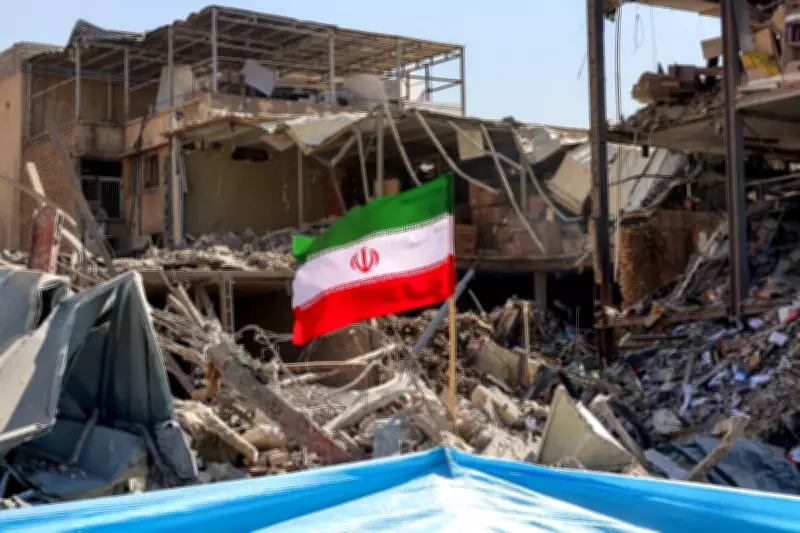
Iran's Calculated Defence Against US Military Might
Facing an increasingly impatient White House administration, Tehran is deploying a sophisticated counter-strategy centred on political resilience and regional escalation rather than conventional military confrontation. According to analysis by Bilal Y Saab, Iran's survival against the world's most powerful military hinges on making the conflict too costly politically and economically for Washington to sustain.
The Asymmetrical Battlefield
With overwhelming American military superiority evident through massive firepower deployment and targeted airstrikes against Iranian military and security infrastructure, Tehran recognises the impossibility of winning a direct shooting war. The United States under President Donald Trump seeks a rapid, geographically contained resolution that would force Iranian concessions on nuclear and conventional capabilities while avoiding broader regional instability.
Iran's response represents the exact opposite approach - embracing a long-term defensive posture that leverages its greater tolerance for casualties and willingness to endure prolonged conflict. The regime understands that Trump's domestic political constraints, including campaign promises of peace and congressional opposition to open-ended foreign interventions, create vulnerabilities that can be exploited through attrition.

Regionalising the Conflict
Tehran's primary strategic move involves deliberately expanding the conflict's geographical scope by drawing neighbouring Gulf Arab states into the confrontation. Following initial US-Israeli strikes, Iran immediately targeted oil fields, airports, and civilian infrastructure across the Arabian Peninsula - a calculated effort to destabilise international energy markets and pressure fragile Gulf governments.
The activation of Iran's regional network represents a core component of this escalation strategy. Hezbollah has been instructed to open a military front from southern Lebanon, while Houthi forces threaten renewed strikes against Israel and Red Sea shipping. Pro-Iranian Iraqi militias have vowed participation, creating multiple pressure points across the Middle East.
Economic Warfare and Strategic Chokepoints
Attacks near the Strait of Hormuz have heightened global concerns about potential closure of this critical maritime passageway, which carries approximately one-fifth of global seaborne oil shipments. Tehran's messaging to Washington emphasises that regime survival attempts will trigger widespread economic disruption and regional chaos.
This economic dimension represents Iran's most potent leverage, with the regime operating from the principle that its downfall would necessarily involve dragging other regional actors into economic turmoil. The strategy aims to compel Gulf Arab states, whose political stability depends on energy exports, to pressure Washington for de-escalation.
Strategic Limitations and Unpredictable Factors
Both American and Iranian approaches face significant constraints. US air power alone appears insufficient for regime change objectives, while Trump's hope for domestic Iranian uprising lacks evidence of substantial opposition mobilisation. Tehran's attacks on Gulf states risk backfiring by pushing these nations toward deeper military cooperation with Washington.
International dimensions further complicate the calculus. Chinese dependence on Middle Eastern oil creates Beijing's vested interest in preventing Hormuz closure, while NATO allies including Britain and France maintain Gulf military bases that could become involved should security deteriorate significantly.
Resource limitations present another critical factor. While the US and regional partners possess superior military assets, Iran's cheaper missile and drone technology forces expensive American interception efforts that could deplete regional missile defence inventories over time.
The Psychological Contest
Ultimately, this confrontation represents a psychological battle of wills more than purely military engagement. Iran's strategy depends on demonstrating greater staying power and casualty tolerance than Washington's political system can withstand. The conflict's trajectory remains influenced by countless unpredictable factors, including luck and unforeseen developments.

For now, both sides remain committed to their respective approaches - America pursuing rapid military resolution through overwhelming force, while Iran embraces protracted conflict designed to exhaust American political will through regional destabilisation and economic pressure tactics.