
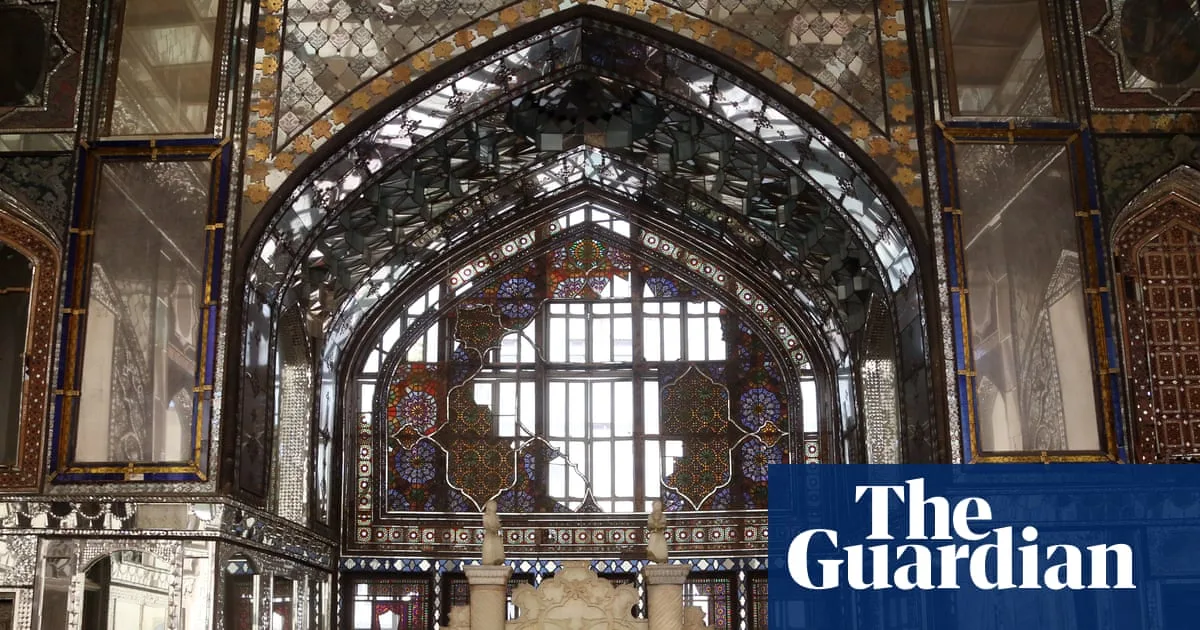
Iranian heritage sites, including the UNESCO-listed Golestan Palace in Tehran and the 17th-century Chehel Sotoon Palace in Isfahan, have been damaged during US-Israel bombing campaigns, according to local officials. The governor of Isfahan accused the US and Israel of a “declaration of war on a civilisation” after the attacks.
Video footage showed that Golestan Palace’s hall of mirrors was shattered, with shards of intricate mirrorwork scattered across the floor. Neither building was directly hit by a missile, but shock waves from nearby blasts and possible debris caused glass to break and tiles and masonry to fall.
UNESCO, which had communicated the coordinates of world heritage sites to all parties, expressed concern. Iran’s foreign minister, Abbas Araghchi, criticised UNESCO for not being more vocal, stating on social media: “Its silence is unacceptable.” He blamed Israel for bombing historical monuments dating back to the 14th century.
In Khorramabad, a strike hit the perimeter of Falak-ol-Aflak Castle, destroying the heritage department’s offices and adjacent museums, and injuring five staff members. The castle’s main structure was not damaged. In Sanandaj, the 19th-century Salar Saeed and Asef Vaziri mansions suffered damage to doors and stained-glass windows.
In Isfahan, Chehel Sotoon Palace was the worst affected, but broken windows and dislodged tilework were also reported at Ali Qapu Palace and several mosques around Naqsh-e Jahan Square. The Isfahan governor noted that damage occurred despite coordinates and blue shield signs being in place.
The US Committee of the Blue Shield stated that Iran’s historic sites “belong not only to the Iranian people, but to all humanity” and expressed disturbance over the damage. An Iranian geologist warned that Isfahan is vulnerable both from land subsidence and aerial attacks.




