Two More Iranian Women Footballers Granted Asylum in Australia Before Dramatic Last-Minute Reversal
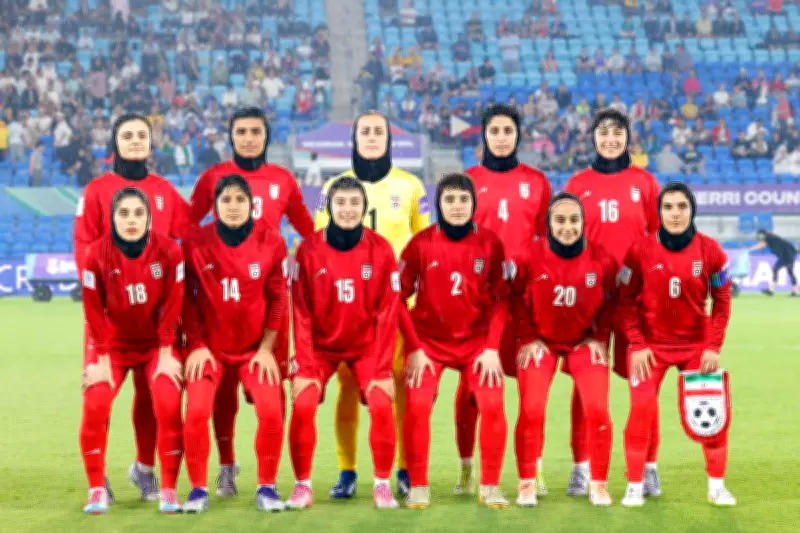
In a rapidly unfolding diplomatic and humanitarian situation, Australia has granted humanitarian visas to two additional members of the Iranian women's football delegation, bringing the total number of players and support staff offered asylum to seven. However, in a dramatic twist, one of the individuals changed her mind at the last minute and decided to return to Iran with the rest of the team.
Asylum Offers and a Sudden Change of Heart
Home Minister Tony Burke confirmed on Wednesday morning that a player and a support staff member had accepted the Australian government's offer of humanitarian visas, which include a pathway to permanent residency. This followed the granting of asylum to five other players just a day earlier. Mr Burke stated that he had prepared the necessary paperwork and was ready to execute the visas immediately for those who wished to stay.
"I made them the same offer that I made the five players the night before," Mr Burke said. "If they wanted to receive a humanitarian visa for Australia, which would have a pathway to a permanent visa, I had the paperwork ready and would execute that immediately."

According to reports from Guardian Australia, squad member Mohaddeseh Zolfi and support member Zahra Soltan Meshkeh Kar sought asylum before the team's scheduled departure on a flight to Kuala Lumpur on Tuesday night. However, in a surprising turn of events, one of the two individuals reversed her decision after speaking with teammates who had already left.
"One of the two who had made the decision to stay last night had spoken to some of the teammates who had left, and had changed her mind," Mr Burke told parliament. "In Australia, people are able to change their mind, people are able to travel. And so, we respect the context in which she has made that decision."
Safety Concerns and International Attention
The Iranian women's football team was in Australia participating in the Asia Cup tournament when war broke out in Iran, drawing significant international attention. The team had previously made headlines for not singing the national anthem before their opening match, a move that led Iranian state television to label them as "wartime traitors." This raised serious concerns about the safety of the players upon their potential return to Iran.
The decision to grant asylum followed days of appeals from Iranian advocacy groups within Australia and even from former US President Donald Trump, who publicly called on Canberra to offer protection to the players. Australian officials took extensive measures to ensure that the players were making informed decisions without any pressure.
Mr Burke emphasized that officials spoke individually with most team members at Sydney airport, informing them of their options before their departure. "What we made sure of was that there was no rushing and no pressure," the minister told reporters. "Everything was about ensuring the dignity of those individuals to make a choice."
After the woman who changed her mind contacted officials at the Iranian embassy, revealing the location of the delegation, Mr Burke immediately ordered the remaining members to be moved to a safe location. "I immediately gave the instruction for people to be moved, and that is being dealt with," he said.
Controversy and Protests
Mehdi Taj, the president of Iran's football federation, accused Australia of pressuring team members into seeking asylum, claiming that police intervened on the orders of the prime minister when the team attempted to leave the country. In contrast, Iran's head coach Marziyeh Jafari stated on Sunday that the players "want to come back to Iran as soon as we can."
The situation sparked emotional reactions from the Iranian community in Australia. Protesters gathered to demonstrate against the Iranian government, surrounding the players' bus in Gold Coast as they left their hotel for the airport. Many also appeared at Sydney airport on Tuesday evening as the team was transferred to the international terminal, as shown in television footage.

Prime Minister Anthony Albanese expressed sympathy for the players, telling a news conference on Tuesday, "Australians have been moved by the plight of these brave women. They're safe here, and they should feel at home here."
Future Implications and Family Concerns
Some players who considered staying in Australia raised questions about the possibility of helping their family members leave Iran. Mr Burke noted that permanent residents have rights to sponsor family members, but he acknowledged the challenges. "Obviously, when people are permanent residents, there are rights that they have in terms of sponsoring other family members," he said. "But all of it only becomes relevant if people can get out of Iran in the first place."
Ultimately, all team members who made it to the airport chose to return to Iran, with some discussing their options with family before declining the offer to stay. The team then departed for Kuala Lumpur en route to Iran. Their campaign in the tournament ended on Sunday, coinciding with the timing of US and Israeli airstrikes on Iran that resulted in the death of Supreme Leader Ali Khamenei.
The Iranian embassy in Malaysia confirmed that the remaining squad members would return to Tehran once Iran's airspace reopened, stating, "They want to return home." This complex situation highlights the delicate balance between humanitarian protection, personal choice, and geopolitical tensions.