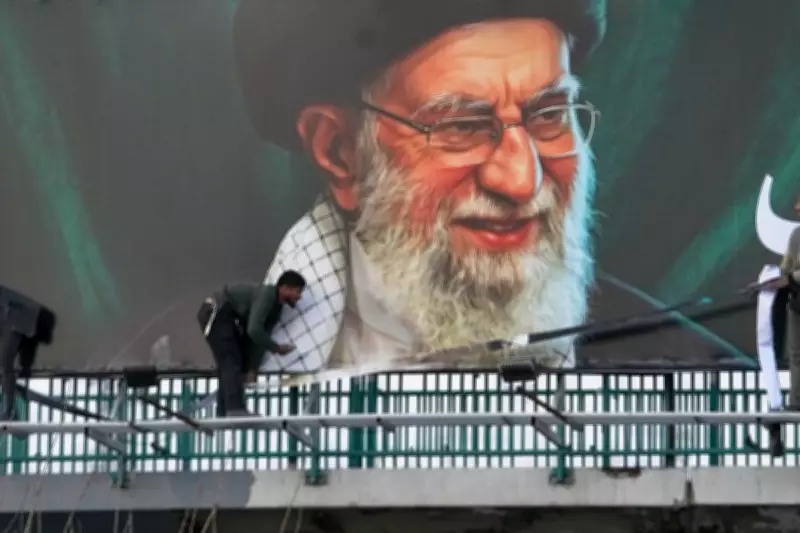
Iran War Could Trigger Regime Change, But History Questions Success
The latest US-Israeli bombings in Iran represent a significant escalation, with one stated objective being regime change. The current Iranian government, accused of domestic human rights abuses and international destabilization, has limited global allies. Many observers, particularly within the Iranian diaspora, view externally imposed political transformation as preferable to the status quo.
The Patchy Record of Imposed Regime Change
However, the historical record of forced regime change, especially by the United States, is profoundly mixed. Outcomes rarely align with initial plans, and long-term consequences are frequently catastrophic. Two immediate examples illustrate this pattern vividly.
Afghanistan and Iraq: Costly Failures

The chaotic 2021 withdrawal from Kabul, following two decades of conflict, demonstrated America's inability to permanently defeat the Taliban. This effort cost thousands of US and allied troop lives and tens of thousands of Afghan civilian deaths.
Similarly, the 2003 Iraq invasion, famously declared a "Mission Accomplished" prematurely, led to another decade of intense fighting. Stabilization efforts arguably continued until 2018 or beyond. The human cost was staggering, with estimates suggesting around 100,000 excess deaths by 2004. The subsequent instability allowed ISIS to establish its caliphate on Iraqi soil, prompting further US military intervention.
A Longer History of Unsuccessful Interventions
American attempts to impose political change have a much longer and equally troubled history. The 1961 Bay of Pigs invasion aimed at overthrowing Fidel Castro in Cuba failed spectacularly, resulting in executed CIA operatives and a humiliating prisoner exchange. Castro remained in power until his death in 2016.
Ironically, a 1953 US-British operation in Iran did succeed in overthrowing Prime Minister Mohammad Mossadeq after he nationalized the oil industry. This short-term "success" installed the authoritarian Shah, whose brutal repression directly contributed to the 1979 revolution that brought the current theocratic regime to power. Today, the Shah's son presents himself as a democratic alternative, highlighting history's complex ironies.
Broader Historical Lessons from Colonialism to the Cold War
Some might cite post-World War II Germany as a successful regime change. However, this involved a multi-generational military occupation, decades of war crime trials, and a nation split for over forty years as a Cold War frontline—hardly a replicable model.
Colonial-era examples from Africa and Asia show that externally imposed governments rarely survive once the occupying military force withdraws or loses its will to enforce control through violence. From the Dutch East Indies to British India, decolonization became inevitable.
The 1968 Prague Spring in Czechoslovakia, crushed by Soviet tanks, demonstrated that regime change only "works" as long as it is enforced by overwhelming force. By 1989, when Soviet appetite for enforcement waned, Eastern Europe transitioned peacefully to democracy.
A Failure to Learn from History
Current US leadership appears reluctant to heed historical warnings. They would benefit from recalling former Secretary of State Colin Powell's "Pottery Barn" rule regarding government overthrow: you break it, you own it. The present Washington perspective seems to assume that states can be broken with the hope that others will manage the aftermath. The historical record strongly suggests otherwise, indicating that the path to regime change in Iran, if pursued, is fraught with peril and likely unintended consequences.