Iran Vows Prolonged Defence as Trump Rejects Ceasefire Deal
Iran has declared it will defend itself for "as long as it takes" against the United States, following former President Donald Trump's insistence that he is not ready to agree to a peace deal to end the escalating Middle East conflict. The war, now entering its third week, has seen leaders on both sides signal a determination to continue hostilities, with diplomatic efforts suffering a significant blow.
Trump's Provocative Remarks and Iranian Defiance
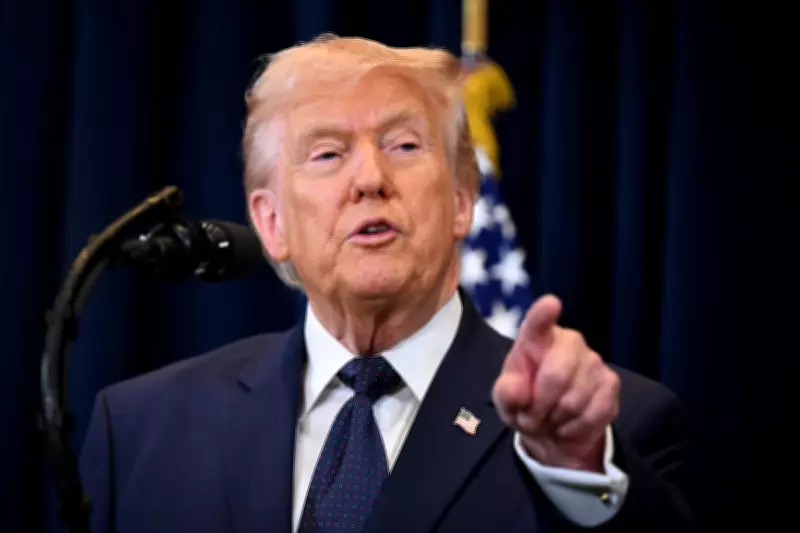
Trump claimed that Tehran was eager to negotiate a ceasefire but asserted the terms "aren't good enough yet." In a provocative statement, he boasted that the US might bomb targets on Iran's Kharg Island once more "just for fun," referencing US warplanes that "obliterated" military installations on the key oil island last Friday. This marked a sharp escalation from his previous stance of targeting only military sites.
Iran's Foreign Minister Abbas Araghchi swiftly countered, telling CBS News: "We never asked for a ceasefire, and we have never asked even for negotiation." He emphasised Iran's readiness to defend itself indefinitely, stating this would continue until Trump acknowledges the conflict as an illegal war with no victory. These exchanges have undermined attempts to halt a war that has spread across the region, resulting in over 2,000 fatalities, primarily in Iran and Lebanon.
Military Escalations and Global Energy Crisis
As missile and drone exchanges persisted over the weekend, Iran launched fresh attacks on Israel and Gulf countries, while Israel conducted "wide-scale" strikes on Iran. The conflict has plunged global energy markets into unprecedented chaos after Iran shut off the vital Strait of Hormuz, a chokepoint for about a fifth of the world's oil and gas supplies. The International Energy Agency described this as "the largest supply disruption in the history of the global oil market," with more than 600 ships trapped in the Red Sea.
Despite the turmoil, US Energy Secretary Chris Wright predicted the war would end within "the next few weeks," anticipating a swift rebound in supplies and lower prices. However, Iran's new Supreme Leader, Mojtaba Khamenei, has vowed to keep the strait closed, though Trump dismissed this, questioning Khamenei's survival after reports he was injured in a strike last month.
International Responses and Diplomatic Moves
In response to the blockade, Trump has called on affected countries to join efforts to reopen the Strait of Hormuz. Meanwhile, European Union foreign ministers are set to discuss expanding the EU's Aspides naval mission to include the strait, currently focused on protecting shipping against Houthi attacks in the Red Sea. French officials are also seeking to assemble a coalition to secure the passage once stability returns.
Iran has shown some openness to dialogue, with Araghchi noting that the country is willing to discuss safe passage for vessels with interested nations, though decisions rest with Iran's military. He mentioned that a group of vessels from various countries has already been allowed to pass securely.
UK's Role and De-escalation Efforts
The UK's Energy Secretary, Ed Miliband, confirmed the government is considering sending minehunting drones to the Middle East to address Iran's oil blockade. He told Sky News that working with allies to reopen the strait is a priority, with autonomous mine-hunting equipment under review. Miliband stressed that de-escalating the crisis is essential, as "the best and most conclusive way to get the strait reopened is to get this conflict to an end."
As the conflict rages on, with debris from airstrikes littering areas like Beirut's Haret Hreik, the international community faces mounting pressure to mediate and restore stability to a region teetering on the brink of further devastation.