

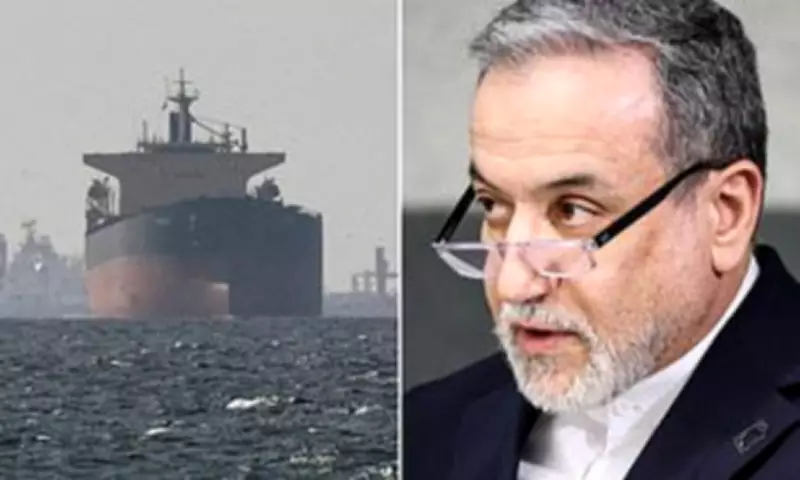
Iran Considers Safe Passage for Chinese-Linked Oil Tankers in Strait of Hormuz
Iran is reportedly evaluating a proposal to permit Chinese-linked oil tankers to traverse the Strait of Hormuz safely, just days after issuing warnings that passing ships would face attacks. An official from the regime confirmed today that China would be exempted from the economic hardships of the conflict, stating the strategic sea passage is 'only closed to tankers and ships belonging to our enemies'. This development follows urgent calls from former President Donald Trump for Britain and other nations to deploy warships to the strait to force its reopening.
Global Oil Trade and Strategic Implications
Asian economies constitute the primary buyers of oil from the Gulf region, with approximately 70 to 75 percent of Gulf crude exports destined for countries such as China, India, Japan, and South Korea. The Strait of Hormuz serves as a critical conduit for roughly one-fifth of the world's oil supply, with around 140 vessels passing through on an average day. Yesterday, Iranian Foreign Minister Abbas Araghchi insisted, 'as a matter of fact, the Strait of Hormuz is open', despite previous threats from the IRGC that any ship passing through would be attacked, leading to descriptions of the strait as a 'death valley'.
An Iranian official has now confirmed to CNN that the Islamic Republic may grant safe passage to oil tankers if the cargo is traded in Chinese yuan. Tehran's blockade of the Strait of Hormuz, stemming from the Persian Gulf, has disrupted the flow of oil and gas from the Middle East, driving up global energy prices. Currently, oil is traded almost entirely in US dollars, with the exception of sanctioned Russian oil, which is traded in rubles or yuan.

Enforcement and International Responses
Some commercial ships have already adjusted their transponder signals to declare links to China, while two Indian tankers carrying liquefied petroleum gas were allowed through the strait yesterday. It remains unclear how Iran will enforce checks on ships, though it is speculated that vessels might be required to hand over documentation for their purchases. Mr. Araghchi claimed that only US and Israeli vessels are forbidden from using the Strait of Hormuz, despite reports of ships flagged to other countries being struck.
He also boasted that China and Russia are providing Iran with 'military co-operation'. According to the International Maritime Organisation, a total of 16 oil tankers, cargo, and other commercial ships have been struck since the conflict began on February 28. This crisis has pushed crude oil prices to their highest level since July 2022.
International Diplomatic and Military Moves
Germany's Foreign Minister Johann Wadephul expressed scepticism today about an EU naval mission to the Strait of Hormuz, stating that a similar mission in the Red Sea was 'not effective'. He added, 'That is why I am very sceptical that extending Aspides to the Strait of Hormuz would provide greater security'. Meanwhile, Donald Trump urged the UK and other nations to send naval vessels to help secure the strait, amid rising concerns over soaring fuel costs.
In the UK, Sir Keir Starmer, who initially declined to allow the US to use British bases to attack Iran, is now considering 'any option' to reopen the strait. Environment Secretary Ed Miliband emphasised that reopening the waterway is a 'priority for the world', noting discussions with allies including the US. He mentioned potential contributions such as mine-hunting drones, stating, 'You can rest assured that any options that can help the strait reopened are being looked [at]'.
Economic Impact and Regional Tensions
Around 12 percent of Britain's oil and gas imports come through the Strait of Hormuz, according to Energy Minister Michael Shanks. However, the global price surge has left Britain and Europe paying more for energy. As efforts to regain control of the strait intensify, Trump called on world leaders, including China, France, Japan, South Korea, and the UK, to help escort oil tankers through the chokepoint, while US military actions target Iranian drone, boat, and missile sites.

The Iranian military responded to Trump's threats, warning that oil and energy infrastructure owned by US-linked firms would 'immediately be destroyed and turned into a pile of ashes' if the US strikes its facilities. South Korea is 'closely monitoring President Trump's remarks on social media', while Japan's policy chief noted the high bar for deploying navy ships under existing laws. Reports suggest Britain could deploy minehunting drones from the Royal Navy's Mine and Threat Exploitation Group, and interceptor drones made for Ukraine might be used against Iran's aerial Shahed drones.





