Unprecedented Strikes Cripple Tehran as Iran Faces Existential Crisis
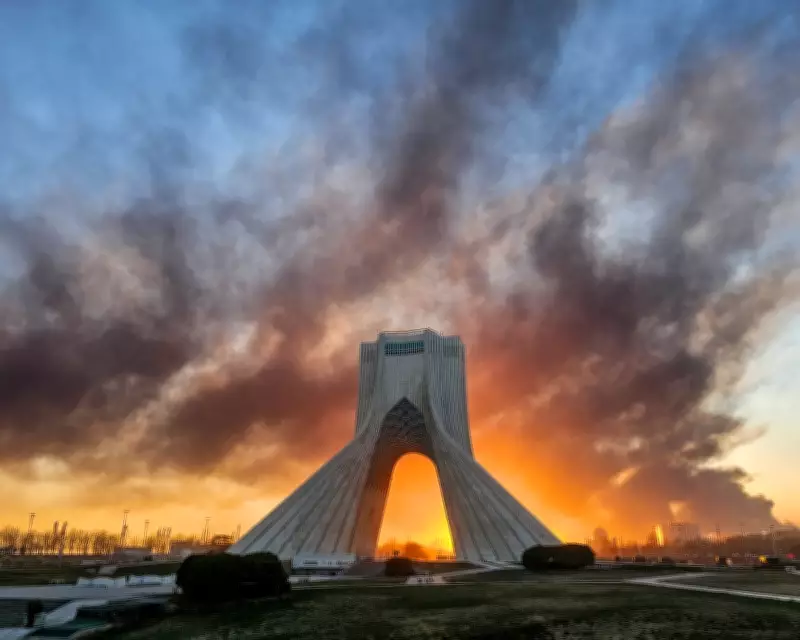
Smoke billowed behind the iconic Azadi Tower in Tehran following a coordinated military strike by the United States and Israel, plunging Iran into a state of chaos and unprecedented pressure. The assault has escalated the Middle East conflict into a dire fight for survival, with the Iranian government struggling to maintain functionality amidst the turmoil.
Leadership Under Siege and Mounting Casualties
On Tuesday, Iran faced a dual onslaught of military and diplomatic challenges as US airstrikes pushed the death toll above 800. Critical institutions were targeted, including the offices of the Assembly of Experts in Qom, the body responsible for selecting a successor to the assassinated Supreme Leader Ali Khamenei. Security lapses are under scrutiny, as many of the 88 elderly clerics may have been present during the bombing.
In Tehran, another attack struck a building housing a mediation body between parliament and the Guardian Council. The chaos underscores Iran's difficulty in operating normally during what has become an existential struggle. Reports of the defence minister's death remain unconfirmed, while the supreme national security council's offices were also bombed, with the whereabouts of Secretary General Ali Larijani unknown.

Power Struggles and Diplomatic Fallout
Behind the scenes, a fierce power struggle is unfolding among Iranian officials over whether to adopt a more flexible approach towards the West. This debate centres on the choice of a new supreme leader, highlighting the urgent need for political consensus. Meanwhile, Israel's warplanes have near-complete control over Tehran's skies, enabling targeted strikes on leaders and security personnel at will.
Vast swathes of black smoke and fires engulfed the Tehran skyline, prompting residents to flee to the countryside. Former US President Donald Trump admitted the airstrikes have been highly effective, claiming at least two prospective government leaders were killed. Trump's shifting objectives raise questions about whether he aims to dismantle Iran's clerical rule in favour of a more malleable secular government.
Diplomatic Efforts Stalled and Regional Tensions
Trump dismissed Turkish-led diplomatic efforts to restart talks, asserting on Truth Social that Iran's military capabilities are decimated and negotiations are too late. Iranian officials denied seeking to resume talks that collapsed last week, with Foreign Ministry spokesperson Esmail Baghaei emphasising that now is a time for war and homeland defence, accusing the US of deception.
Baghaei rejected claims by US special envoy Steve Witkoff about negotiation demands, labelling them as lies. Foreign Minister Abbas Araghchi suggested Trump was misled by Israeli Prime Minister Benjamin Netanyahu regarding Iran's defences, warning European powers against complicity in US airstrikes, which he termed acts of war.
Humanitarian Tragedy and Global Implications
The humanitarian toll is stark, with thousands mourning in Minab, southern Iran, for over 170 schoolgirls killed in a bombing. The US has not accepted responsibility, but the UN human rights commission has called for an urgent inquiry. Baghaei held a press conference in a damaged Tehran school to highlight civilian destruction.
Regional tensions are intensifying as Iran's strategy to attack US assets across the Gulf threatens global markets, pushing oil prices toward $85 a barrel. The UK has agreed to let the US use its airbases for defensive operations to protect Gulf economies. In a rare admission, Yousef Pezeshkian, son of the Iranian president, expressed regret over striking American bases in friendly countries, underscoring the diplomatic damage.
This crisis signals a profound shift in the Middle East, with Iran's survival hanging in the balance amid relentless military pressure and internal discord.