Iran Closes Key Strait of Hormuz Shipping Route After Ayatollah Threatens to Sink US Warships
The strategic Strait of Hormuz, a vital global shipping lane, has been partially shut by Iran for the first time since the 1980s. This dramatic move comes amid escalating tensions with the United States, following threats from Iran's Supreme Leader Ayatollah Ali Khamenei to sink American aircraft carriers.
Historic Closure and Military Drills
On Tuesday, Iranian state media announced a temporary, hours-long closure of part of the strait due to "security precautions" as the Islamic Revolutionary Guard Corps (IRGC) conducted military exercises. The Strait of Hormuz, linking the Persian Gulf and the Gulf of Oman, is one of the world's most strategically important routes, with approximately 20 percent of global oil passing through its narrow waters.
At its narrowest point, the passage falls under both Iranian and Omani control, with international law allowing countries to exercise authority up to 12 nautical miles from their coastline. The closure has raised immediate concerns among experts, who warn it could trigger a spike in oil prices if fuel shipments are disrupted.

Escalating Tensions with the United States
The shutdown coincides with high-stakes nuclear talks between the US and Iran. On Tuesday, Tehran's foreign minister announced that "guiding principles" had been agreed upon, though specifics were not disclosed. However, US Vice President JD Vance offered a more cautious assessment, stating that while discussions progressed, President Joe Biden's "red lines" remained unacknowledged by Iran.
Despite diplomatic overtures, both nations have taken provocative actions in recent days. The US deployed the USS Gerald R Ford, the world's largest warship, to the Middle East, joining the USS Abraham Lincoln aircraft carrier already stationed in the region. In response, Ayatollah Khamenei issued a stark warning, threatening to sink the carriers and mocking US military strength.
"The US president keeps saying 'our military is the strongest military in the world'; the world's most powerful military can sometimes receive such a slap that it can no longer stay on its feet," Khamenei said on Tuesday. "They constantly say, 'we have sent an aircraft carrier towards Iran'. OK, of course an aircraft carrier is a dangerous device, but more dangerous than the carrier is the weapon that can send it to the bottom of the sea."
Military Exercises and Regional Alliances
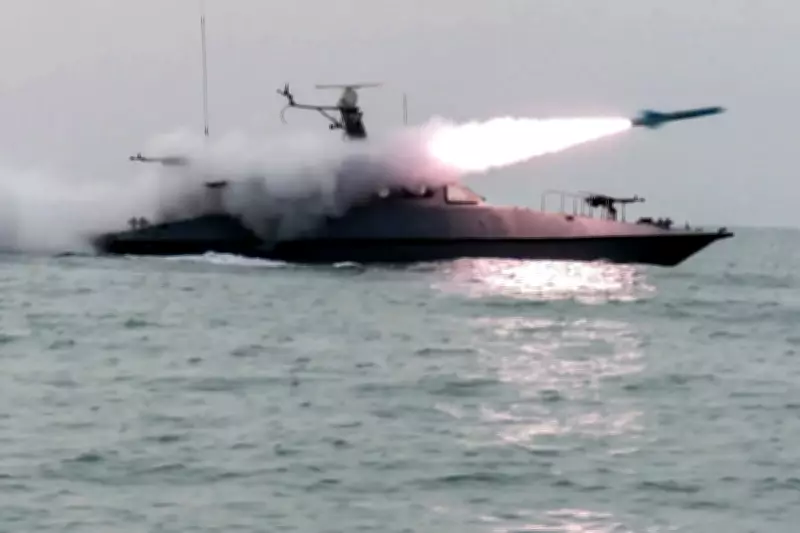
Earlier in the week, Iran conducted extensive military drills in the Strait of Hormuz, involving missile launches from inland and coastal sites targeting the waterway. These exercises, featuring test missiles, warships, and helicopters, were designed to showcase the IRGC's "operational readiness" and plans for retaliatory measures against "potential security and military threats."
Adding to the regional instability, Iran and Russia announced on Wednesday that they would hold joint navy drills in the Sea of Oman and the northern Indian Ocean on Thursday. Iranian navy commander Hassan Maghsoodloo stated that the exercises aim to enhance "convergence and coordination in joint measures to counter activities threatening maritime security and safety" and combat maritime terrorism, according to Fars news agency.
Global Implications and Future Outlook
The closure of the Strait of Hormuz underscores the fragile state of US-Iran relations and the broader geopolitical tensions in the Middle East. With oil markets on edge and military posturing intensifying, the situation threatens to destabilize global energy supplies and regional security. As diplomatic talks continue, the world watches closely to see if these escalatory actions will derail efforts toward a nuclear deal or lead to further confrontations in one of the planet's most critical maritime chokepoints.