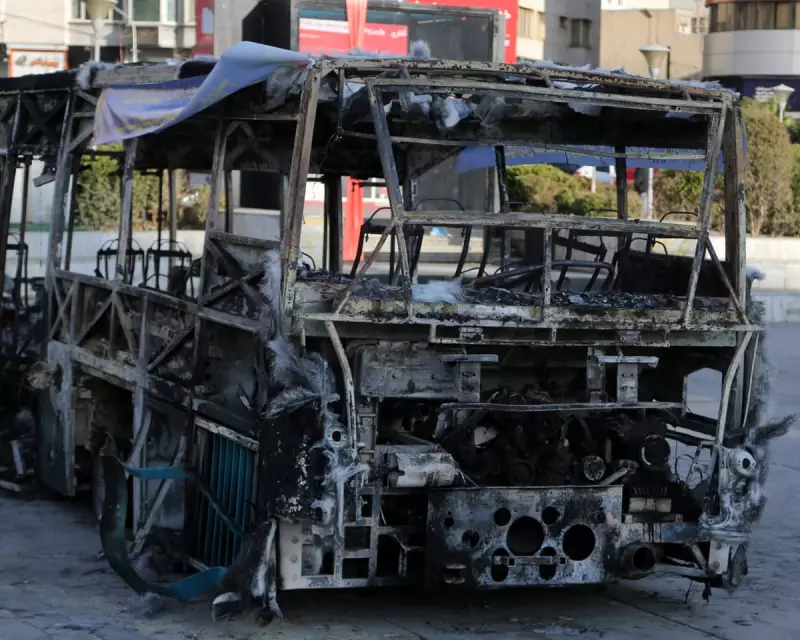
Iran's nationwide protest movement appeared to lose momentum on Thursday, subdued by a severe and bloody crackdown from state authorities that has left thousands dead and tens of thousands imprisoned.
A Brutal Crackdown Quells Unrest
Residents in the capital, Tehran, reported a relative calm on the streets. The sounds of gunfire had faded and fires were extinguished, marking a stark contrast to the preceding weeks of large-scale confrontations between crowds and security forces. This slowdown came just two days after US President Donald Trump publicly urged Iranians to "keep protesting – take over your institutions", promising that American help was imminent.
However, by Wednesday night, President Trump signalled a retreat from the brink of potential military intervention. He told reporters that, according to his information, Iranian authorities were halting executions. "We’ve been told that the killing in Iran is stopping – it’s stopped – it’s stopping. And there’s no plan for executions," Trump stated.

This claim stands in grim contrast to the reported death toll. According to the US-based Human Rights Activists News Agency, at least 2,637 people have been killed in the unrest. Among the dead is an Iranian Red Crescent staff member, killed in northern Iran on Saturday, with five others wounded—prompting calls for the protection of humanitarian workers.
Continued Repression and International Pressure
Despite Trump's comments, Iranian authorities have continued their campaign against demonstrators. State media has trumpeted the arrest of so-called "terrorists", and a nationwide internet shutdown entered its seventh day, surpassing previous blackouts. Authorities are also reportedly seizing Starlink satellite dishes, cutting off a vital communication link with the outside world.
Rights groups have raised serious concerns over forced confessions, as state television broadcasts footage of detainees being interrogated. One such broadcast showed hardline chief justice Gholamhossein Mohseni Ejei—sanctioned by the US and EU—personally questioning women accused of offences ranging from contacting Israeli officials to dropping concrete blocks on security forces.
In a significant development, Iranian state media claimed that 26-year-old Erfan Soltani, the first protester sentenced to death, would not be executed. His scheduled execution on Wednesday had made him an international symbol of the regime's repression.
Root Causes and Regional Calculations
The protests erupted on 28 December following a sudden currency devaluation, quickly expanding into demands for political reform and even an end to the Islamic Republic. The movement spread to all 31 provinces, representing the most serious challenge to the government in decades.
President Masoud Pezeshkian acknowledged the economic grievances on Thursday, vowing to tackle corruption and price gouging. The crisis is deep-seated: Iran’s national currency has lost two-thirds of its value in three years, while food prices have soared by 72% since last year.
Analysts suggest that while the protests reveal systemic issues that will trouble Tehran long-term, state collapse is unlikely. This view was reportedly echoed by Israeli and Arab officials, who advised the US administration that the regime is not yet weak enough for American strikes to topple it. Their lobbying appears to have influenced Washington's stance.
The international response continues to build. The UN Security Council scheduled an emergency meeting on the protests, while G7 foreign ministers stated they were "prepared to impose additional restrictive measures" on Iran over its violent handling of the demonstrations.