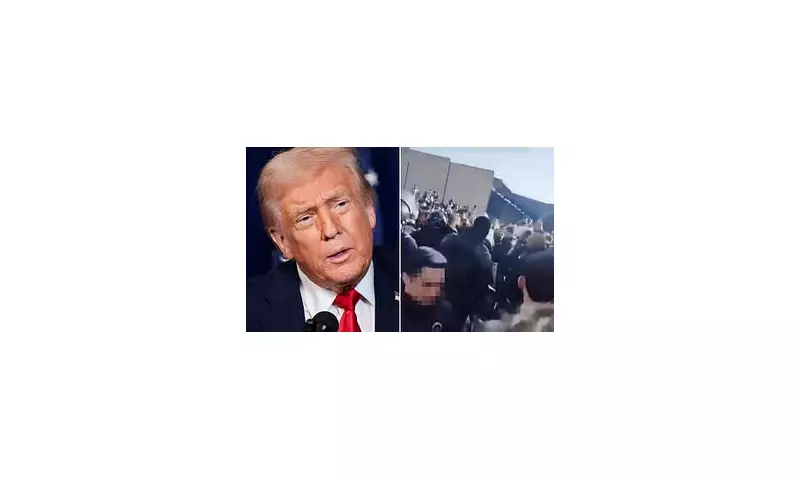
Iranian authorities confirmed on Saturday that two more people have been killed amid ongoing protests, bringing the total death toll to at least ten. The fatalities mark a significant escalation in the weeklong demonstrations, which have become the largest in the country since the 2022 unrest triggered by the death of Mahsa Amini.
Trump's Stark Warning and Tehran's Angry Response
The new deaths followed a stark warning from US President Donald Trump on Friday. He stated that if the Iranian regime "violently kills peaceful protesters," the United States "will come to their rescue." Trump added, "We are locked and loaded and ready to go." While the specifics of any potential intervention remain unclear, his comments provoked an immediate and angry response from officials within Iran's theocracy, who threatened to target American troops in the Middle East.
Details of the Latest Fatalities
The violence overnight into Saturday reached a new level. According to the state-owned IRAN newspaper, a grenade explosion in the holy city of Qom, home to major Shiite seminaries and located 130km south of Tehran, killed one man. Security officials alleged the man was carrying the grenade to attack people. Online videos from Qom purportedly showed fires in the streets.

The second death occurred in the town of Harsin in Kermanshah province, some 370km southwest of Tehran. There, a member of the Basij, the all-volunteer arm of Iran's paramilitary Revolutionary Guard, died in an attack involving a gun and a knife.
Scale and Roots of the Unrest
Demonstrations have now been reported in over 100 locations across 22 of Iran's 31 provinces, as tracked by the US-based Human Rights Activists News Agency. While the protests have not yet reached the same widespread intensity as the 2022 Mahsa Amini demonstrations, they represent a major challenge. The current unrest is rooted in a severe economic crisis, with Iran's rial currency collapsing in value. The protests have also featured chants against the country's ruling theocracy.
Reformist President Masoud Pezeshkian's government has signalled a desire to negotiate with protesters but has acknowledged its limited power to address the economic freefall. The situation has been exacerbated by the aftermath of Iran's June war with Israel, which included US airstrikes on Iranian nuclear sites, further damaging the economy.
In a recent move, Iran stated it had halted uranium enrichment at all sites within the country, a gesture seemingly aimed at opening potential negotiations with the West to ease sanctions. However, talks have not materialised, with both President Trump and Israeli Prime Minister Benjamin Netanyahu warning Tehran against restarting its atomic programme.