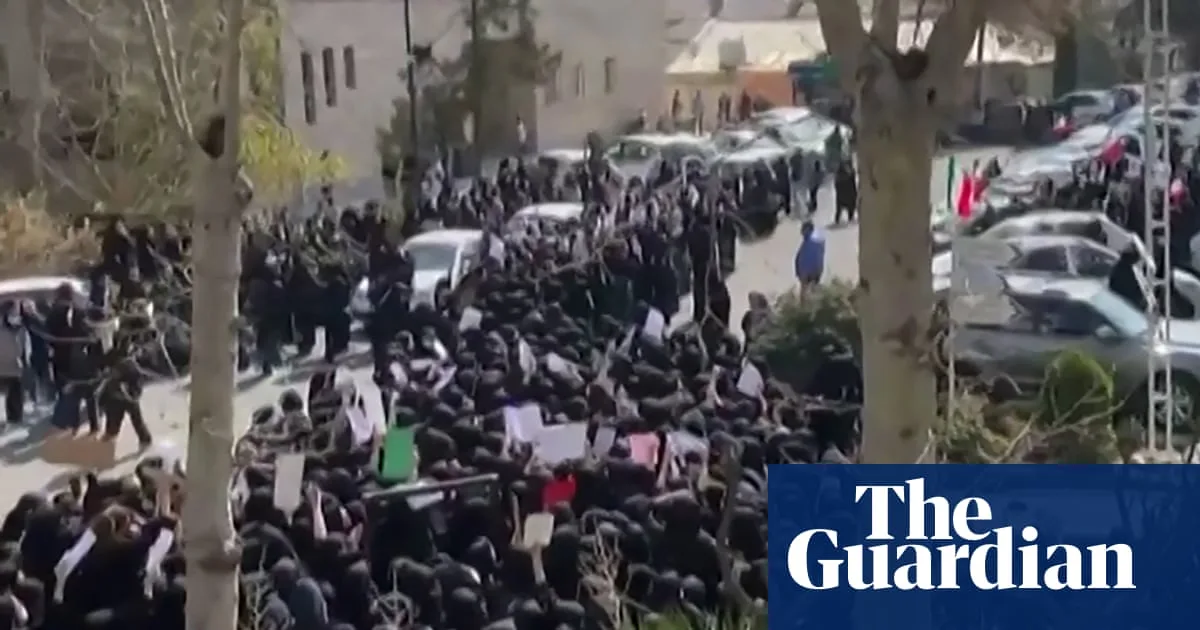
Students at universities across Iran have held a third consecutive day of protests, just over a month after a security crackdown on mass street demonstrations left thousands dead. The protests on Monday spread to campuses including all-women Al Zahra University in Tehran, where anti-government slogans were chanted and an Iranian flag was burned and torn.
A Telegram channel for Iranian students reported that an attack by the Basij state-backed militia at Sharif University in Tehran left several students injured, with an ambulance arriving at the campus. Universities have sent text messages to students warning them of disciplinary consequences. In a bid to ridicule Iran's supreme leader, Ayatollah Ali Khamenei, some students climbed trees and hung toy mice from branches, a symbol suggesting he is hiding underground like a mouse.
The renewed protests come amid heightened tensions between Iran and the United States, with the next round of nuclear talks scheduled for Thursday in Geneva. US President Donald Trump has warned that 'really bad things will happen' if no deal is reached, while Iran's foreign ministry spokesperson said Iran would retaliate 'ferociously' against any attack. The protests serve as a reminder that Trump has not yet fulfilled his pledge to 'Iranian patriots' that 'help is on its way'.
Domestic media coverage of the university protests has been kept to a minimum, as authorities directed universities to ban photographed demonstrators from campus. Former Iranian president Mohammad Khatami has called for the release of all those arrested, saying they are accused of nothing but despair and protest. His remarks mark a change from his initial response, when he said the protests had been engineered by the US and Israel.
Separately, Iranian reformists complained they had been banned from standing for Tehran city council, the first time such political interference had spread to local authority level. In a further sign of dissent, five political parties representing Iranian Kurds have agreed to form a coalition to bring down the government, saying the government had lost all legitimacy but remained standing due to the fragmentation of the opposition.