Iran Issues Stark Warning to US Amid Escalating Middle East Conflict
Iran has pledged to deliver 'crushing' attacks against the United States and its allies, as even staunch supporters like Nigel Farage question the rationale behind Donald Trump's military campaign in the region. In a fiery social media statement, Iranian parliamentary speaker Mohammad Ghalibaf directly challenged President Trump, declaring: 'Bring it on.'
Ghalibaf's Defiant Stance and Volunteer Mobilisation
Ghalibaf, a veteran of the Iran-Iraq war, revealed that seven million Iranians have volunteered to defend their homeland, ready to be activated if US forces launch ground assaults. He emphasised Iran's historical resilience, stating: 'When I was 18 years old I grabbed my rifle and defended the soil of my beloved Iran. We are not warmongers but, when the time comes to defend our homeland, every last one of us becomes a soldier.' He added that Iranians are prepared to 'bleed for it' and warned the US: 'You come for our home, you're gonna meet the whole family. Locked, loaded and standing tall.'
Trump's Uncertain Strategy and Economic Fallout
This provocation followed a national address by President Trump, who indicated uncertainty over deploying 'boots on the ground' in Iran. His remarks, which included plans to continue bombing for two to three weeks without resolving the Strait of Hormuz closure, triggered a spike in oil prices and stock market declines. The strait's blockage has severely disrupted global markets, with Iranian military spokesman Abolfazl Shekarchi confirming it will remain closed 'long term' to the US and Israel.

International Criticism and Political Reactions
Amid the turmoil, Reform leader Nigel Farage expressed confusion over Trump's motivations, noting: 'It is difficult to work out from the press conferences sometimes. OK, Israeli encouragement, I understand that. What persuaded Trump to do it?' He acknowledged potential long-term benefits if Iran's nuclear capabilities are dismantled but highlighted significant short-term costs. Meanwhile, Conservative leader Kemi Badenoch urged Trump to adopt a 'if you break it, you own it' approach, cautioning against withdrawal.
Iranian Retaliation and Escalating Attacks
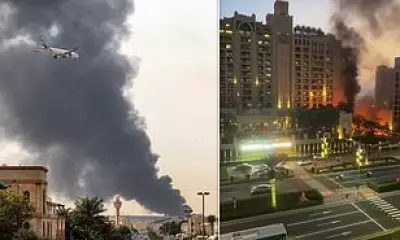
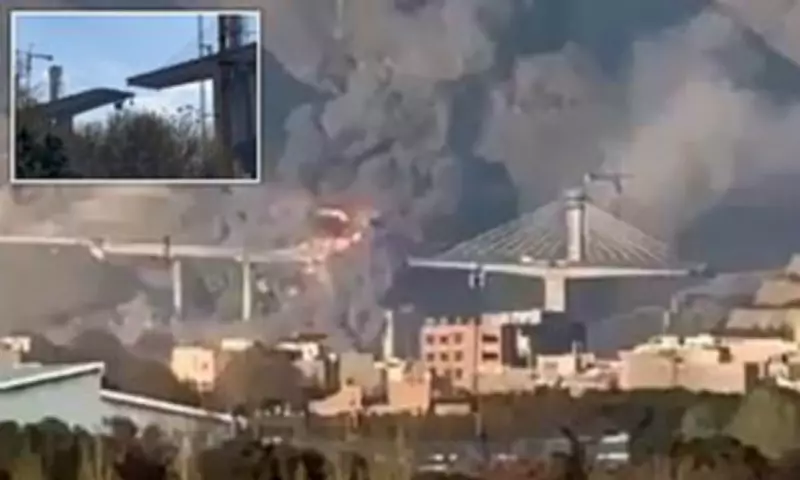
Iran swiftly acted on its threats, launching missiles into Israel, striking a US base in Jordan, and targeting Kuwait, Qatar, and Bahrain with drones and missiles. British forces in northern Iraq were forced to intercept Iranian drones, adding to the conflict's spread. The attacks included non-military targets such as the 446ft-high B1 bridge in Karaj—Iran's tallest bridge—and the Pasteur Institute in Tehran, a historic medical centre. Deputy governor Ghodratollah Seyf reported eight deaths and 95 injuries from the bridge strike, condemning it as a 'horrific crime.'
Growing Global Discontent and Diplomatic Strains
The war's unpopularity is rising in the US, fueled by soaring petrol prices and fertiliser shortages. Internationally, Austria joined France, Italy, Spain, and Bulgaria in denying airspace to US military aircraft, though US warplanes were observed departing from RAF Lakenheath in Suffolk. Gulf states are reportedly frustrated with the US's lack of strategic foresight in its military decisions. UK Chancellor Rachel Reeves voiced anger at Trump for initiating the conflict, reflecting broader political frustration as the situation drags on.
As tensions mount, the world watches a volatile standoff that threatens to deepen regional instability and economic hardship, with Iran's defiant posture challenging US authority and testing international alliances.