Iran Launches Ballistic Missiles at US-UK Military Base in Indian Ocean
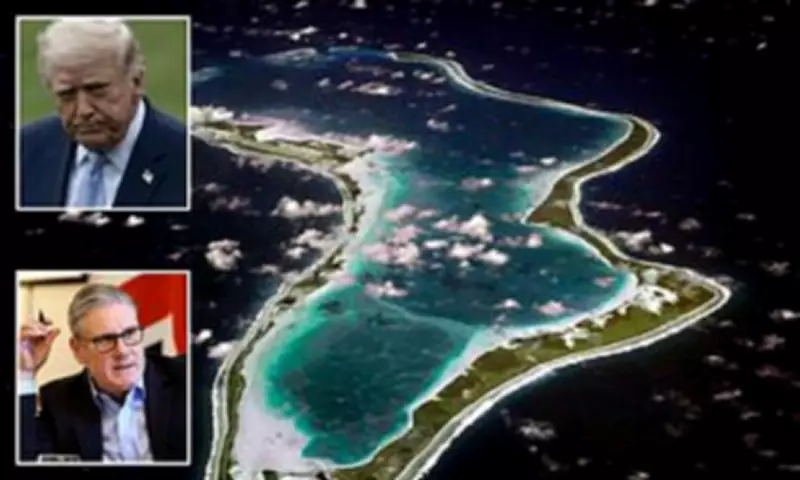
Iran has reportedly fired ballistic missiles at a joint US-UK military base located in the Indian Ocean, according to recent intelligence reports. This aggressive action comes as the ongoing conflict between the United States, Israel, and Iran approaches its third week since the initial military strikes began. The targeted base, Diego Garcia, is situated on a remote island within British territorial waters and serves as a critical strategic hub for American military assets.
Details of the Missile Attack and US Response
The Wall Street Journal disclosed on Friday evening that two intermediate-range ballistic missiles were launched by Iran towards the Diego Garcia facility. Multiple US officials have confirmed to the outlet that neither missile successfully struck the base. Sources indicated that one of the projectiles failed during its flight trajectory, while the other was effectively intercepted by United States defense systems. The Daily Mail has reached out to both the White House and the Pentagon for further official comments regarding this incident.
Diego Garcia is positioned approximately 4,000 kilometers from Iran, a distance that directly contradicts previous statements made by Iranian Foreign Minister Abbas Araghchi. He had asserted that Tehran intentionally limited the operational range of its ballistic missiles to only 2,000 kilometers. This recent strike undermines those claims and raises significant concerns about Iran's actual military capabilities and intentions.

Political Reactions and Diplomatic Tensions
Former US President Donald Trump addressed reporters outside the White House on Friday, criticizing the United Kingdom for its perceived sluggish response in permitting American forces to utilize British bases. Trump expressed his surprise at the delay, noting the historically strong relationship between the two nations. He specifically mentioned that the UK initially hesitated to allow the US access to Diego Garcia for military operations.
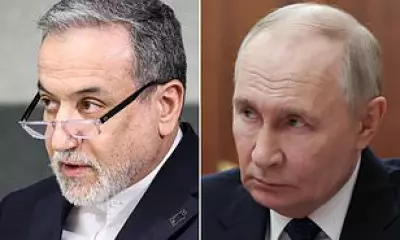
In response, Iranian Foreign Minister Abbas Araghchi took to social media platform X to issue a stern warning. He urged UK Prime Minister Keir Starmer to refrain from joining US military efforts against Iran, emphasizing that the majority of British citizens oppose involvement in the conflict. Araghchi concluded his statement with a chilling declaration, asserting Iran's right to self-defense in the face of perceived aggression.
UK Stance and Broader Conflict Context
Prime Minister Keir Starmer has maintained a firm position that the United Kingdom will not be drawn into a wider war with Iran. In a recent address to Parliament, Starmer affirmed that the UK would take necessary actions to protect its citizens and allies in the region but reiterated the country's commitment to avoiding deeper military entanglement. The UK has previously restricted the use of its bases by US forces to specific defensive scenarios, such as countering Iranian missile launchers targeting British interests, rather than for broader offensive operations.
The United States and Israel have consistently stated that their primary objective in the conflict is to prevent Iran from developing nuclear weapons. Secretary of State Marco Rubio previously rejected Iranian claims about missile limitations, alleging that Tehran is actively pursuing intercontinental ballistic missile technology capable of reaching the continental United States.
Trump's Comments and International Implications
Donald Trump projected confidence regarding the conflict's progress, suggesting that the US is nearing its military objectives and has effectively dominated the opposition. He criticized NATO allies for complaining about rising oil prices while refusing to provide military support, labeling them as cowards. Trump also addressed the strategic importance of the Strait of Hormuz, a vital global oil transit route, calling for other nations to assume responsibility for its security once the Iranian threat is neutralized.
As the war enters its third week, the missile attack on Diego Garcia marks a significant escalation, highlighting the volatile nature of the ongoing hostilities and the complex geopolitical dynamics at play.