Iran's Supreme Leader has launched a blistering attack on the United States, personally labelling President Donald Trump a 'criminal' for his support of anti-government protests that have rocked the Islamic Republic.
Khamenei's Unprecedented Casualty Admission
In a nationally televised address on Saturday, Ayatollah Ali Khamenei made a startling admission regarding the scale of the violence. He stated the unrest, which began on December 28, had resulted in the deaths of 'several thousand' people. This marks the first time a senior Iranian leader has acknowledged such a significant death toll from the recent wave of demonstrations.
The protests initially erupted over severe economic grievances, including the government's decision to cut currency subsidies amid an inflation rate hovering around 40 per cent. They quickly escalated, leading to what observers describe as a bloody crackdown by Iranian security forces.

A War of Words Across Continents
Ayatollah Khamenei directly accused President Trump of inciting the violence. 'In this revolt, the US President made remarks in person, encouraged seditious people to go ahead and said, 'We do support you, we do support you militarily',' he told the nation. He described the protesters as 'foot soldiers' of the United States, alleging they destroyed mosques and educational centres.
The Iranian leader reiterated long-standing claims that Washington seeks domination over Iran's economic and political resources. 'We do consider the US President a criminal, because of casualties and damages,' he declared.
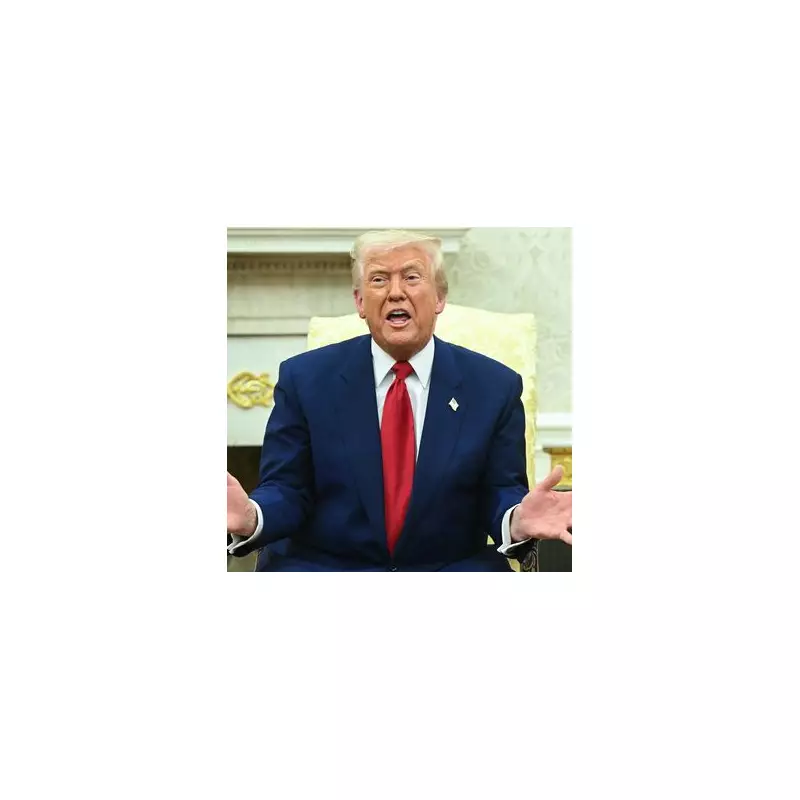
In a swift response, President Trump called for an end to Khamenei's nearly four-decade rule. In an interview with Politico, he stated, 'The man is a sick man who should run his country properly and stop killing people.' He added that it was 'time to look for new leadership in Iran'.
Contradictory Figures and an Uneasy Calm
The exact number of fatalities remains contested. The US-based Human Rights Activists News Agency reported earlier last week that 2,435 protesters and 153 security personnel had been killed, with over 18,470 arrests. Other unverified reports have suggested the death toll could be as high as 10,000, which would make it the deadliest period of unrest since the 1979 revolution.
Despite the fierce rhetoric, there are signs of an uneasy calm returning to Iranian streets, particularly in the capital Tehran, where shopping and daily life have resumed a semblance of normality. Iranian state media has not reported any new significant unrest in recent days.
The diplomatic spat follows a brief moment of conciliation, where President Trump claimed Iran had 'cancelled the hanging of over 800 people', a statement for which he provided no evidence. Iranian officials have consistently blamed the United States and Israel for fomenting the domestic turmoil, a claim repeated by Iran's President in a recent call with Russian leader Vladimir Putin.