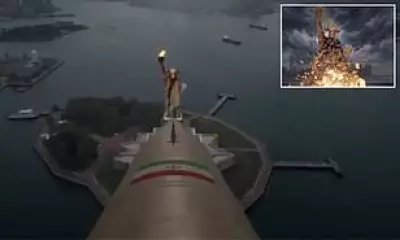
Iranian Drone Attack Targets Bahrain Skyscraper Following Dubai Assault
In a significant escalation of regional hostilities, an Iranian suicide drone has struck a skyscraper in Bahrain, mere hours after a coordinated missile blitz targeted the iconic Palm Jumeirah hotel in Dubai. The dual assaults have plunged the Gulf region into a state of heightened alert, with Western tourists and social media influencers caught in the crossfire of retaliatory strikes following recent US air operations against Iran.
Dubai's Palm Jumeirah Hotel Under Fire
The initial attack saw Iranian missiles raining down on Dubai's world-renowned Palm Jumeirah, a man-made archipelago famed for its luxury resorts and celebrity clientele. The assault triggered panic among visitors, with British celebrities and influencers including Hofit Golan, Vicky Pattison, and Laura Anderson reportedly among those present during the bombardment. Reform UK treasurer Nick Candy also recounted his experience, describing how his Dubai hotel "shook" violently as the projectiles impacted nearby.
This offensive appears to be a direct response to US and Israeli airstrikes against Iranian targets, with unconfirmed reports from Israeli media suggesting there are "growing indications" that Supreme Leader Ali Khamenei may have been killed in those operations. Iranian state media has not verified these claims, leaving the leadership's status shrouded in uncertainty.

Bahrain High-Rise Strike Intensifies Crisis
The subsequent drone attack on Bahrain marks a dangerous expansion of the conflict beyond the United Arab Emirates. The unmanned aerial vehicle, believed to be a kamikaze-style model operated by Iranian-backed forces, collided with a commercial skyscraper in the capital Manama, causing substantial structural damage and raising fears of civilian casualties. Security analysts warn that this strike signals Tehran's willingness to target multiple Gulf states simultaneously.
According to regional defence sources, Iranian mullahs have explicitly ordered missile attacks on US interests in Abu Dhabi, Kuwait, Qatar, and Bahrain, alongside continued drone sorties against Israeli positions. This multi-front strategy represents a calculated escalation designed to test Western resolve and regional defence capabilities.
Political Fallout and Diplomatic Responses
In London, Prime Minister Keir Starmer has urged restraint, emphasising that the United Kingdom did not participate in the US air strikes on Iran and calling for "further escalation" to be avoided. Starmer has engaged in urgent diplomatic consultations with French President Emmanuel Macron and German opposition leader Friedrich Merz following an emergency Cobra meeting convened to address the crisis.
The British government faces mounting questions regarding potential logistical support provided to American operations, with speculation that the US may have utilised the UK's Diego Garcia military base in the Indian Ocean to launch sorties against Iranian positions. Downing Street has yet to confirm or deny these allegations.
Regional Security Implications
The twin attacks have exposed vulnerabilities in the Gulf's sophisticated air defence networks, which failed to intercept all incoming threats. Security forces across the region are now on maximum alert, with additional patrols and surveillance measures implemented in major urban centres.
Tourism authorities in Dubai and Bahrain report significant disruptions, with numerous flight cancellations and hotel evacuations underway. The economic impact on the hospitality and retail sectors is expected to be substantial, particularly during what is traditionally a peak travel period for Western visitors.
As tensions continue to mount, regional governments are coordinating their responses through the Gulf Cooperation Council, while international observers monitor for any signs of further escalation that could draw additional global powers into the conflict.