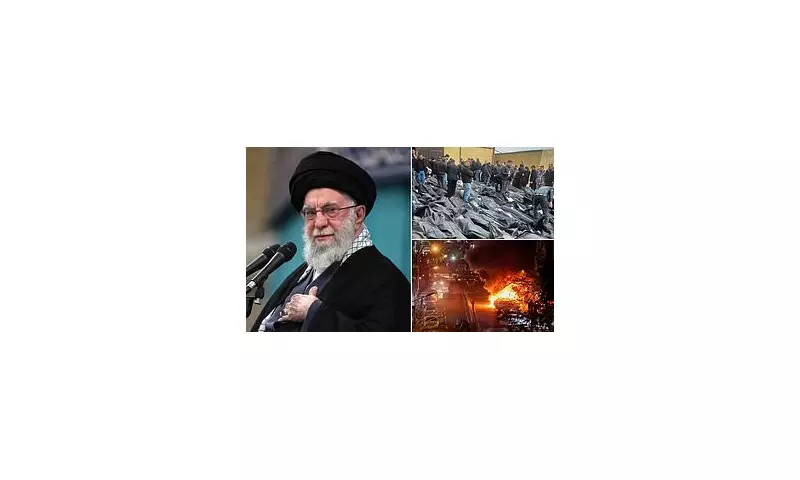
A damning new medical report has accused Iran's clerical regime of carrying out its most brutal suppression of dissent in almost 50 years, alleging that at least 16,500 protesters have been killed and more than 300,000 wounded in just three weeks of unrest.
A Stark Contradiction to Official Claims
The findings present a horrifying picture that directly contradicts the first public admission by Supreme Leader Ayatollah Ali Khamenei. In a televised address, Khamenei acknowledged that 'several thousands' had died since the demonstrations began, but shifted blame onto the protesters, branding them foreign-backed agitators and claiming the violence was provoked by armed 'rioters'.
However, doctors inside Iran, according to a report seen by The Times, describe a far darker reality. Medical staff report a chilling escalation in the authorities' tactics. Where previous protests were met with less-lethal measures like rubber bullets, doctors now document extensive gunshot and shrapnel wounds to the head, neck, and chest, injuries consistent with military-grade weapons.

'This is a whole new level of brutality,' said Professor Amir Parasta, an Iranian-German eye surgeon who helped coordinate the report. He described the situation as 'genocide under the cover of digital darkness', adding, 'They said they would kill until this stops, and that's what they are doing.'
The Scale of the Casualties
Data compiled from eight major eye hospitals and 16 emergency departments suggests the death toll is between 16,500 and 18,000, with up to 360,000 injured. The victims reportedly include children and pregnant women. Even by the regime's own estimate of 'several thousand', this represents one of the deadliest episodes in the Islamic Republic's history.
Testimony from medics indicates the vast majority of deaths occurred during just two days of what one source called 'utter slaughter', marking the most ferocious use of force since the regime's founding 47 years ago. The victims are overwhelmingly young, many believed to be under 30. Social media has been flooded with tributes to students, athletes, and artists.
Among those killed are a 23-year-old fashion designer, three young footballers—including a 17-year-old youth team captain in Tehran—a champion basketball player aged 21, a budding film director, and a student who dreamed of doctoral studies at Bristol University.
Digital Blackout and International Fallout
Communications have been severely restricted since the regime shut down the internet, forcing doctors and activists to rely on smuggled Starlink satellite terminals to transmit evidence—a dangerous and illegal act with Revolutionary Guard units hunting for the dishes.
In his speech, Khamenei explicitly accused US President Donald Trump of direct involvement, calling him a 'criminal' and claiming the unrest was American-planned 'sedition'. 'We consider the US president guilty,' Khamenei stated, as his supporters chanted 'death to America, death to England'. He later repeated the accusation in a post on X.
In response, Trump called for an end to Khamenei's nearly 40-year reign, telling Politico, 'The man is a sick man who should run his country properly and stop killing people.' He had previously told protesting Iranians that 'help is on the way'.
The Iranian authorities have not responded to the claims in the medical report. The data has not been independently confirmed, though the US-based rights group HRANA has estimated a death toll of 3,000. If the report's figures are verified, they would represent one of the deadliest crackdowns on civilian protest in modern history.