

The regional war in the Middle East has escalated dramatically, with Iranian drones striking the US embassy in Riyadh, Saudi Arabia, causing a minor fire and prompting warnings for Americans to avoid the compound. This attack follows a similar strike on the US embassy in Kuwait, part of a broader Iranian campaign targeting US bases and personnel across Arab Gulf states.
Israeli Ground Campaign in Lebanon
On the fourth day of the conflict, Israeli troops have begun operating in southern Lebanon, marking a significant expansion of the war. Israeli Defence Minister Israel Katz ordered soldiers to "hold and advance" into areas south of the Litani River to counter Hezbollah fire on northern Israel. This move represents the first official acknowledgment that Israel's campaign will involve ground forces, not just aerial strikes.
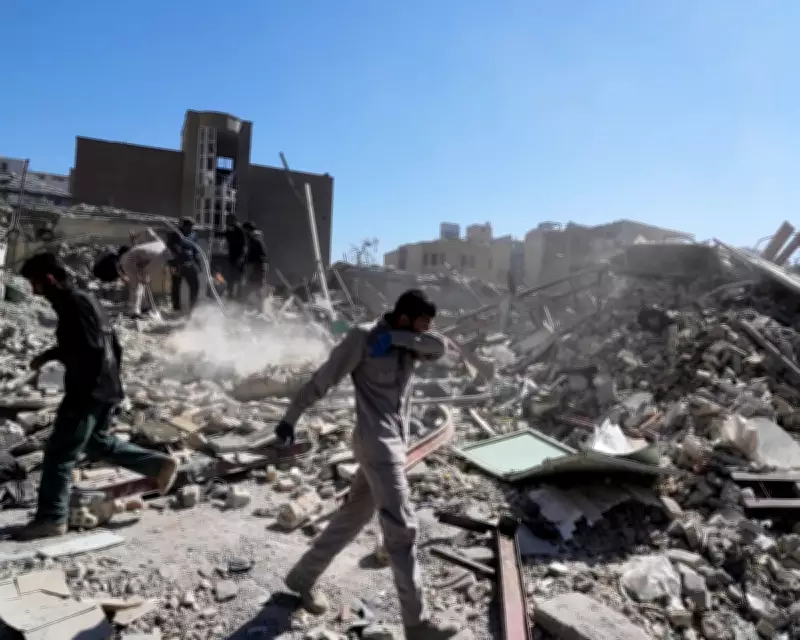
Evacuation orders have virtually emptied villages in south Lebanon, turning Beirut's southern suburbs into ghost towns. Israeli airstrikes have killed 52 people and displaced at least 29,000 in Lebanon so far.

Hezbollah's Response and Domestic Pressure
The pro-Iran group Hezbollah has continued to target Israel, launching missile salvoes at military bases in northern Israel and striking airbases with one-way drones. However, Hezbollah faces domestic criticism in Lebanon for violating the government's neutrality. In an unprecedented move, Lebanon's government banned Hezbollah's military activities and instructed the judiciary to arrest those responsible for firing rockets at Israel.
Israel has targeted Hezbollah's infrastructure, including its intelligence chief Hussein Makled, the al-Qard al-Hassan bank, political bureau members, and the al-Manar media channel building. Rights groups have questioned the legality of attacking non-military targets.
US-Israeli Air Campaign Against Iran
The US and Israel continue their strikes against Iran, with the US claiming destruction of Islamic Revolutionary Guard Corps command facilities. The conflict began with attacks on Tehran that killed Supreme Leader Ali Khamenei, prompting Iranian retaliation that has expanded to involve at least nine countries.
Explosions were heard overnight across Iran, particularly in the capital. Casualty estimates range from 555 to 1,500 people, including 165 killed in a strike on a girls' elementary school in southern Iran.
Political Justifications and Objectives
US and Israeli officials have offered shifting justifications for the war. Secretary of State Marco Rubio claimed the US was forced to act preemptively because of planned Israeli action. President Donald Trump has alternated between citing regime change and preventing Iran from obtaining nuclear weapons as goals.
Israeli Prime Minister Benjamin Netanyahu stated the war "could take some time" but wouldn't be endless, suggesting the US and Israel are "creating the conditions" for Iranians to topple their government. Some analysts believe the conflict benefits Netanyahu politically ahead of elections.
Regional Energy Crisis
Iran's strikes on Gulf energy infrastructure have paralysed oil-rich states. Qatar halted operations at its largest liquid natural gas facility, while Saudi Arabia ceased operations at the Ras Tanura oil refinery after a drone attack.
The situation worsened when Iran closed the Strait of Hormuz, a critical global chokepoint for hydrocarbons, threatening to bomb ships attempting to cross. Global energy prices have surged as a result.
Military Developments and Casualties
Iran has launched ballistic missiles at Israel, most intercepted but some breaking through defences and killing 11 people. The US acknowledged six soldier deaths in Kuwait. Hezbollah claims to have struck Israeli airbases and the Golan Heights with rockets.
US Defence Secretary Pete Hegseth has publicly considered putting US troops in Iran, though analysts warn of challenges due to Iran's mountainous geography.
What began as a conflict between Iran and the US-Israel alliance has rapidly transformed into a multi-front regional war with expanding humanitarian, economic, and geopolitical consequences.






