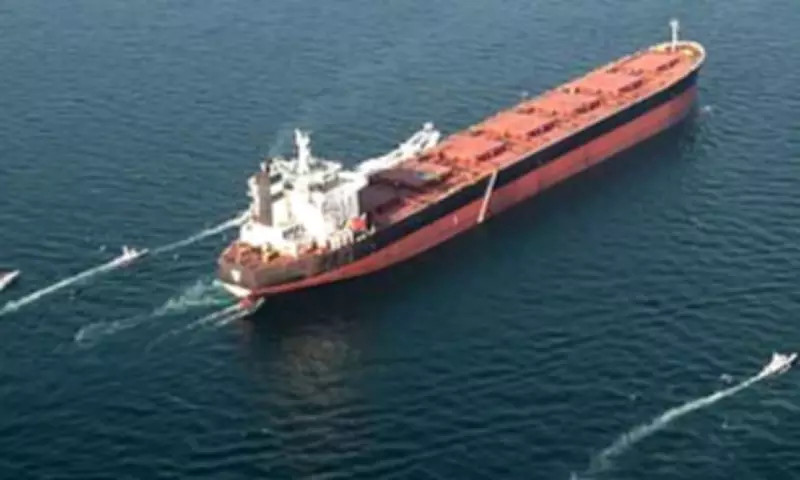
In a significant escalation of regional tensions, the Iranian Revolutionary Guard has reportedly blocked ships from passing through the Strait of Hormuz, the world's most critical route for exporting oil. This action comes in direct retaliation for joint Israel-US air strikes that targeted the Iranian regime earlier this week.
Vital Waterway Under Blockade
The Strait of Hormuz serves as the essential maritime corridor connecting the Persian Gulf's major oil producers—including Saudi Arabia, Iran, Iraq, and the United Arab Emirates—with the Gulf of Oman and the Arabian Sea. This narrow passage is responsible for transporting approximately one-fifth of the world's oil supply, making any disruption a matter of global economic concern.
Official Reports from EU Naval Mission
According to an official from the European Union's naval mission Aspides, vessels have been receiving VHF transmissions from Iran's Revolutionary Guards stating that "no ship is allowed to pass the Strait of Hormuz." The official, who spoke on condition of anonymity on Saturday, emphasized that Iran has not formally confirmed any such order, adding a layer of uncertainty to the situation.

Historical Context of Threats
Tehran has repeatedly threatened to block this narrow waterway over the years, vowing retaliation for any attacks on the Islamic Republic. This latest move appears to be the realization of those long-standing warnings, following the recent air strikes by Israel and the United States.
Immediate Impact and Global Ramifications
The blockade of the Strait of Hormuz could have immediate and severe consequences for global oil markets, potentially leading to price spikes and supply chain disruptions. Energy analysts are closely monitoring the situation, as any prolonged closure would affect economies worldwide, particularly those dependent on Middle Eastern oil exports.
This is a developing story, and further updates are expected as more information becomes available. The international community is likely to respond to this provocative action, which threatens both regional stability and global energy security.