Houthis Escalate Threats Against Vital Global Shipping Lane
In a dramatic escalation of Middle Eastern hostilities, Iran-backed Houthi rebels have issued a stark warning to choke off the Bab al-Mandeb Strait, a second major global oil shipping route. This strategic waterway, known as the 'Gate of Tears' in Arabic, represents a critical vulnerability in international maritime trade.
The Strategic Chokepoint: Bab al-Mandeb Strait
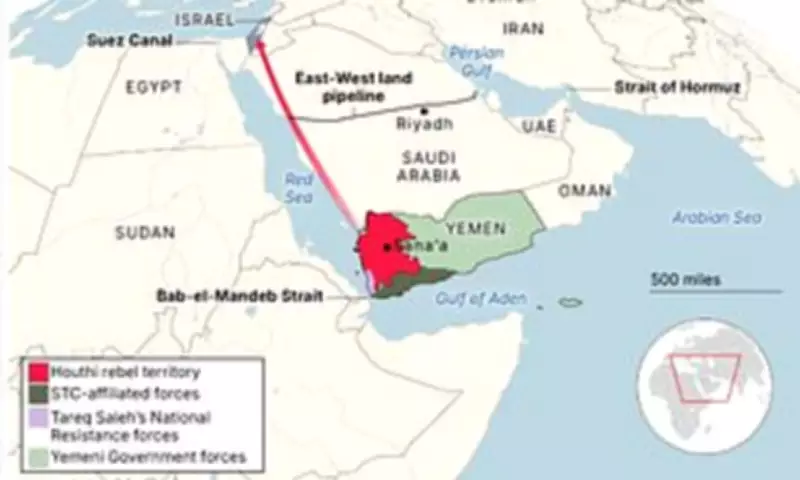
The 18-mile-wide Bab al-Mandeb Strait connects the Red Sea with the Gulf of Aden, serving as a crucial alternative to the Strait of Hormuz, which Iran has effectively closed. This narrow passage between Yemen and the African nations of Djibouti and Eritrea sees approximately 10% of global seaborne trade, including 20% of container traffic and 10% of crude oil shipments.
As revealed in detailed mapping analysis, ships must slow significantly when entering this perilous strait, navigating divided lanes around Mayyun Island. Both shipping lanes fall well within range of Houthi missiles and drones, creating a perfect scenario for potential blockade operations.

Global Economic Implications
The potential closure of both the Strait of Hormuz and Bab al-Mandeb Strait would create unprecedented disruption to global supply chains. The Red Sea serves as the 1,400-mile connection between the Indian Ocean and Mediterranean via the Suez Canal, handling billions in annual trade.
Between 2023 and 2025 alone, Houthi attacks targeted over 100 merchant vessels, sinking two ships and claiming four sailors' lives. During this period, Suez Canal transits plummeted from 26,000 to just 12,700 vessels, demonstrating the severe impact of regional instability on global shipping.
Military Escalation and Regional Diplomacy
The Houthi threat comes amid significant military buildup in the region. The USS Tripoli recently arrived with 3,500 additional sailors and Marines, joining the USS Boxer and other vessels redirected to the Middle East. These forces bring transport aircraft, strike fighters, and amphibious assault capabilities to an already volatile situation.
Mohammed Mansour, Houthi deputy information minister, explicitly stated: 'We are conducting this battle in stages, and closing the Bab al-Mandeb Strait is among our options.' This declaration follows recent Houthi missile attacks against Israel and ongoing threats against shipping during the Israel-Hamas conflict.
Meanwhile, Iranian officials have accused the United States of preparing for ground operations despite public negotiation rhetoric. Tehran's parliament speaker Mohammad Bagher Ghalibaf claimed Donald Trump's administration 'signals negotiation in public, while in secret it plots a ground attack.'
Diplomatic Efforts and Regional Impact
As military tensions escalate, diplomatic efforts continue with foreign ministers from Saudi Arabia, Turkey, and Egypt gathering in Pakistan for crisis talks. However, progress remains limited as strikes continue across the region, with major infrastructure like the Emirates Global Aluminium plant in Abu Dhabi sustaining significant damage.
The Houthis, who have controlled Yemen's capital Sanaa since 2014, have largely remained outside direct US-Israeli conflicts with Iran until now. Their increasing aggression against shipping routes represents a dangerous expansion of regional proxy warfare that threatens to destabilize global energy markets and increase shipping costs worldwide.
With the Bab al-Mandeb Strait's vulnerability now clearly exposed, the international community faces critical decisions about securing this essential maritime corridor against blockade threats that could reverberate through economies far beyond the Middle East.