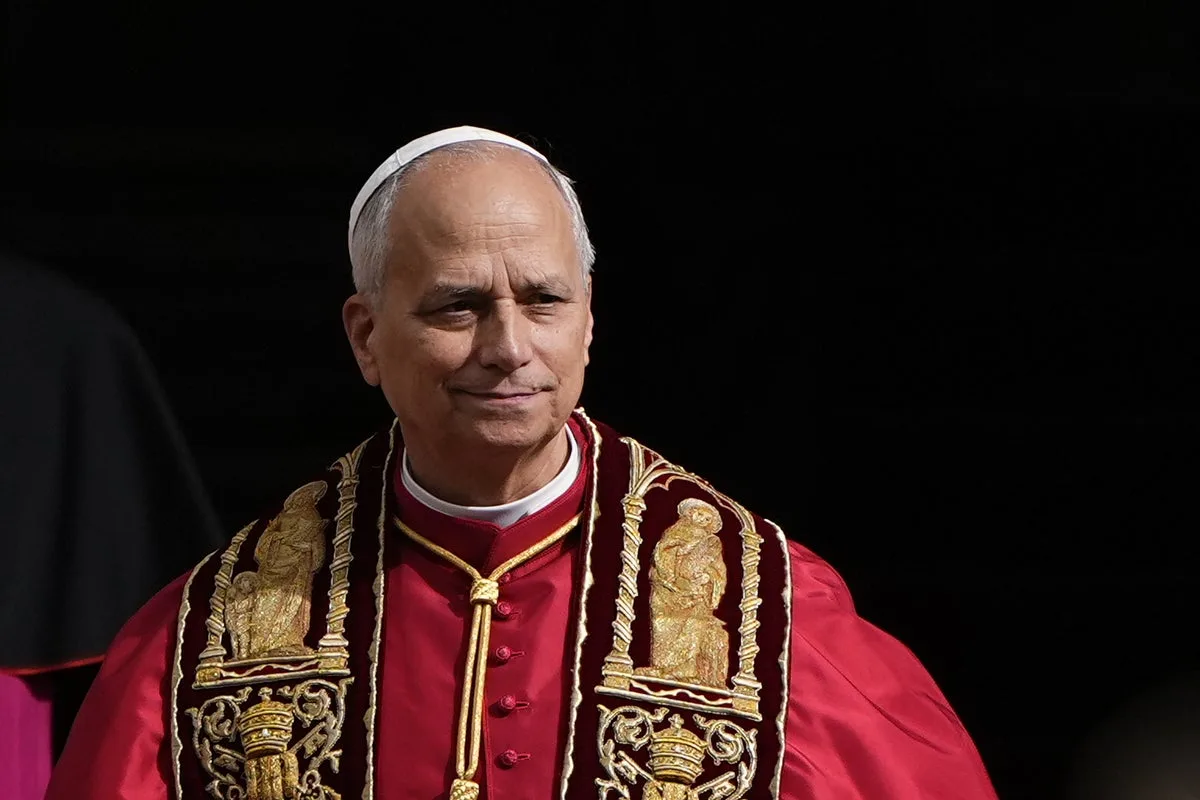
Pope Leo delivered an unusually forceful message on Palm Sunday, stating that God rejects the prayers of leaders who initiate wars and possess 'hands full of blood', as the conflict in Iran entered its second month.
Speaking to tens of thousands gathered in St Peter's Square, the pontiff asserted that Jesus cannot be invoked to justify any form of warfare. 'This is our God: Jesus, King of Peace, who rejects war, whom no one can use to justify war,' Leo, the first U.S. pope, told crowds in brilliant sunshine.
He cited a Bible passage: '(Jesus) does not listen to the prayers of those who wage war, but rejects them, saying: ‘Even though you make many prayers, I will not listen: your hands are full of blood.’'
Leo did not name any world leaders, but he has been ramping up criticism of the Iran war in recent weeks. The pope has repeatedly called for an immediate ceasefire and said on Monday that military airstrikes are indiscriminate and should be banned.
Some U.S. officials have invoked Christian language to justify the joint U.S.-Israeli strikes on Iran on February 28. Defense Secretary Pete Hegseth, who has started leading Christian prayer services at the Pentagon, prayed for 'overwhelming violence of action against those who deserve no mercy'.
Leo referenced a Bible passage in which Jesus rebuked a follower for striking his captor with a sword. 'He did not arm himself, or defend himself, or fight any war,' Leo said. 'He revealed the gentle face of God, who always rejects violence.'