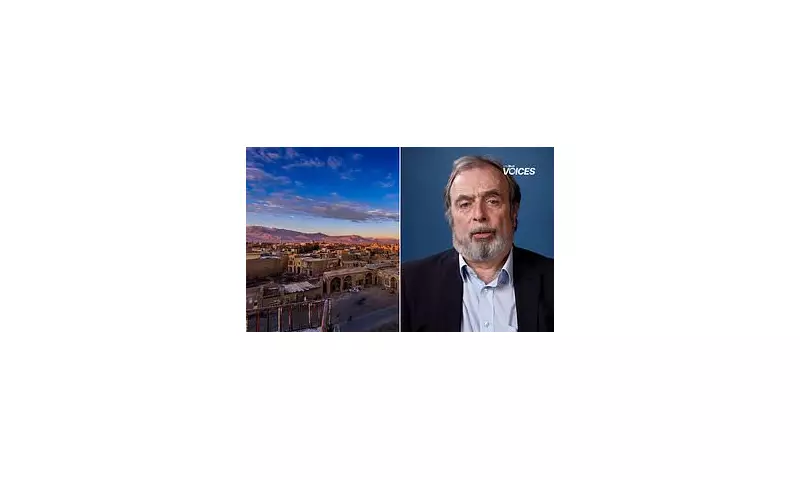
In a compelling new video monologue, renowned columnist Peter Hitchens presents a stark and revisionist portrait of Iran, arguing that the nation now seen as a pariah was once a thriving, beautiful, and pro-Western ally. He contends that this potential partnership was shattered not by inherent anti-Western sentiment, but by catastrophic political meddling from the West itself.
The Lost Iran of the 1970s
Hitchens draws from his own travels, recalling a visit to Iran in the 1970s before the Islamic Revolution. He describes a memory of a modern, secular society where women wore miniskirts and the country was a key strategic friend to Britain and the United States during the Cold War. This image stands in jarring contrast to the theocratic state that exists today. The central pillar of his argument is that this radical transformation was not inevitable, but was directly triggered by Western actions.
The pivotal event, according to Hitchens, was the British and American-backed coup in 1953 that overthrew Iran's democratically elected Prime Minister, Mohammad Mosaddegh. Mosaddegh had sought to nationalise the Iranian oil industry, which was then controlled by the British-owned Anglo-Iranian Oil Company. Perceiving this as a threat to their interests, Western intelligence services orchestrated Operation Ajax, which removed Mosaddegh and reinstated the absolute monarch, Shah Mohammad Reza Pahlavi.

The Seeds of the 1979 Revolution
Hitchens asserts that this foreign intervention planted the toxic seeds of future conflict. The Shah's rule, heavily supported by the West thereafter, became increasingly autocratic and repressive. His secret police, SAVAK, was notorious for its brutality. While the country modernised superficially, resentment festered among the population against a regime viewed as a puppet of foreign powers.
This deep-seated anger, Hitchens explains, was ultimately channelled and exploited by radical Islamists led by Ayatollah Khomeini. The 1979 revolution was, in this analysis, a direct backlash against decades of Western-imposed rule. The anti-American and anti-British fury that defines the modern Iranian state is, therefore, portrayed not as an ancient cultural constant, but as a manufactured consequence of that original sin in 1953.
A Warning Against Endless Intervention
The columnist extends his argument into a broader critique of Western foreign policy. He suggests that the same pattern of ill-conceived intervention, driven by short-term interests and a poor understanding of local history, has been repeated in countries like Iraq, Libya, and Afghanistan. These actions, he warns, consistently create failed states, power vacuums, and long-term enemies, achieving the opposite of their intended goals.
Hitchens's conclusion is a sobering one. He posits that the West, and particularly the United Kingdom and United States, must confront this uncomfortable history. The current hostile relationship with Iran is seen as a legacy of past mistakes. The video serves as a potent reminder that nations are not static, and their political trajectories can be violently altered by external forces, often with devastating and unintended consequences that echo for generations.