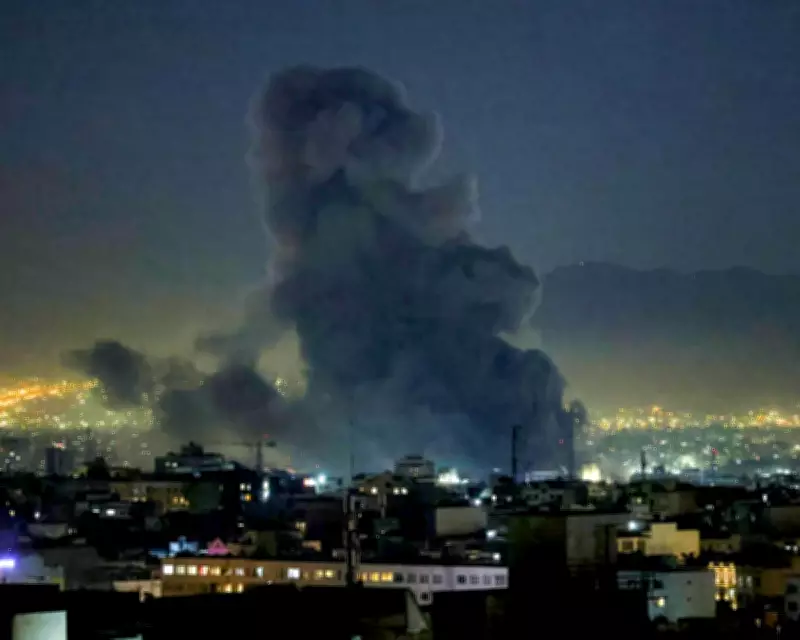
Hezbollah Retaliates with Missile Strikes Against Israel
The Israeli military confirmed early on Monday that it was conducting strikes against Hezbollah targets across Lebanon. This action came in direct response to the militant group launching a barrage of missiles and drones towards Israel. Hezbollah, a Shi'ite Muslim faction and long-standing ally of Tehran, stated that this attack was retaliation for the killing of Ayatollah Ali Khamenei and ongoing Israeli violations against Lebanese sovereignty.
Escalation in Beirut and Regional Fallout
Witnesses reported hearing explosions in the Lebanese capital, Beirut, with Lebanese security sources informing Reuters that Israeli strikes targeted the city's southern suburbs, a known Hezbollah stronghold. This marks the first such projectiles launched by Hezbollah since the commencement of US and Israeli strikes on Iran, initiated on Saturday to trigger regime change.
Iran's supreme leader, Ayatollah Ali Khamenei, who had ruled since 1989, was killed in these strikes, as announced by the US president on Truth Social. Former Iranian president Mahmoud Ahmadinejad also perished in the attacks. US President Donald Trump, in a Fox News interview, warned that combat operations in Iran would continue until all objectives are achieved, citing the threat of an Iranian regime with long-range missiles and nuclear weapons.

Humanitarian and Economic Consequences
The conflict has led to significant civilian casualties, with Iranian state media reporting that a missile strike on a girls' elementary school in Minab, southern Iran, has resulted in 148 deaths and 95 injuries, making it the worst mass casualty event of the bombing campaign so far. Additionally, the US Central Command confirmed the deaths of three US service members in operations against Iran, the first confirmed fatalities since strikes began.
Economically, oil prices have soared, with Brent crude jumping by 13% to $82 per barrel, a 14-month high, due to fears over the closure of the Strait of Hormuz and global trade disruptions. Stock markets faced pressure as a result.
International Reactions and Polling Data
A Reuters/Ipsos poll concluded on Sunday revealed that only 27% of Americans approve of the US strikes that killed Iran's leader, with about half believing Trump is too willing to use military force, including one in four Republicans. Trump has indicated that Iran's new leadership seeks talks, and he has agreed to engage, as reported by The Atlantic.
The war has also caused major disruptions to the airline industry, with countries across the Middle East closing airspace and key airports halting operations, affecting hundreds of thousands of travelers. In a related incident, a suspected drone strike hit RAF Akrotiri in Cyprus, a UK base, with no casualties reported, as the UK allowed US strikes from British bases and plans rescue operations for citizens in the Gulf.