

Pete Hegseth's Bellicose Address Marks Dangerous Turn in US Foreign Policy
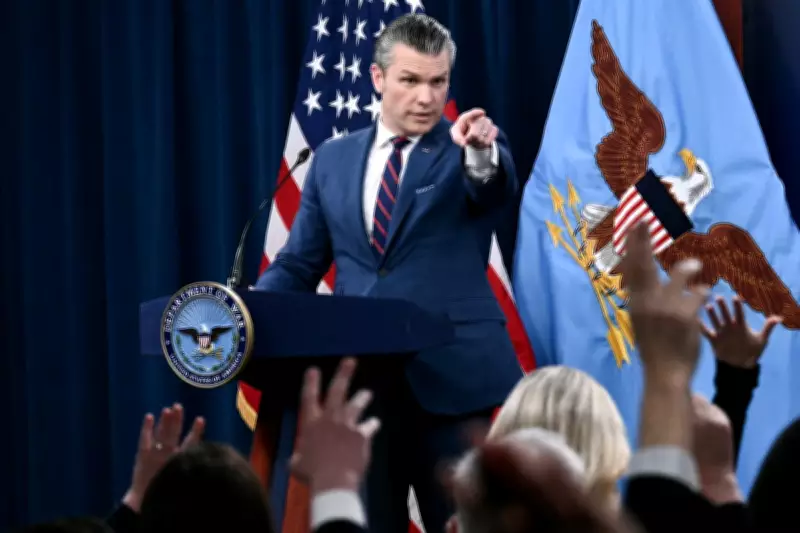
In a speech that oscillated between adolescent bravado and outright manipulation, United States Secretary of Defense Pete Hegseth addressed the nation on Monday, March 2, 2026, following a weekend of military strikes against Iran. The address, delivered from the Pentagon, offered no reassurance to a concerned public, instead presenting a vision of unending conflict dressed in the language of strength and vengeance.
Operation Epic Fury: A Name Reflecting Juvenile Strategic Thinking
The military campaign, dubbed "Operation Epic Fury" alongside June's planned "Operation War Hammer," represents a stark departure from the more measured, committee-approved operation titles of previous administrations. Gone are designations like Operation Atlantic Resolve, Inherent Resolve, or Enduring Freedom. Hegseth's rhetoric suggested such titles lacked sufficient lethality, framing the conflict through a lens of maximalist confrontation rather than diplomatic resolution.
Hegseth framed the military action as righteous vengeance for historical grievances, citing "brothers who never came home" and referencing decades of conflicts including roadside bombs in Iraq and Afghanistan. Conspicuously absent were claims of imminent threat that had circulated over the weekend, replaced instead with a narrative of generational score-settling.

Gaslighting and Contradictions in Official Narrative
The Secretary of Defense engaged in what observers described as blatant gaslighting, asserting "We didn't start this war, but under President Trump we are finishing it" regarding a conflict initiated by American and Israeli forces just two days prior. He further claimed "This was not a regime change war" moments after urging Iranian protesters to overthrow their government, adding the contradictory qualifier "but the regime did change."
Hegseth repeatedly returned to Donald Trump as the central figure in the conflict, describing him as "a man who always puts Americans first" who would "finally draw the line after 47 years of Iranian belligerence." This characterization stands in stark contrast to Trump's campaign promises to "end the forever wars" and focus on "America first" policies, revealing significant contradictions in the administration's foreign policy approach.
Escalating Rhetoric and Chilling Implications
The speech grew progressively darker, escalating from defensive posturing to explicit threats: "If you threaten Americans anywhere on this earth, we will hunt you down without apology and without hesitation and we will kill you." Hegseth acknowledged American casualties would occur, framing them not as tragedy but as justification for further military action, stating that honoring the fallen required "no apologies, no hesitation, epic fury."
Addressing US troops directly, Hegseth declared "history doesn't care if we're tired, if we're scared or if the fight feels bad," promoting what he called "warrior ethos, lethality and union of purpose" as essential to military service. This rhetoric, critics noted, mangled the human reality of warfare into abstract concepts of honor and duty.
Dismissal of International Norms and Domestic Concerns
Particularly concerning were Hegseth's dismissals of international institutions and domestic criticism. He spoke of acting "regardless of what so-called international institutions say" alongside Israel, while simultaneously claiming America could end the conflict at any time. He dismissed concerns about civilian casualties, referencing "pearl-clutching allies" and criticizing "politically correct wars" even as reports emerged of significant civilian harm.
Videos from Iran showed patients, including a newborn in an incubator, evacuated from damaged hospitals, while Iranian authorities reported over 150 deaths from a missile strike on a girls' school. Hegseth's response to such humanitarian concerns was to urge the Iranian people to "take their chance and rise up," displaying what critics called a fundamental misunderstanding of the realities facing ordinary citizens under repressive regimes.

Economic Consequences and Public Disconnect
The speech notably ignored the practical consequences of military escalation, even as analysts predicted skyrocketing gas prices following oil market disruptions. Polls indicate most Americans prioritize economic stability and homeland security over foreign military adventures, concerns Hegseth addressed by simply telling troops to "don't listen to the noise" and "stay focused," while dismissing critical media coverage as "fake news."
Hegseth concluded with the chilling assertion that the conflict would end only at "President Trump's choosing, no one else's," signaling a potentially prolonged engagement with minimal congressional or public oversight. The address represented a significant escalation in rhetoric and policy, moving the United States toward what appears to be an open-ended conflict with profound implications for regional stability and international relations.





