
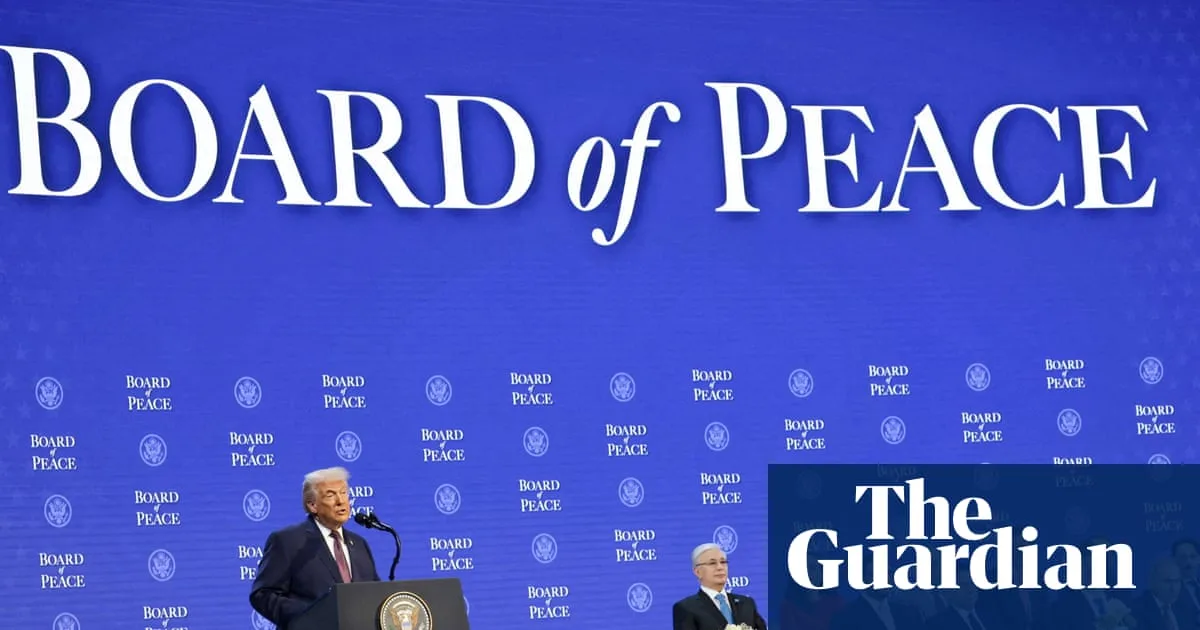
Major European allies have declined to attend the first meeting of Donald Trump's Board of Peace in Washington, with criticism mounting over the initiative's unclear funding and political mandate. The summit, scheduled for Thursday at the renamed Donald J Trump Institute of Peace, is expected to function largely as a fundraiser, according to the White House.
Trump claimed on social media that countries have pledged over $5bn towards rebuilding Gaza, which remains in a dire humanitarian crisis after the war with Israel. He also said member states had committed thousands of personnel to a proposed International Stabilization Force. However, the board's credibility has been widely questioned, with analysts noting that pledges do not guarantee delivery.
European Commission President Ursula von der Leyen, along with leaders from the UK, Germany and France, have all turned down invitations. Pope Leo XIV also announced the Vatican would not join, with Cardinal Pietro Parolin stating that the United Nations should lead crisis management. Canada's Mark Carney had his invitation rescinded after a critical speech at Davos.
The meeting will be attended by Middle Eastern delegations including Israel, the UAE, Saudi Arabia, Turkey, Jordan and Qatar, plus other states such as Argentina, Paraguay, Hungary and Kazakhstan. Many are seen as seeking to curry favour with the Trump administration, with a $1bn donation reportedly securing a permanent seat on the board.
Israeli Prime Minister Benjamin Netanyahu, who signed up to the board last week, will skip the meeting, sending Foreign Minister Gideon Saar instead. Experts remain sceptical, with Aaron David Miller of the Carnegie Endowment for International Peace describing the board as a way to project motion without serious diplomatic progress.




