Trump's Top Military Advisor Urges Caution on Iran Strikes Amid Rising Tensions
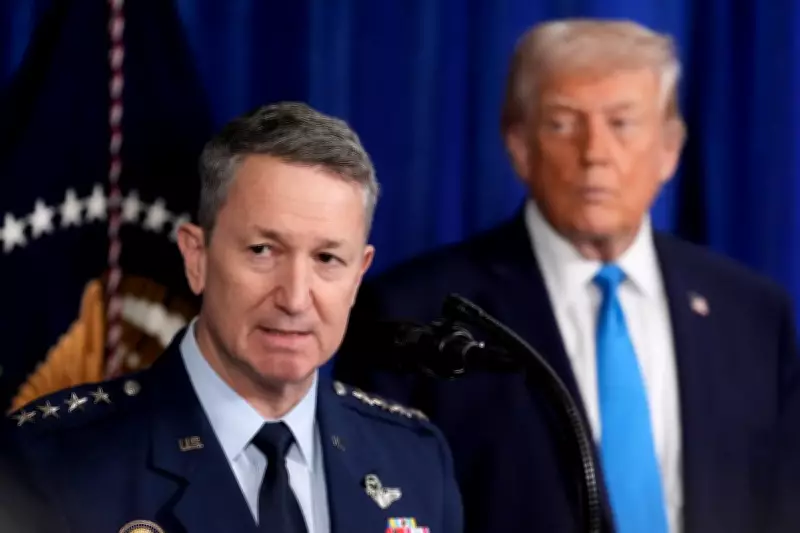
General Dan Caine, the Chairman of the Joint Chiefs of Staff and a key military advisor to President Donald Trump, has reportedly issued stark warnings against launching air strikes on Iran. According to sources speaking to Axios, Caine believes that a full-scale war with the Middle Eastern nation could dangerously deplete the United States' military power and resources.
Military Resources at Risk in Potential Conflict
Sources describe General Caine as a "reluctant warrior" who is not advocating for military action against Ayatollah Khamenei's regime. However, he would support any final decision made by the commander-in-chief. The general's concerns center on the massive logistical and resource demands that a campaign against Iran would require, potentially leaving American forces stretched thin.
These warnings come despite President Trump's public assertion on Truth Social that Caine believes any war with Iran could be "easily won." The president dismissed a Washington Post report detailing the general's apprehensions as "100% incorrect."

Complex Strategic Challenges in Iran Campaign
Military analysts suggest that neutralizing Iran's missile program would necessitate strikes against hundreds of targets across a country three times larger than Iraq. Many of these launch sites are mobile, utilizing extensive transportation networks to evade detection. Former defense officials warn that attempting to unseat Ayatollah Khamenei would expand the target list to thousands of sites, potentially locking the United States into a months-long campaign.
Compounding these challenges, General Caine has reportedly expressed concerns about limited allied support for military action against Iran. The Washington Post noted his worries about America's munitions stockpile being depleted by ongoing support for Israel and Ukraine's defense efforts.
Diplomatic Deadlock and Domestic Unrest in Iran
The military warnings unfold against a backdrop of stalled nuclear negotiations between Washington and Tehran. Steve Witkoff, representing the US alongside Jared Kushner, Trump's son-in-law, has stated that America seeks to ensure Iran abandons any plans to enrich nuclear material. Iranian Foreign Minister Abbas Araghchi has publicly rejected such demands.
Meanwhile, Iran's government faces significant domestic pressure following waves of anti-government protests. The US-based Human Rights Activists News Agency reports that at least 7,000 people were killed in crackdowns against December and January demonstrations. Fresh protests erupted recently at multiple Iranian universities, with students burning Islamic Republic flags and chanting "Death to the Ayatollah."
Military Buildup and Decision-Making Process
The United States has established its largest Middle Eastern airpower presence since the 2003 Iraq invasion, deploying an aircraft-carrier strike group to the region with a second carrier stationed in the Mediterranean. Despite this show of force, officials told The Wall Street Journal that President Trump has not yet decided on sending troops to topple Khamenei's regime.
Joint Staff spokesperson Joe Holstead emphasized to Axios that General Caine provides "a range of military options, as well as secondary considerations and associated impacts and risks" to civilian leaders confidentially. As the only military leader directly advising Trump on potential attacks against Iran, Caine's counsel is expected to significantly influence presidential decision-making.
Both nations are now approaching last-ditch diplomatic efforts ahead of scheduled talks in Geneva, with military, political, and humanitarian considerations creating a complex calculus for American foreign policy makers.