How Iran-US Friendship Collapsed: A 50-Year Scholar's Perspective
Iran and the United States share a profound history of mutual respect and friendship, according to archaeologist Daniel Thomas Potts, who has dedicated over five decades to studying Iranian history. This relationship, however, has dramatically deteriorated, culminating in the 2026 war launched by the US and Israel against Iran, which continues today. The roots of this hostility trace back to the 1953 British and American-backed coup that overthrew Iran's prime minister, setting the stage for the 1979 hostage crisis and decades of tension.
The Early Foundations of Friendship
In the 1800s, American missionaries traveled to Persia, as Iran was then known, establishing schools, colleges, hospitals, and medical institutions that endure to this day. A notable figure was Dr. Joseph Plumb Cochran, an American physician fluent in Persian, Turkish, Kurdish, and Assyrian, who founded a hospital in Urmia in 1879 and Iran's first medical school. His 1905 funeral in northwestern Iran drew over 10,000 attendees, highlighting the deep connections formed during this era.
From 1834, when the first Protestant American mission was established in Urmia, until 1953, Americans were widely viewed as benevolent figures in Iran. This contrasts sharply with modern stereotypes and anti-Iranian sentiments from Washington. During this period, American efforts were primarily nongovernmental, with missionaries focusing on education, healthcare, and social welfare, without official US government involvement.

Imperial Exploitation by Russia and Britain
While Americans built goodwill, other nations exerted manipulative influence over Iran. Russia and Great Britain, often invited by Iranian leaders, economically exploited Persia to advance their imperial ambitions through diplomatic, military, and economic pressure. After losing territory in the Russo-Persian Wars of the early 1800s, Iran faced further control as Russia loaned millions of rubles to fund lavish lifestyles of rulers like Mozaffar ed-Din Shah.
Great Britain, though less openly hostile except during the Anglo-Persian War of 1856-1857, engaged in significant economic exploitation. By the late 19th century, the shah granted exclusive concessions to the British for telegraph lines, tobacco, and oil rights, the latter given to the Anglo-Persian Oil Company. In 1907, Britain and Russia signed the Anglo-Russian Convention, dividing Iran into spheres of influence without consulting its Parliament or people, sparking outrage.
America as the Honest Broker
Iran's relations with the United States stood in stark contrast to those with European powers. American missionaries and invited technocrats offered aid without seeking official advantage for the US government. By 1895, American Presbyterian missionaries had established 117 schools around Urmia, expanding to cities like Tehran and Mashhad. Diplomatic relations were formalized in 1883, and institutions like the American Presbyterian Hospital in Tehran were founded.
After World War I, Iran turned to America for financial help, viewing it as a disinterested party free from colonial baggage. In 1911, W. Morgan Shuster was appointed treasurer-general to reorganize Iran's finances, though his mission was sabotaged by British and Russian diplomats. Later, in 1922, Arthur C. Millspaugh was appointed administrator-general of finances, seen as Iran's "last hope" despite mixed results. These efforts reinforced America's image as an honest broker, though incidents like the 1924 murder of American consul Robert Imbrie showed tensions.
The Turning Point: 1953 Coup and Aftermath
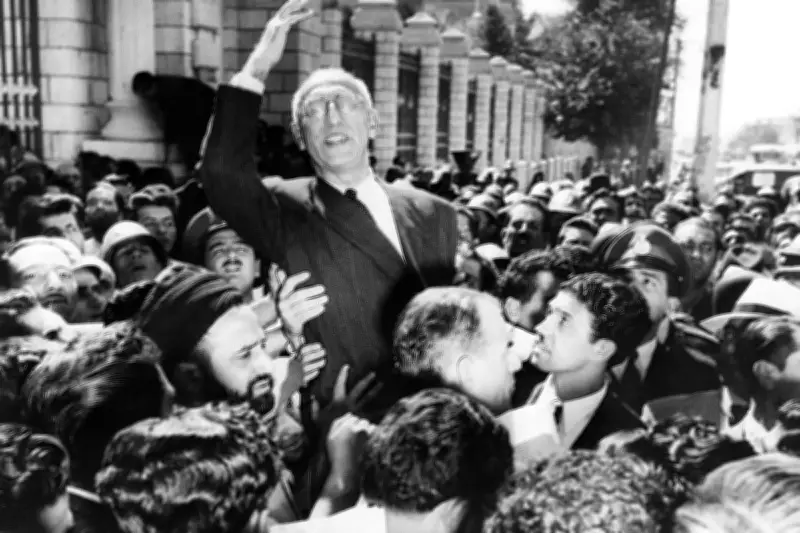
America's benign image in Iran was shattered in 1953 when the CIA, collaborating with Great Britain, engineered a coup against democratically elected Prime Minister Mohammad Mossadegh, who had nationalized the Anglo-Iranian Oil Company. This event severely damaged Iranian trust in the US, yet cultural ties persisted. By 1977, over one-third of Iranian students abroad were in the US, with numbers peaking at 51,310 by 1979, making Iran the largest source of foreign students in America.

Researcher Steven Ditto noted in 2017 that Iranian students had been in the US for nearly a century, reflecting deep connections. Despite political storms, the legacy of American goodwill and personal friendships has not been entirely lost, though the ongoing war threatens to obscure this history. Potts argues that Americans should remember this past friendship, as deep relationships can withstand adversity and may offer hope for future reconciliation.