One hundred days after a landmark truce was declared between Israel and Hamas, a freelance journalist from Gaza City has delivered a stark rebuttal to headlines proclaiming peace. For Nour Abo Aisha and countless others on the ground, the conflict persists in everything but official designation.
A Truce Announced Amid Tears, Not Cheers
The ceasefire was declared by Donald Trump on 10 October 2025. Nour Abo Aisha recalls being in the Mocha Cafe in southern Gaza when the news broke. While some ran towards Gaza City yelling, she was overcome with emotion. "I was crying and questioning whether the announcement of the truce was truly worth all the bloodshed," she writes. That initial despair has only deepened into a pervasive gloom.
Far from a period of recovery, the subsequent months have been a relentless struggle for survival. Life is now defined by the anguish of the past, fear of the unknown, and the constant threat of renewed full-scale war. "I have never felt as though there is a ceasefire," Abo Aisha states, noting the daily background noise of Israeli strikes, referred to as the "yellow line" bombing, in eastern Gaza.

Surviving in the Rubble of a Former Home
Following the truce announcement, her father made the difficult decision to return to western Gaza. The family left a tent in the south to live next to the debris of their home, which had been bombed by Israel just two weeks prior. The area had no basic services: no water, no sewage systems, and no internet.
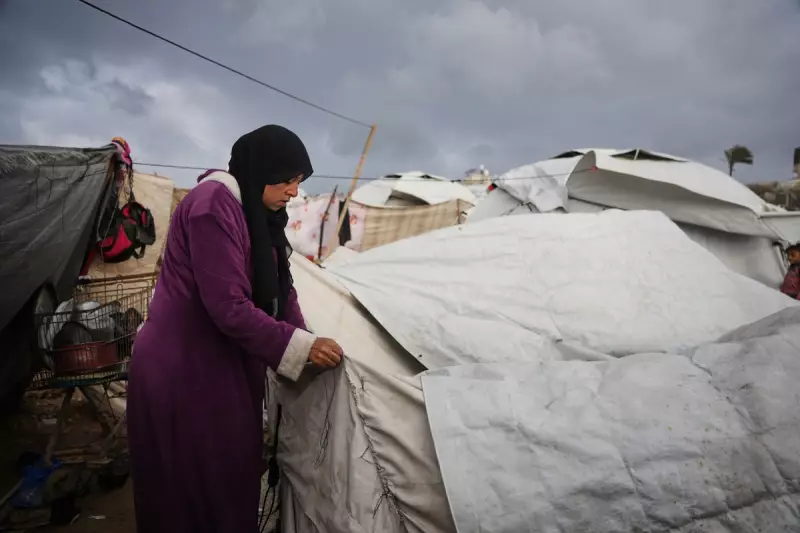
They returned to their devastated Sheikh Radwan neighbourhood, a scene her cousin described as "like I was living in a grave." After a brief period in their wall-less, burnt-roof house, they moved into a tent beside it. The nylon walls tear constantly, requiring daily repairs by her father. The cold is piercing, and the fear that a strong wind might blow their shelter away is ever-present.
"The sound of the wind combines with that of the drones and my neighbours screaming as they pray to Allah for the rain to stop so that they can sleep," she describes. Even a chronic cold goes untreated, a small symptom of the collapsed healthcare system.
A Famine by Another Name and a Bleak Future
The journalist's daily journey to a workspace is a perilous trek through sewage-flooded streets, with no public transport or shelter. On one occasion, stranded for two hours in pouring rain, she sobbed while protecting her laptop—her last connection to normality—in a nylon bag.
She attributes the widespread famine to Israel's control over food imports, compounded by worthless paper currency and no sources of income. The desire for a real peace, to move to a promised second phase of the ceasefire, feels like a distant dream.
The violence also extends beyond Gaza's borders. The article references an incident where masked Israeli settlers beat a 67-year-old deaf Palestinian man in the West Bank, underscoring the tense and dangerous atmosphere across the occupied territories.
Nour Abo Aisha's conclusion is unequivocal: "Gaza wishes to calm down... Yet here we are: soaked and bleeding from a war that continues in all but name." Her testimony stands as a powerful indictment of a peace process that has failed to deliver safety or dignity for the people it was meant to protect.