French Animator Florence Miailhe on Oscar Nomination and Championing Human Rights
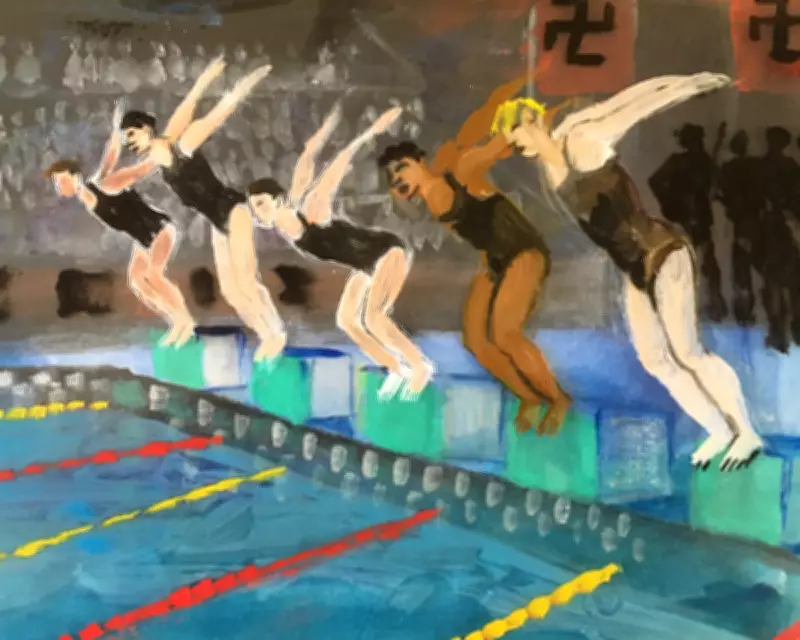
At the age of 70, French animation director Florence Miailhe has received her first Oscar nomination, a remarkable achievement in a career dedicated to storytelling through art. Her nominated short film, Papillon (Butterfly), delves into the poignant life of Alfred Nakache, a French-Jewish swimmer who faced discrimination during Vichy France. Miailhe reflects on this late-career recognition with a mix of surprise and determination, using her platform to address contemporary issues of human rights.
A Journey Through Memory and Discrimination
Miailhe's connection to Nakache runs deep, as her parents met him during the resistance. She recalls, "Frankly, I don't know why my memory was working like that. Maybe because I was thinking of my father." This personal link fuels Papillon, which explores Nakache's life through a stream of memories as he bathes for the last time before his death in 1983. The film traces his journey from overcoming a fear of water in Algeria to competing in the 1936 Berlin Olympics, only to be stripped of his citizenship and sent to Auschwitz.
Hand-animated on glass sheets, each frame layered with oils, pastels, and sand, the film creates a visceral experience of trauma and renewal. Miailhe explains, "It's not a scientific study, but something more sensual and sensitive. What interests me is representing how it's never the same and always in metamorphosis." This technique allows her to capture the fluidity of water and memory, making the story resonate on an emotional level.

Sport as a Lens for Social Issues
Miailhe highlights how sport serves as a powerful arena for discussing discrimination. She notes, "Irrespective of whether he was Jewish or not, what interested me was how even being a champion isn't enough to prevent that discrimination." Nakache's story, largely forgotten postwar due to a consensual silence, has regained relevance with recent interest in Toulousain swimming history, sparked by athlete Leon Marchand.
The director, who is also Jewish, draws parallels to modern France, where debates over nationality and community exclusion persist. She states, "For a while now in France, this idea that we can deprive a group of their nationality, because of them belonging to another community or religion, has come back." This makes Papillon not just a historical recount but a commentary on ongoing human rights struggles.
Embracing Risk in Animation
Miailhe's career began with encouragement from experimental animator Robert Lapoujade, leading her to explore motion after initial work in static visual arts. Her 1991 short Hammam showcased her innovative approach, using abstraction inspired by Picasso. For Papillon, she embraced happy accidents, painting live under the camera to create dynamic effects, though this method risks errors that could ruin sequences.
She relishes this personal, hands-on technique, especially in an era dominated by AI. "It's very difficult and stressful," she admits, "but I like the challenge aspect." Compared to her feature film La Traversée (The Crossing), which involved a larger team, Papillon was a high-wire act with just four collaborators, requiring precise judgment to rescue faltering scenes.
Oscar Hopes and Human Rights Advocacy
The Oscar nomination came as a shock to Miailhe, but she has prepared a speech focusing on the film's origins and its relevance today. She is mindful of the parallels between Nakache's exclusion and current discussions about boycotting the 2028 Los Angeles Olympics. For her, the real prize lies in advocacy: "It's important to speak up about human rights and to try to live correctly."
As she promotes Papillon in New York ahead of the ceremony, Miailhe remains committed to using her art as a tool for change. Her work underscores the power of animation to convey complex histories and inspire reflection on justice and equality in contemporary society.