US Appeals Court Denies Families' Bid to Reopen Boeing 737 Max Criminal Case
Court Denies Bid to Reopen Boeing 737 Max Criminal Case

US Appeals Court Upholds Dismissal of Boeing 737 Max Criminal Case

A federal appeals court in the United States has definitively rejected a request from dozens of families who lost relatives in two fatal Boeing 737 Max crashes to reopen the criminal case against the aircraft manufacturer. The unanimous decision from a three-judge panel of the 5th U.S. Circuit Court of Appeals represents a significant setback for victims' families seeking further legal accountability.

Families' Legal Challenge Dismissed

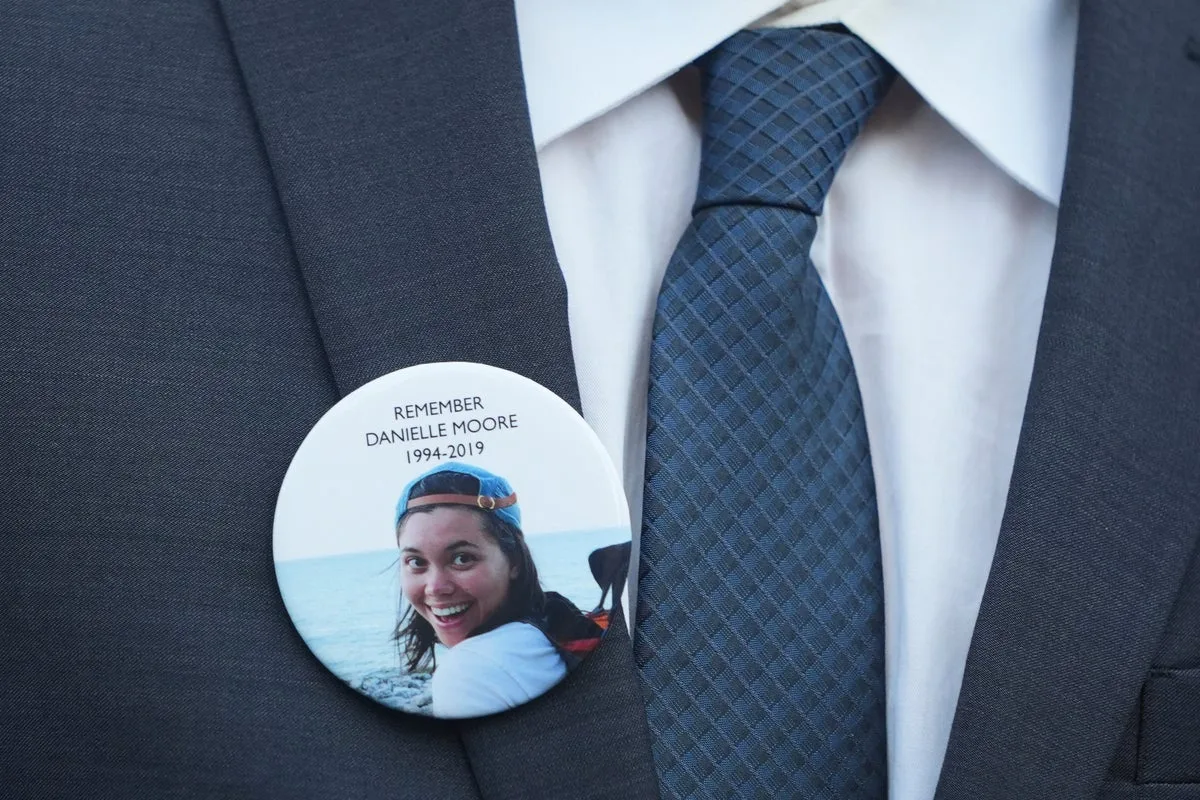
Lawyers representing the families had argued vigorously that the Department of Justice failed to properly consult them before reaching a settlement agreement last year with Boeing. This deal led a lower court to dismiss a criminal conspiracy charge against the company. The charge originated from allegations that Boeing deliberately misled federal aviation regulators about a critical flight-control system directly linked to both crashes, which tragically claimed 346 lives.

In their ruling released Tuesday, the appellate judges stated they disagreed with the families' claims that federal prosecutors had violated their rights under the Crime Victims' Rights Act. Consequently, the court found no legal basis to revive the dismissed criminal case.

Wide Pickt banner — collaborative shopping lists app for Telegram, phone mockup with grocery list

Strong Reactions from Legal Representatives

Paul Cassell, a prominent lawyer for the families, condemned the ruling as "badly flawed." In a strongly worded statement, Cassell declared, "Today's ruling means that Boeing escapes criminal justice accountability for killing 346 people. The victims' families were never given a meaningful opportunity to shape the negotiations between the Justice Department and Boeing, dating back to 2020."

In contrast, Boeing attorney Paul Clement presented a different perspective during last month's hearing before the appellate court in New Orleans. Clement asserted that more than 60 other families had "affirmatively supported" the settlement deal, with dozens more not opposing it. He emphasized that "Boeing deeply regrets" the tragic crashes and highlighted that the company "has taken extraordinary steps to improve its internal processes and has paid substantial compensation" to the victims' families.

The Controversial Settlement Agreement

The plea agreement at the center of this legal battle allowed Boeing to avoid criminal prosecution in exchange for significant financial commitments. The company agreed to pay or invest an additional $1.1 billion in:

  • Fines
  • Compensation to victims' families
  • Internal safety and quality improvement measures

Federal prosecutors defended their approach during the hearing, telling the judges that the government had, for years, "solicited and weighed the views of the crash victims' families as it's decided whether and how to prosecute the Boeing Company."

Complex Legal History and Technical Background

The criminal case followed an exceptionally complex path through the legal system. The Justice Department initially charged Boeing in 2021 with defrauding the government but agreed not to prosecute if the company paid a settlement and complied with anti-fraud laws. When federal prosecutors determined in 2024 that Boeing had violated that agreement, the company agreed to plead guilty to the charge.

However, U.S. District Judge Reed O'Connor in Texas, who oversaw the case for years, rejected this plea deal and directed both sides to resume negotiations. The Justice Department returned last May with a new agreement and a request to withdraw the criminal charge altogether, which Judge O'Connor approved in November.

The case fundamentally centered on a software system Boeing developed for the 737 Max, which airlines began operating in 2017. Boeing marketed the aircraft as an update that wouldn't require extensive additional pilot training. Yet the Max incorporated significant changes that Boeing downplayed, most notably an automated flight-control system designed to compensate for the plane's larger engines.

Pickt after-article banner — collaborative shopping lists app with family illustration

Boeing did not mention this critical system in airplane manuals, leaving most pilots completely unaware of its existence. In both catastrophic crashes, this software repeatedly forced the nose of the plane downward based on faulty readings from a single sensor. Pilots flying for Lion Air and Ethiopian Airlines were unable to regain control of their aircraft.

Investigations later revealed that Boeing had not informed key Federal Aviation Administration personnel about software changes before regulators set pilot training requirements and certified the airliner for flight. Following the Ethiopia crash, 737 Max planes were grounded worldwide for twenty months.

In dismissing the case, Judge O'Connor stated that federal prosecutors hadn't acted in bad faith and had fulfilled their obligations under the Crime Victims' Rights Act. He also noted that legal precedent prevented him from blocking the dismissal simply because he might disagree with the government's assessment that the new deal with Boeing served the public interest.

The Justice Department had argued that proceeding to trial carried the substantial risk that a jury might acquit Boeing entirely, potentially leaving the company without any further punishment. All passengers and crew perished when the 737 Max jets crashed less than five months apart in 2018 and 2019—first a Lion Air flight that plunged into the sea off Indonesia, followed by an Ethiopian Airlines flight that crashed into a field shortly after takeoff.

Cassell concluded his statement with a sobering warning: "One can only hope that another Boeing crash won't be the outcome of this badly flawed ruling." Messages seeking comment were sent to Boeing representatives following the court's decision.