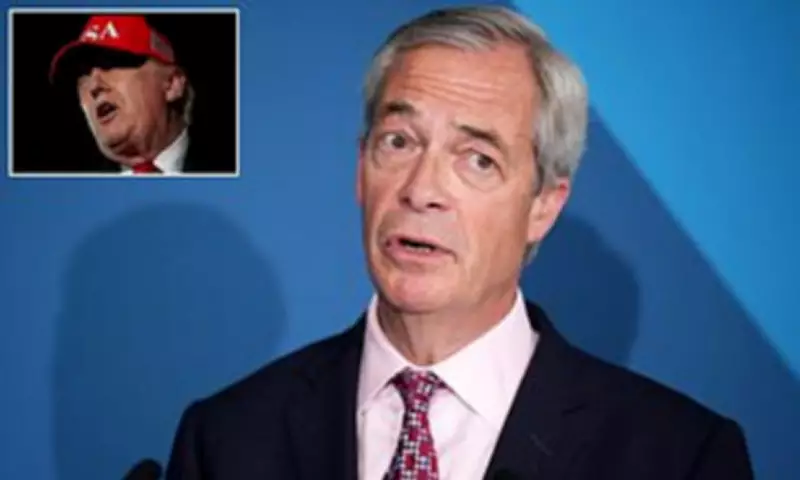
Nigel Farage Raises Concerns Over Trump's Iran War Strategy
Reform UK leader Nigel Farage has publicly questioned whether Donald Trump possesses a coherent "exit strategy" for his escalating conflict with Iran, while simultaneously warning about the substantial "risk" involved in the US President's proposed blockade of the Strait of Hormuz.
Distance from Trump's Erratic Actions
During a London press conference on Monday morning, Mr Farage appeared to distance himself from the US President, whom he describes as a "friend," over what he characterized as increasingly erratic actions in the Middle East. The Reform leader specifically addressed Mr Trump's vow to prevent tankers from entering or leaving the crucial Strait of Hormuz shipping lane, which handles significant global oil and gas transportation.
The American President has declared that military forces will commence "blockading any and all ships trying to enter, or leave, the Strait of Hormuz" starting at 10am US Eastern Time, equivalent to 3pm in the United Kingdom. This dramatic escalation comes in direct response to the collapse of peace negotiations with Iranian authorities.

Strategic Calculations and Unanswered Questions
Mr Farage suggested that Mr Trump's primary objective might be compelling China—which purchases more than eighty percent of Iran's exported oil—to "start pressuring the Iranians" into accepting American demands. However, the British political figure expressed significant uncertainty about the conflict's ultimate resolution.
"I don't know where this war ends," Mr Farage stated bluntly. He elaborated further, noting that "the exit strategy might not have been as clearly thought through as one would wish," indicating serious reservations about the long-term planning behind the military escalation.
UK's Limited Capacity and National Humiliation
Regarding British involvement, Prime Minister Keir Starmer has firmly stated that the United Kingdom will not become entangled in the Iran war, explicitly refusing to endorse Mr Trump's blockade initiative. When questioned about whether Britain should participate, Mr Farage responded with a sober assessment of national military capabilities.
"I'm pleased we're at least sending mine sweepers, but we can't get involved beyond that," he acknowledged. The Reform leader then delivered a scathing critique of British naval readiness, citing the example of HMS Dragon requiring three weeks and one day to reach Cyprus before returning to dock with mechanical failures.
"Even if we wanted to help with the blockade, we do not have the means to do so. This is an utter humiliation for our country," Mr Farage declared. He characterized the situation as "the biggest wake up call we frankly ever had in the entire history of the country on defence," highlighting what he perceives as critical vulnerabilities in national security infrastructure.
Historical Precedents and Calculated Risks
While acknowledging that naval blockades can prove effective historically—referencing successful British operations during 1917 and 1918—Mr Farage emphasized that "this does not come without risk." His comments reflect a nuanced position that recognizes potential strategic benefits while maintaining serious concerns about unintended consequences and escalation dynamics in an already volatile region.
Dismissing Cognitive Decline Speculation
Despite the chaotic Middle East crisis and Mr Trump's frequent controversial social media statements—including an AI-generated image depicting himself as Jesus Christ amid tensions with the Vatican—Mr Farage dismissed suggestions that the soon-to-be-octogenarian President suffers from "cognitive decline."
"He's 80 in a few weeks' time. He has a very unusual way of operating," Mr Farage observed, noting that similar questions about the President's mental acuity were raised a decade ago. "I don't think he's changed very much at all, which some people like and a lot of people don't," he concluded, deflecting concerns while neither endorsing nor condemning Mr Trump's provocative online behavior.

Broader Implications and Unresolved Tensions
The Reform leader's comments reveal deepening unease among even traditional Trump allies about the direction of US foreign policy in the Middle East. With China's economic interests potentially at stake and European allies like Britain demonstrating limited capacity for meaningful military support, the situation presents complex diplomatic and strategic challenges that extend far beyond immediate blockade operations.
As geopolitical tensions continue to mount, questions about endgames, regional stability, and the broader implications of confrontational approaches to international disputes remain largely unanswered, creating uncertainty for global markets and diplomatic relations alike.