The Escalation Trap: How the Iran Conflict Could Become More Costly and Complex
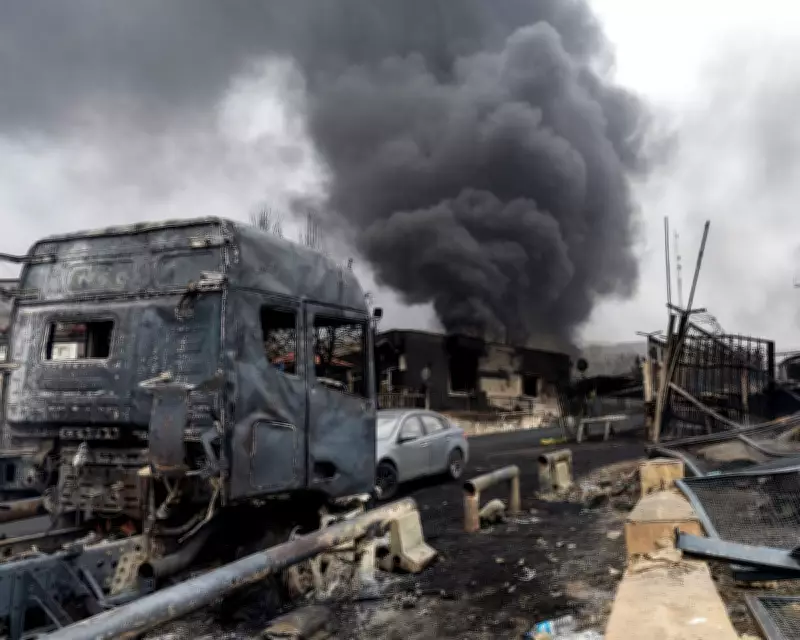
In the aftermath of a US-Israeli strike on Tehran's Shahran oil depot on 8 March, military experts are warning of a dangerous "slippery slope of incrementalism" that could draw both nations into a protracted and costly conflict. The current phase of the war against Iran and its proxies has become a proving ground for two competing concepts of military escalation, each threatening to become a strategic trap.
Competing Escalation Models
On one side, Donald Trump and Benjamin Netanyahu have thus far failed to achieve their ill-defined and shifting strategic aims. Despite killing Iran's supreme leader Ali Khamenei and other key leaders in the opening salvo, the clerical regime remains intact and Iran's stockpile of highly enriched uranium remains unsecured. Airstrikes are intensifying and hitting a greater number of targets, yet strategic success remains elusive.
Tehran's counterstrategy involves "horizontal escalation" - a long-prepared approach intended to widen the conflict geographically with strikes on Gulf states, while simultaneously increasing costs to Washington and the global economy, particularly in energy supplies. This approach demonstrates Iran's ability to escalate the war's costs far beyond its direct military capabilities to counter US-Israeli attacks.

The Three-Stage Escalation Trap
Robert Pape, a US historian who has studied air power limitations and advised multiple administrations, outlines the dangerous progression of what he terms the "escalation trap."
"What we saw with the initial attack was tactically almost 100% success," Pape explained. "The problem is that when that doesn't lead to strategic success, you enter the second stage of the trap."
He describes a three-stage process: initial tactical success without strategic achievement, followed by escalation dominance leading to further military escalation, and finally reaching stage three where far riskier options must be contemplated. According to Pape, the conflict currently sits at stage two, teetering on the brink of stage three.
The Trump administration, Pape suggests, has become mesmerized by the initial attack's precision, creating an "illusion of control" based on weapon accuracy rather than strategic outcomes.
Iran's Calculated Response
Iran's strikes on Gulf states and shipping in the Strait of Hormuz serve a dual purpose: creating wedges between the US and Gulf allies while forcing Gulf populations to question why they're paying the price for what appears to be expansionist Israeli policies. This horizontal escalation strategy represents Tehran's attempt to leverage global economic vulnerabilities against superior US military power.
Meanwhile, Israel has signaled its own escalation intentions. Defense Minister Israel Katz announced on Thursday that he ordered military preparations for expanded operations in Lebanon against Iran-backed Hezbollah, threatening to "take territory" if rocket fire continues.
Psychological Factors in Escalation
Robert Malley, former US envoy to Iran and lead nuclear negotiator, suggests that escalation dynamics may be driven less by strategic calculation than by President Trump's psychology.
"At this point, what we should fear is that the escalatory ladder is the one that Trump is most comfortable on," Malley warned. "I don't think the Iranians are going to make life any easier for him or offer him the victory on a platter that he wants."
Malley expressed concern that escalation could reach previously unimagined levels, including ground troops, attacks on basic infrastructure, occupation of Iranian territory, or collaboration with Kurdish and other ethnic groups. Such moves could trigger Iranian retaliation against soft American targets, creating unpredictable escalation spirals.
Broader Strategic Context
Jack Watling of the Royal United Services Institute identifies multiple competing debates driving conflict trajectory: between US defense professionals and Trump's inner circle, between US and Israeli priorities, and between political and military factions within Iran's leadership.

Watling notes that parts of the US strategic community, concerned about potential future conflict with China, have sought to avoid simultaneous threats involving Russia, Venezuela, and Iran. This has created tension between those advocating limited objectives to degrade Iran and Trump's desire for "coercive control" over the country's future.
For Iran, Gulf retaliation serves not only reciprocal purposes but also re-establishes regional deterrence. Even if Tehran struggles to maintain current missile and drone strike intensity, Watling cautions that a transition to longer-term threats against Hormuz shipping could sustain horizontal escalation.
The Slippery Slope of Incrementalism
Foreign affairs specialist Robert D. Kaplan highlights another concerning dynamic: "the slippery slope of incrementalism." He warns that if civil conflict emerges in Iran, the administration might feel compelled to deploy special forces and advisers, potentially mirroring Vietnam's gradual escalation into a major war.
The coming weeks will reveal crucial lessons about US military power in an increasingly fragile, multipolar world. As tactical successes fail to translate into strategic achievements, both sides risk being drawn deeper into a conflict whose costs and complexity exceed initial expectations, with global economic and political consequences extending far beyond the Middle East theater.